
















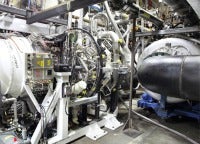
Engineers at General Electric have achieved the highest combination of temperatures ever recorded inside the core of a jet engine, the company said on Tuesday. The higher temperatures, up to 2400 degrees Fahrenheit, could lead to the development of jet engines that exceed today’s fuel efficiency by 25 percent. The company said it plans to use its new technology in a supersonic jet engine that will combine the fuel economy of passenger aircraft with “the raw power of military jets.” The pilot will be able to switch between two modes, one to maximize speed and power, and another for cruising at a slower pace.
To withstand such extreme temperatures, the engine uses new lightweight ceramic matrix composite materials that were developed by GE engineers. The high temperature of jet fuel combustion typically exceeds the melting point of even the most advanced aviation alloys, so engines are designed with tiny ducts and pinholes inside the turbine blades to make the engine cooler — but that also decrease efficiency. The new high-tolerance ceramics allow the engine to run hotter without melting down, and more heat generates more power. The technology could extend range up to 30 percent while providing an extra 10 percent in thrust, the company said.

