
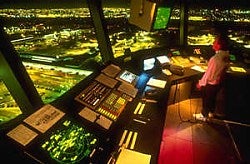
The controllers’ union and the FAA for the most part have presented a united front in responding to recent incidents of controllers caught sleeping, but on Friday, NATCA suggested that controllers on overnight shifts should be allowed nap breaks, which Transportation Secretary Ray LaHood has opposed. “I don’t expect to walk into a break room and see controllers napping, period,” he said in an interview last week. NATCA President Paul Rinaldi said the FAA needs to implement all the recommendations of a NATCA-FAA fatigue work group that spent 18 months researching the problem. Those recommendations include allowing “recuperative breaks” on the overnight shift of up to two and a half hours. On Monday, NTSB member Mark Rosekind, an expert in fatigue issues, said research has shown short naps of 20 to 30 minutes are effective in keeping workers alert. “[Nap breaks] should be on the table for consideration,” Rosekind told reporters at a briefing, the Associated Press reported.
“Extensive scientific modeling clearly proves that introducing a recuperative break on the mid shift can mitigate the identified risk of reduced cognitive performance due to fatigue,” the FAA-NATCA work group stated in its recommendations. Further, since fatigue can occur at any time on any shift, recuperative breaks should be allowed during relief periods at any time, the group said. The work group also recommended scheduling a minimum of nine hours between shifts, which the FAA has recently moved to implement. “There is nothing groundbreaking about these recommendations,” Rinaldi said on Friday. “They are common-sense solutions to a problem NATCA and fatigue experts have consistently raised for years while past Administrations turned a blind eye. The recommendations are based on advice from NASA and the military and in line with international air traffic control best practices. If we are serious about addressing controller fatigue, then every recommendation must be adopted and implemented.” On Monday, the FAA fired another controller for sleeping on the job, at Boeing Field in Seattle. It was the third such firing in recent weeks.