















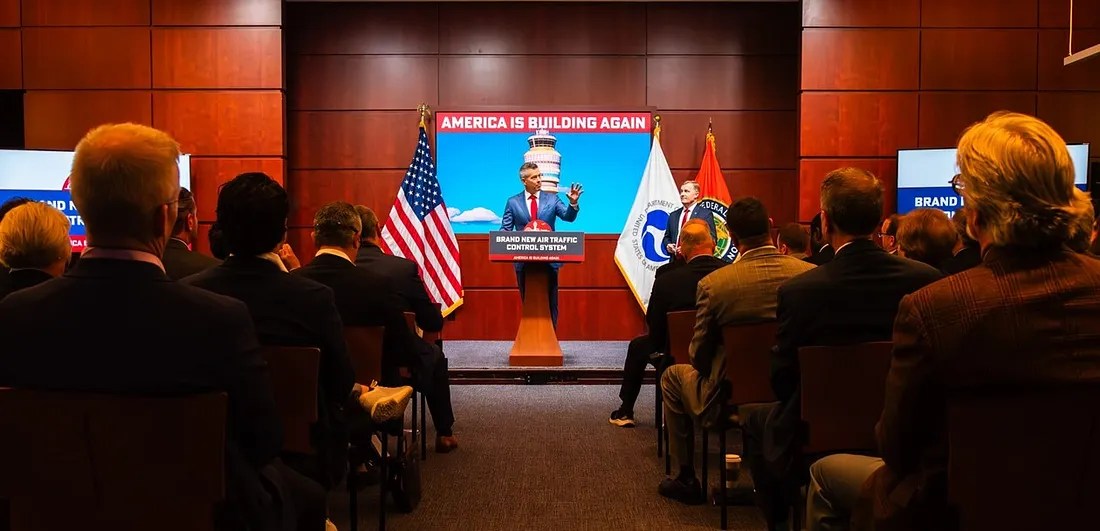

Transportation Secretary Sean Duffy says artificial intelligence will play a role in the FAA’s air traffic control modernization program, although its initial use will focus on providing information to controllers rather than making operational decisions independently. Speaking Tuesday at a National Artificial Intelligence Association dinner, Duffy said the technology will be introduced gradually as the FAA replaces radar, radios, voice switches and other aging equipment.
Human Oversight
“We are building all new equipment — whether it’s radar, radios [or] voice switches,” Duffy said, according to Nextgov/FCW. He added that adoption of artificial intelligence will be “a slow roll into the airspace.”
Duffy pointed to weather management as one area where AI could provide controllers additional information. He said the technology could help identify routes around or through weather and improve traffic efficiency. The comments come as the FAA continues a broader ATC modernization effort that includes new software and automation. In June, the agency awarded Air Space Intelligence a contract for software and AI technology intended for the Air Traffic Control System Command Center.
Controllers Remain in Charge
“It’s all going to be driven, not by the most complicated AI, but AI that will provide information to them, and will, I think, have a huge impact on the flying public,” Duffy said.
He also said the tools being considered by DOT differ from the more advanced general-purpose AI models that have prompted broader concerns about safety and oversight.
The FAA modernization program is already carrying a substantial price tag. FAA Administrator Bryan Bedford told lawmakers this week that the first phase is expected to cost about $16 billion, above the $12.5 billion Congress has already provided for modernization and facility construction. The agency is also seeking additional funding for the next phase of the overhaul.


Oh really?? Now that we know AI can have goals of it’s own, ATC is the last place I’d be playing with that stuff.