















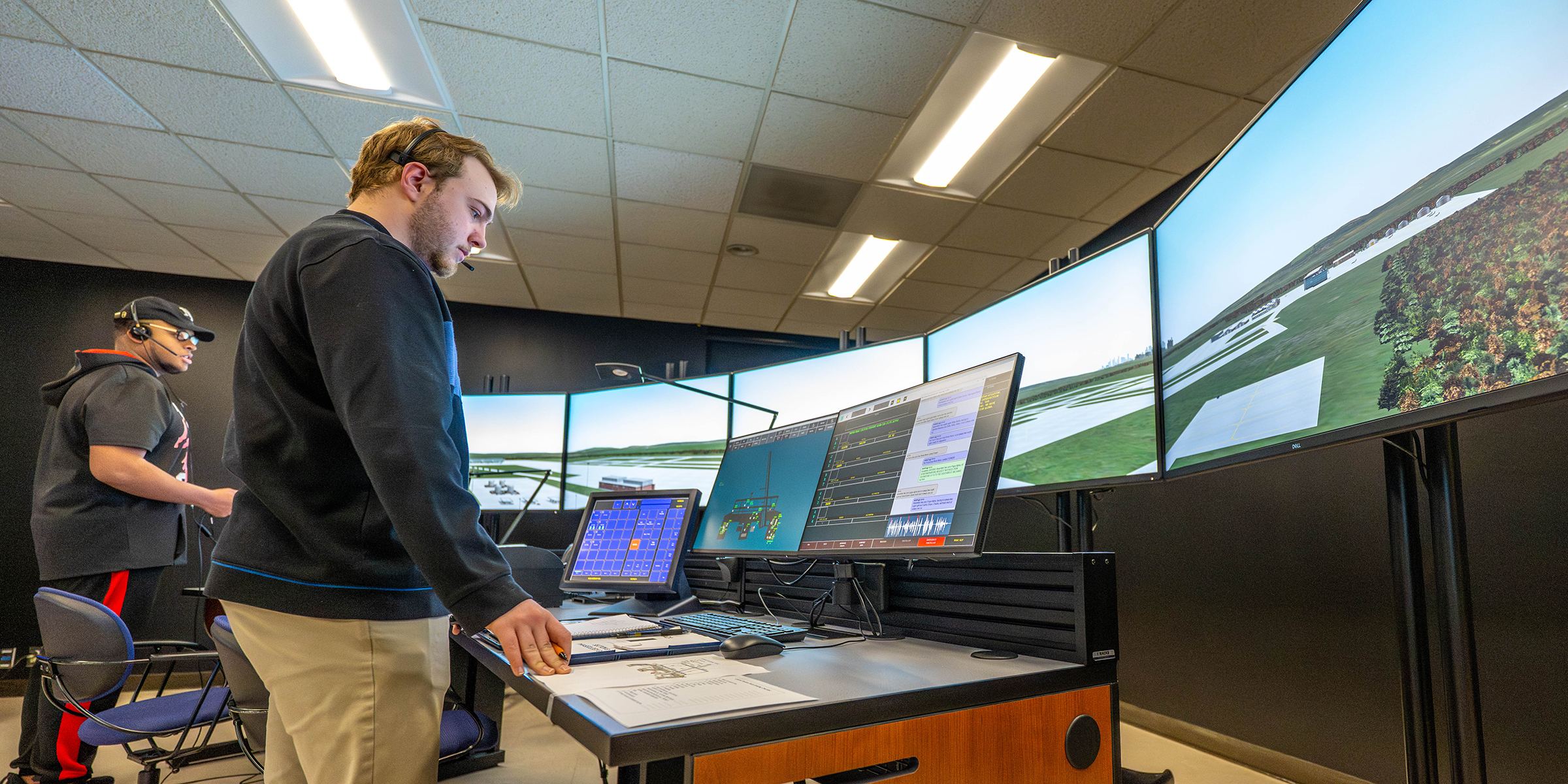

Angelo State University’s commercial aviation program has received FAA approval for both the Enhanced Air Traffic Collegiate Training Initiative (AT-CTI) and the Control Tower Operator Partnership Program (CTO-P), the FAA announced Thursday. The San Angelo, Texas, school is the 12th institution in the U.S. approved for the enhanced collegiate training program and the first in Texas.
The approvals apply to ASU’s Air Traffic Operations track, which was launched less than a year ago as part of the school’s Bachelor of Commercial Aviation degree program.
“We’re extremely excited about the future of our air traffic program and the multiple opportunities available for our students,” said Mark Arzate, lead air traffic operations instructor. “Angelo State now has three streamlined entry avenues for air traffic control. Having the standard AT-CTI, CTO-P and Enhanced AT-CTI options will provide students that meet all the specified requirements for each endorsement an entry-level preferential hire into either a contract tower or into the FAA.”
Students who complete the enhanced program and meet FAA assessment, medical and security requirements can move directly to facility training rather than attending the FAA Academy in Oklahoma City. ASU graduates approved through the CTO-P track can also begin on-the-job training at a tower in the Federal Contract Tower system.
The new designations follow the university’s initial AT-CTI approval in July 2025. Angelo State said students began using its new simulator lab in January, and that the FAA conducted a site visit last month, in April.
According to the university, the process included adding training scenarios and aligning its lab with FAA Academy standards. The Department of Transportation said the Angelo State agreement covers the school’s control tower program, giving successful students a path to placement at an FAA air traffic control tower.
“We’re laser-focused on filling our FAA facilities with the best and brightest controllers,” said FAA Administrator Bryan Bedford. “Expanding opportunities, like this one in Texas, help us strengthen our workforce and continue to protect the safety of the American travelling public.”


0 replies