















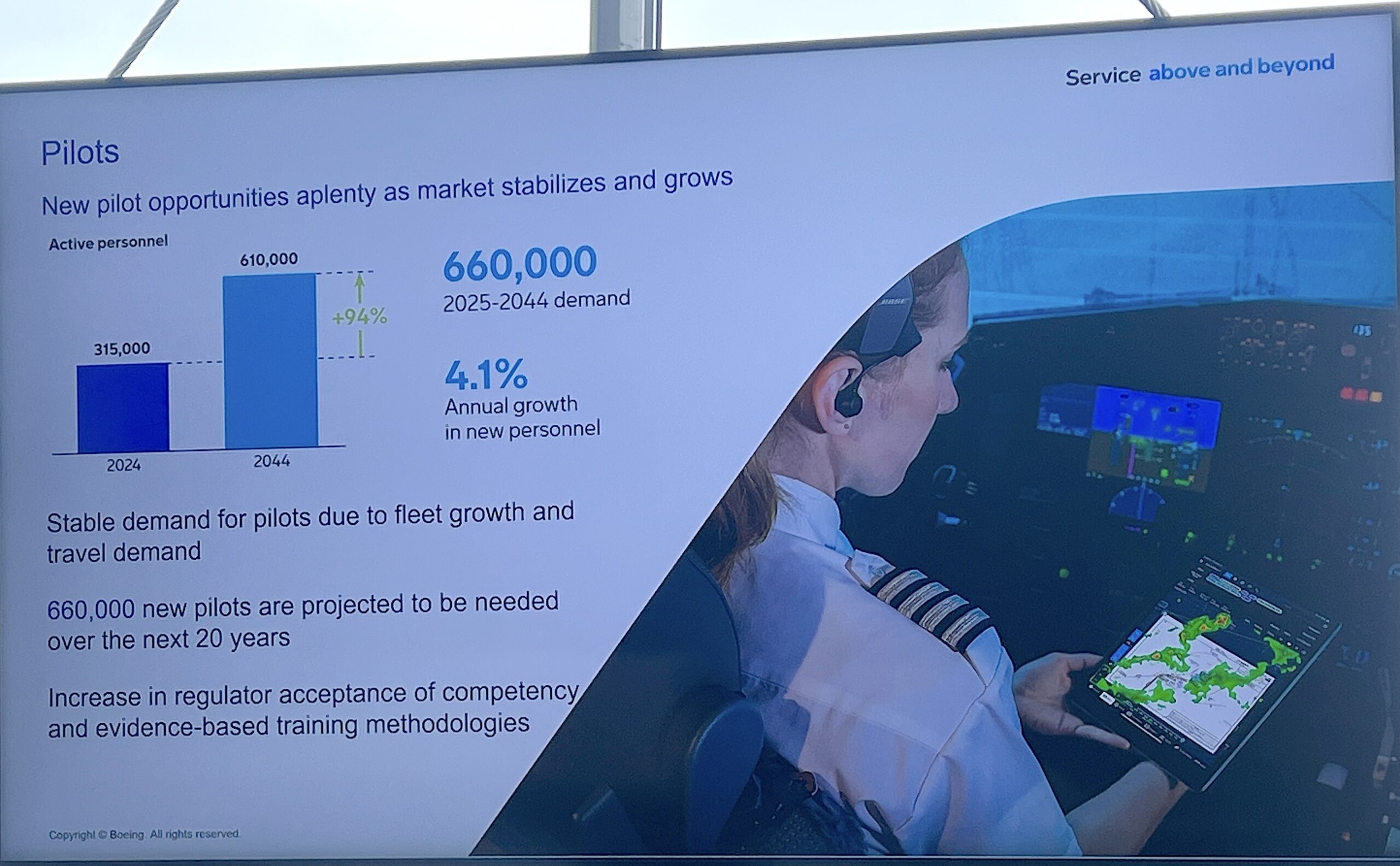

Boeing’s latest 20-year forecast, released today, predicts a need for nearly 2.4 million more commercial pilots, technicians and cabin crew members between now and through 2044. The forecast, which subdivides the requirements geographically as well as by position, calls for a total global shortfall of 660,000 pilots, 710,000 technicians and 1 million cabin crew members.
By region, the biggest demand is Eurasia, with need for 550,000 new personnel. North America is next with 435,000 followed by China at 426,000. Boeing said two-thirds of the vacant positions will be due to attrition as current aviation professionals retire. The remainder are attributed to industry growth over the next two decades.
Chris Broom, Boeing VP of commercial, training solutions and global services, said, “As commercial air traffic demand continues to outpace economic growth and the global fleet expands to meet demand, our industry will keep the fleet flying safely and efficiently by supporting workforce development for carriers worldwide. The industry is investing in technologies, including mixed reality—an immersive blend of physical and digital environments that enhances hands-on learning and situational awareness. Boeing is supporting customers with digitally advanced aviation training products and services to meet their needs. The bedrock of our approach remains competency-based training and assessment methodology to ensure high-quality aviation training.”


If it were only so. A bit of “pie in the sky” wishfull thinking as fuel and seat costs rise amid a growing number of environmental concerns that a diminishing marketplace can support. Hasn’t the industry reached the top of the bell curve a few years ago considering the Covid effects and inflationary costs?
The U.S. is going to have to revert to European standards(750 hours, or whatever it is) to get pilots in the seats.