














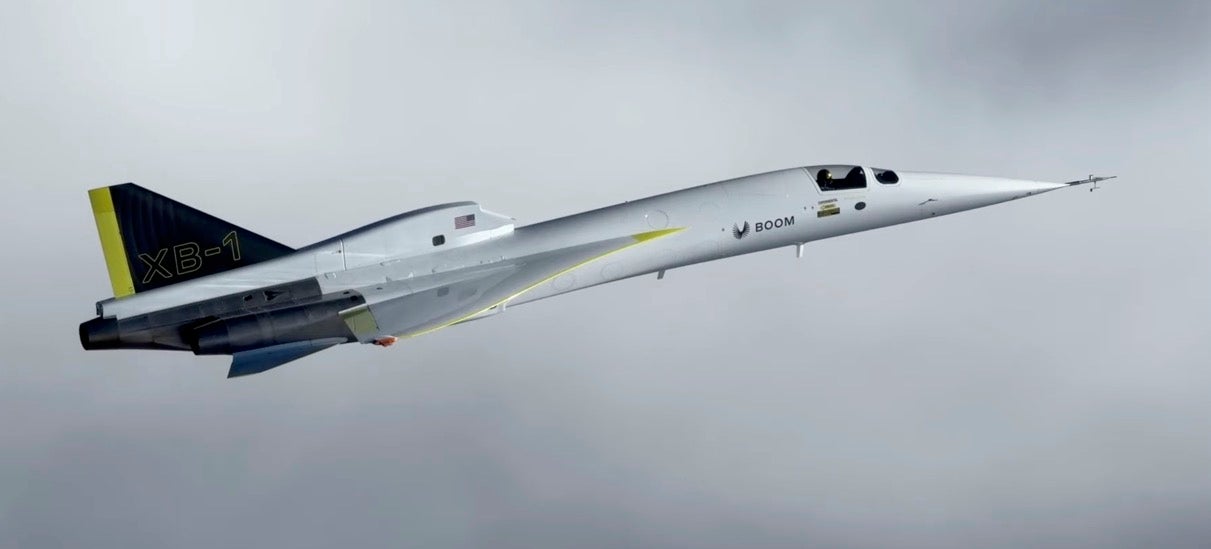

Boom Supersonic’s XB-1 test aircraft made a splash with its first supersonic flight two weeks ago, but it didn’t make a boom and that, after all, was the point. The startup’s XB-1 prototype exceeded Mach 1 three times on the Jan.28 flight but those in the flight path wouldn’t have been able to tell. “Specialized microphone arrays placed in strategic locations under the flight path confirmed that sonic booms did not reach the ground as XB-1 flew at a top speed of Mach 1.12,” company founder Blake Scholl told Fox News.
Scholl said the flight profile was calculated to keep quiet by using physics. “It’s actually well-known physics called Mach cutoff,” Scholl said. “When an aircraft breaks the sound barrier at a sufficiently high altitude, the boom refracts in the atmosphere and curls upward without reaching the ground. It makes a U-turn before anyone can hear it.”
Mach cutoff varies with atmospheric conditions and aircraft speed so technology to address those variables in flight is needed to keep the planes quiet. Scholl said he’s confident they can do that reliably. A bigger barrier facing Boom is political and regulatory. Scholl said he hopes the sonic flatline from the Jan. 28 flight will convince federal authorities to end a ban on overland supersonic flight as his company gets ready to build airliners. The first Overture supersonic airliner is projected to come off the assembly line in three years and enter service by the end of 2029.
