















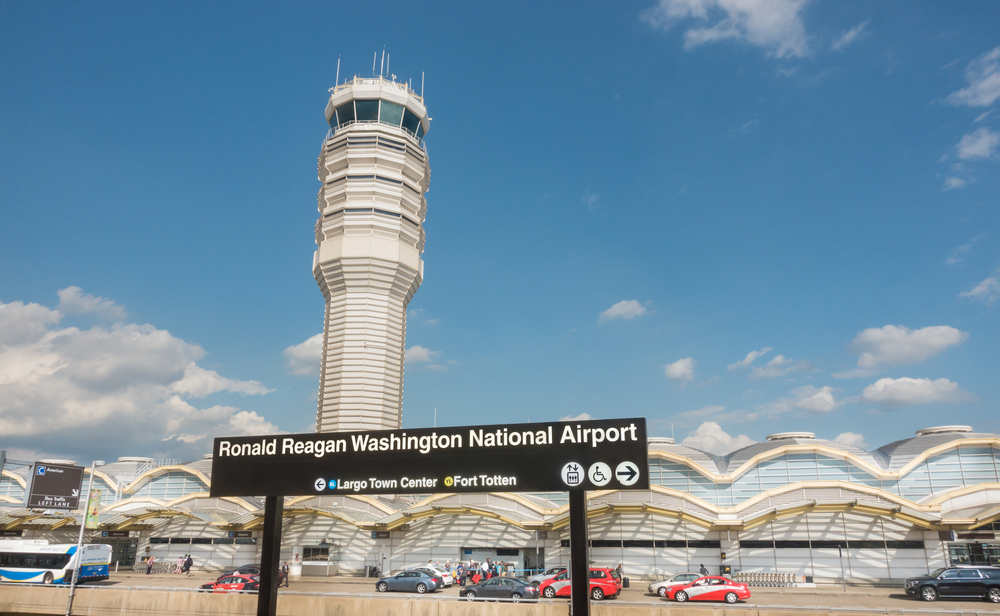

The U.S. Department of Transportation said Thursday that Transportation Secretary Sean Duffy visited Ronald Reagan Washington National Airport (DCA) to mark the installation of electronic flight strips in the air traffic control tower. The new system replaces the paper-based system historically used to track aircraft movements and flight information and is part of the Terminal Flight Data Manager program.
Electronic flight strips provide digital updates to flight data and allow information to be shared among tower positions during daily operations. The system is intended to support coordination as controllers manage traffic levels, weather changes and other factors that affect surface movement and sequencing. Controllers have relied on paper strips for decades to record and pass along operational details.
Electronic flight strips have been in testing and development for decades, but routine, widespread operational use in U.S. air traffic control towers began mostly in the early 2020s under the FAA’s Terminal Flight Data Manager modernization program. Deployment has so far expanded gradually, and DCA is among the latest facilities to implement the system.
The announcement comes the same week that the National Transportation Safety Board published its final report on the January 2025 midair collision near DCA, which examined factors including controller workload, communications, traffic management and information-sharing in the terminal environment. The report issued recommendations to the FAA and the Department of Transportation related to safety processes, coordination and data use in air traffic operations.


A giant leap forward from 1930s technology. I realize that the FAA has not always been quick to adopt new tech and that a conservative approach is usually best. But 90 years?
I’m not sure the Department of Transportation was successful in convincing people that they are rapidly advancing aviation safety with this press release.
I’m an air traffic controller with 34 years experience. I also happen to have a BS in physics. People are overly enamored with technology & fail to understand that, while technology like this is very pretty, it does very little to enhance safety. It’s a bit like the anecdote of NASA spending millions to develop pens that could write in zero gravity while the Russians sent their astronauts to space with pencils. But then, people really don’t understand what air traffic controllers do.
The actual skill of an air traffic controller is twofold:
In other words, know how to deal with things when things go wrong. The nice thing about paper strips is that if you have a power failure, your strips don’t disappear. Just because a technology is old doesn’t mean it is not the best solution.
The core skill of an air traffic controller - the one that really matters when it comes to preserving lives - is to be able to function when everything around you is falling apart. All technologies can fail. Back-up power is nice but sometimes even a power burp can cause a loss of data. Something that I never have to worry about when my data is written in ink on a piece of paper.
We have lots of great technology that makes my job easier to do but if I can’t work traffic safely with only a working radio, then I am not a very good controller. I want back-up systems on top of back-up systems. Failing technology is worse than no technology because then I have to not only work the traffic but I have to try & fix the technology in addition to working traffic. Simple technology is best because it rarely fails. Resilience is far more important than a bunch of bells & whistles.
I’m with you, DIs! Updating assigned altitude changes on a strip with a pen or pencil is much faster than typing it in on a keyboard. But the first thing crossing my mind was those power fluctuations. Momentary or longer power loss doesn’t happen often, but when it does, with paper strips you always have that as backup. I can’t imagine not having paper strips as backup.