
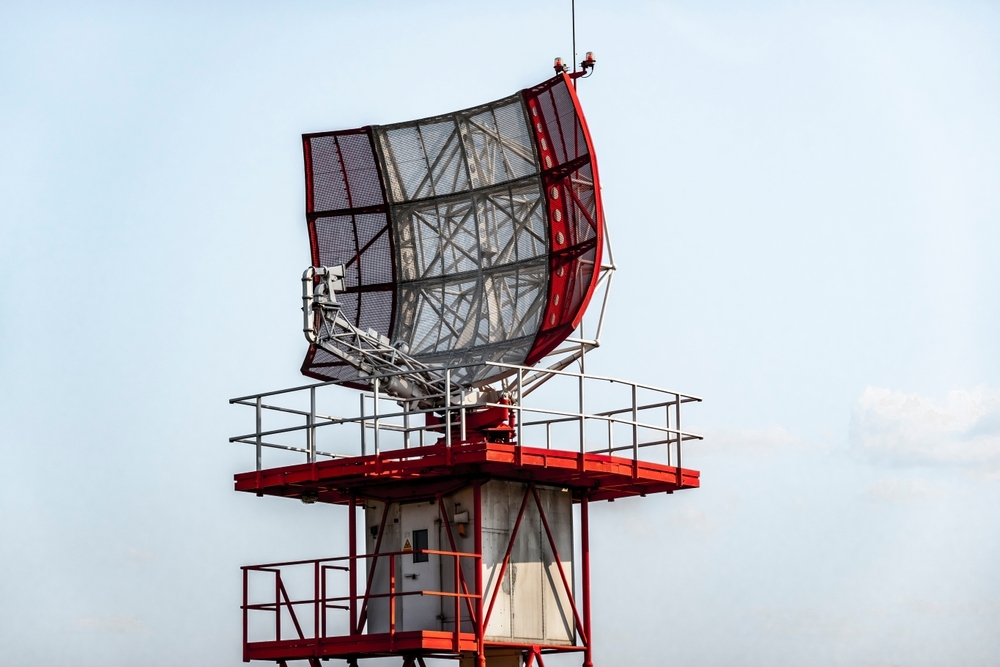

The Federal Aviation Administration plans to replace hundreds of aging radar systems across the National Airspace System under new contracts awarded to RTX and Indra, the agency announced Monday. The effort is part of a larger air traffic control modernization program and is intended to address reliability and sustainment concerns associated with current infrastructure that, in many locations, has been in service for decades.
According to the U.S. Department of Transportation, the contracts call for the replacement of as many as 612 ground-based radars by June 2028 using commercially available surveillance technology. Deployment is expected to begin this quarter and will occur in phases, with higher-traffic regions addressed first.
Collins Aerospace, RTX’s parent company, said its part of the contract is worth $438 million and includes systems like its Condor Mk3 and ASR-XM.
Transportation Secretary Sean Duffy said in a release that much of the current network dates to the 1980s.
“While our air travel system is the safest in the world, most of our radars date back to the 1980s. It’s unacceptable,” Duffy said.
FAA Administrator Bryan Bedford noted that many systems have surpassed their original design life and are becoming increasingly difficult and costly to maintain.
“Our radar network is outdated and long overdue for replacement. Many of the units have exceeded their intended service life, making them increasingly expensive to maintain and difficult to support,” Bedford said. “We are buying radar systems that will bring production back to the U.S. and provide a vital surveillance backbone to the National Airspace System.”
In addition to replacing hardware, the FAA intends to reduce the number of radar configurations currently in use across the National Airspace System, in a move the agency said aims to streamline maintenance and logistics. The radar effort follows, and is part of, a December announcement naming Peraton as prime integrator for a broader $12.5 billion air traffic control overhaul. According to the FAA, initial work under that contract includes transitioning remaining copper communications infrastructure to fiber, installing updated voice switches and expanding surface awareness systems at airports nationwide.