















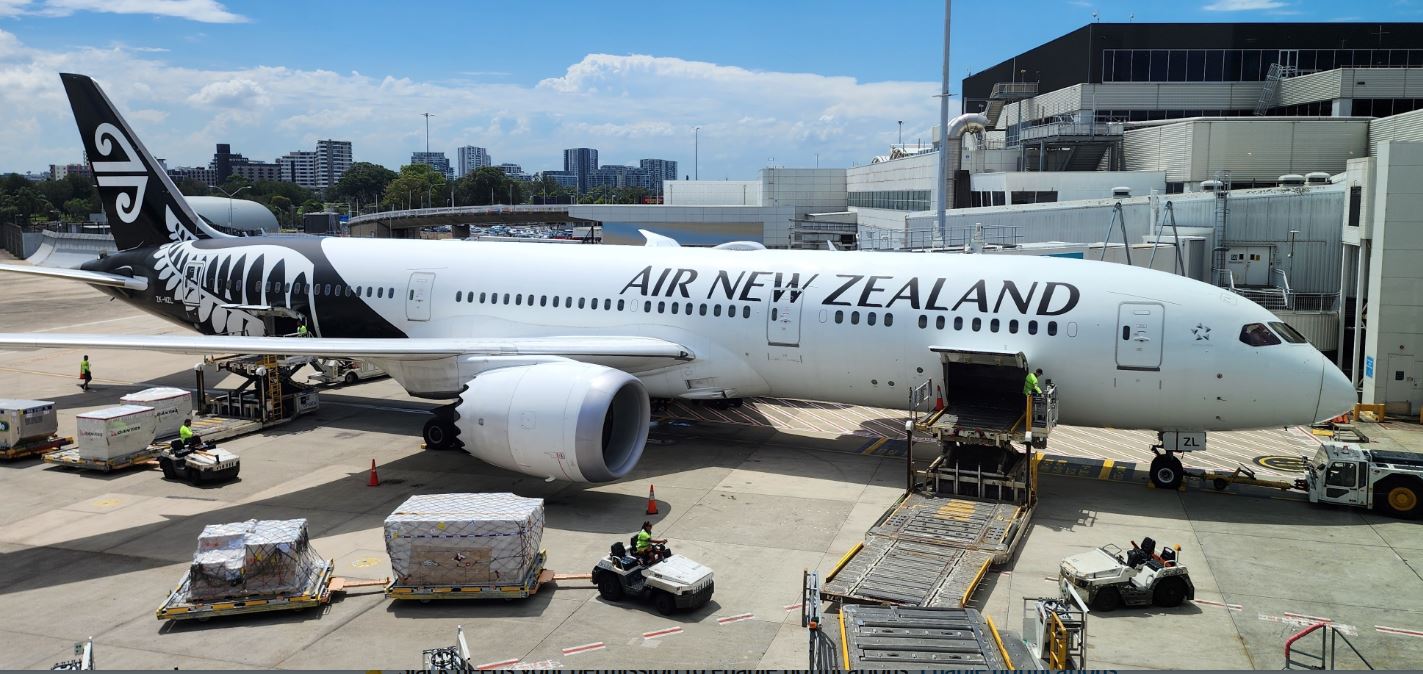

On Tuesday, the Federal Aviation Administration (FAA) said it has increased the maximum takeoff weight (MTOW) limits for the Boeing 787-9 and 787-10, giving airlines the option to carry more payload or extend range on the popular long-haul widebodies.
According to Boeing, the certification—referred to as increased maximum takeoff weight (iMTOW)—applies to both variants of the 787 Dreamliner family. The increase would bump allowable takeoff weight by about 10,000 pounds on the -9 and 14,000 pounds on the -10. In practical terms, that’s roughly an extra 3 metric tons of payload or more than 300 NM of range for the -9, and about 5 metric tons or 400 NM for the -10.
The added margin can help on hot-and-high departures, long stage lengths with alternate requirements, or routes where operators are routinely payload-limited. It also gives dispatchers more room to carry contingency fuel without bumping passengers or cargo.
All 787-9 and 787-10 aircraft assembled since December 2025 are structurally capable of the higher weights, with certification applied on an individual aircraft basis. Airline operators can choose when—and if—they want to activate the higher weight certification.
The increased MTOW can affect landing fees, climb performance margins, and runway requirements—factors crews may see reflected in performance calculations and release paperwork.
“These airplanes symbolize progress, and it shows the strength of our engineering, our partnership with our customers, and how the team is continuing to evolve the 787 Dreamliner family in a disciplined way to help our customers succeed for decades to come,” said Scott Stocker, 787 program vice president and general manager.

The takeoff weight increases allow more flexibility when performance limits, which do not change, allow. That is a good thing.
The statement that the increase helps in “hot and high” departures is not true. The maximum takeoff weight would still be limited by performance requirements. A proclamation by the manufacturer does not change the elevation of an airport and surrounding terrain or the ambient density altitude.