















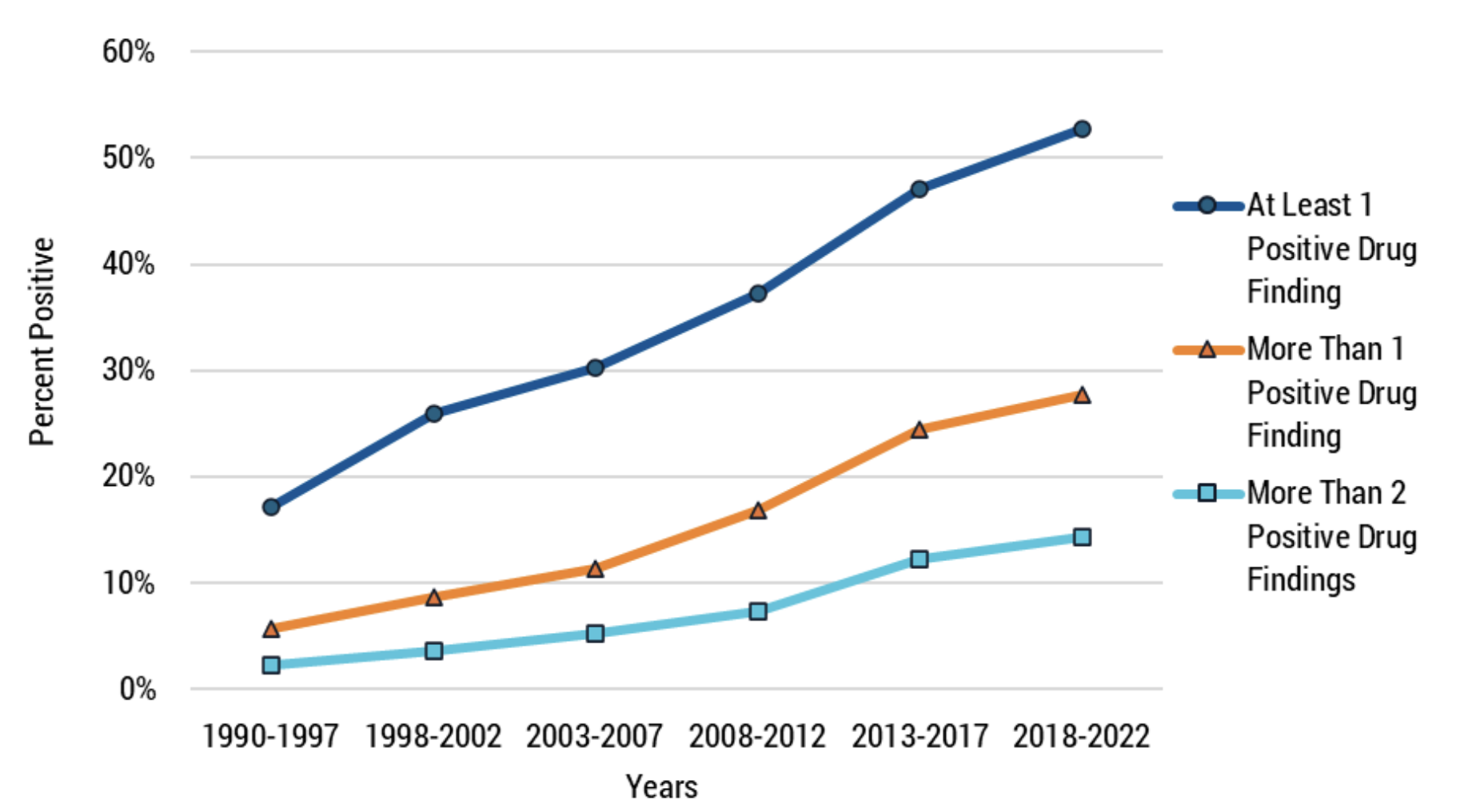

The National Transportation Safety Board has published an updated study on drug presence among fatally injured pilots, showing increases in both overall drug detection and the presence of drugs the agency classified as potentially impairing.
The report, 2018–2022 Update to Drug Use Trends in Aviation, examined toxicology results from 930 pilots killed in U.S. civil aviation accidents from 2018 to 2022. According to the NTSB, 52.8% of those pilots tested positive for at least one drug of any type, including medications such as cardiovascular drugs, cholesterol-lowering drugs and nonsedating over-the-counter medications. The study separately found that 28.6% tested positive for drugs classified as potentially impairing, a category that includes some prescription and over-the-counter medications, controlled substances and illicit drugs.
The most commonly detected potentially impairing drug remained diphenhydramine, a sedating antihistamine used in many allergy and nighttime cold medications. The NTSB also reported that illicit drug detection rose to 7.4%, with the increase primarily tied to delta-9-THC, the primary psychoactive chemical in marijuana. Drug presence was lower among Part 135 pilots than among general aviation pilots, lower among pilots with an active medical certificate than those without one, and lower among pilots holding airline transport or commercial certificates than among private, sport or student pilots, or those with no certificate.
The NTSB noted that a positive toxicology result does not, by itself, establish impairment. The agency also cautioned that pilots should not infer that a drug may be used safely or legally based on how it was classified in the report, noting that some drugs outside its potentially impairing category may still have impairing effects, may be used to treat conditions that affect flying or may be subject to FAA restrictions.


This appears to be an increasingly significant issue, and more often than not it involves legal medications. Giving training, including for certificates/ratings and flight reviews, I find a lot of folks don’t have a good grip on how to determine whether it’s safe to fly with various legal meds. AOPA’s Basic Medical Education Course (free to all pilots regardless of AOPA membership status) discusses these issues (and a whole lot more about self-determination of fitness to fly) in depth – a very good investment of an hour or less. For information about the specific medications, including whether flying is allowed while taking and if not, how long to wait before flying) see AOPA’s Medication Database and the FAA Do Not Fly/Do Not Issue list.
Be careful in drawing conclusions from statistics. The statistics mentioned here do not specify the concentration of the drugs detected. For example, it is OK to fly with a detectible amount of alcohol in your blood as long as the concentration is low enough. The same is true for many prescription drugs that only become “illegal” above a certain concentration. There are of course certain drugs that are prohibited at any concentration.
This looks to me like the report was written by someone with an other-than-safety agenda. If the focus was on safety, the report would be about the percentages with levels of potentially impairing drugs at levels likely to lead to material impairment. But I’m guessing that wouldn’t give scare-headline results that would support that other-than-safety agenda. Someone’s budget, would be my first guess.
I find it insulting and misleading that the first pie chart shown on page 10 of the report shows the percentage of pilot types involved but then lumps in sport pilots AND people with no pilots license at all in the same group. Why break out all other pilot types except for sport pilots!?!? If you scroll on down to page 17, you’ll see that people with no pilots license at all accounts for 21 of the 45 fatal incidents in the “Sport Pilot/None/Other” group shown in the graph on page 10! Why not break out the sport pilot group like all the other pilot groups and show that we (I am a sport pilot) have the lowest percentage of accidents of any pilot group?