
















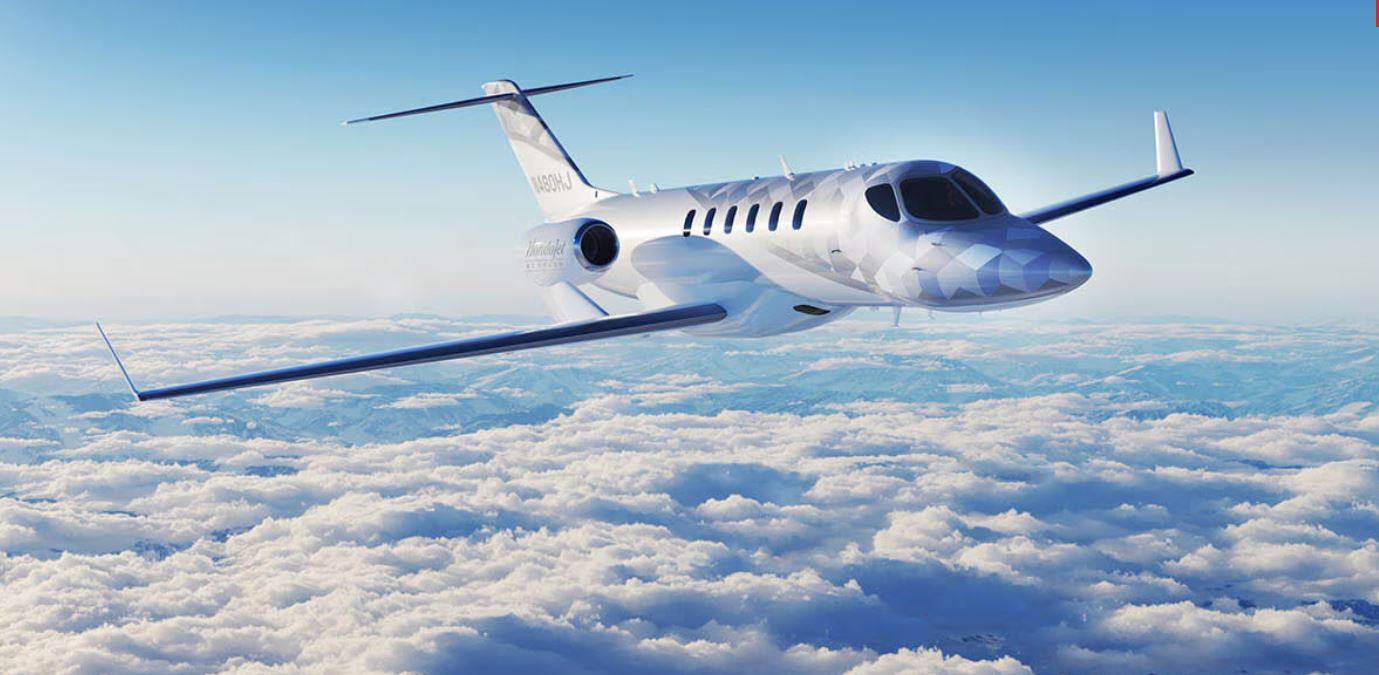

The Federal Aviation Administration (FAA) is proposing additional certification requirements for Honda Aircraft’s HA-480, a new derivative of the HondaJet HA-420 that is designed to operate as high as 47,000 feet.
The proposed special conditions, published Monday, focus on the airplane’s pressurized fuselage and the additional loads created when flying at higher altitudes.
Current Part 23 rules do not fully address aircraft designed to operate above 45,000 feet. For the HA-480, the FAA is proposing that Honda use a 1.67 safety factor, rather than the standard 1.33 factor, when showing that the airplane’s pressure vessel can withstand the maximum cabin pressure differential.
The higher factor would apply to the fuselage and other parts of the pressure vessel, including doors and windows. The FAA said the additional margin is needed because of the higher pressure differential associated with the HA-480’s high-altitude operations.
The FAA also considered whether additional requirements would be needed to protect occupants following a loss of cabin pressure. It determined that separate special conditions are not necessary because updated Part 23 rules already address depressurization for airplanes operating above 45,000 feet.
Honda Aircraft originally applied to amend the HA-420 type certificate to add the HA-480 in 2019. The airplane is a twin-engine, normal-category aircraft with seating for up to 11 people and a maximum takeoff weight of 17,550 pounds.
The FAA is accepting comments on the proposed special conditions through Nov. 19, 2026. The agency could modify the requirements based on feedback received.


I wonder if it would be more cost effective to just certify the plane to FL450, to avoid the additional requirement the FAA wants. I can’t imagine wanting to fly at FL470 on a regular basis. I flew a Citation Ultra which is certified to FL450 and never had to fly any higher than FL430 for weather and reduced fuel consumption. Any higher the loss of cruise performance wasn’t worth it.
Ah, certified to Part 23 not Part 25.
The B707 and B727 were certified to 45,000 feet as Part 25 or predecessor regulation.
I was up to 45,000 feet one night over YVR, felt high (well, … ;-). Had to go there to test new flight data recorder system, regulators tended to ignore that transducer and data wiring would very probably work just like testing on ground.
Years later a fellow DER and I each came back from different flight tests motivated to talk the FAA out of things like trying to achieve -0.25G with 747 and ducking under glide slop on final, testing GPWS. FAA agreed with both of us.
My fading memory of 737-200, despite working performance calculations for it, was that it was not designed to go as high as B727. A later model may have been cleared to higher, with more thrust.
OTOH with its big wing the 767-200’s best trip fuel was high even on 150 nmi shuttle run.