














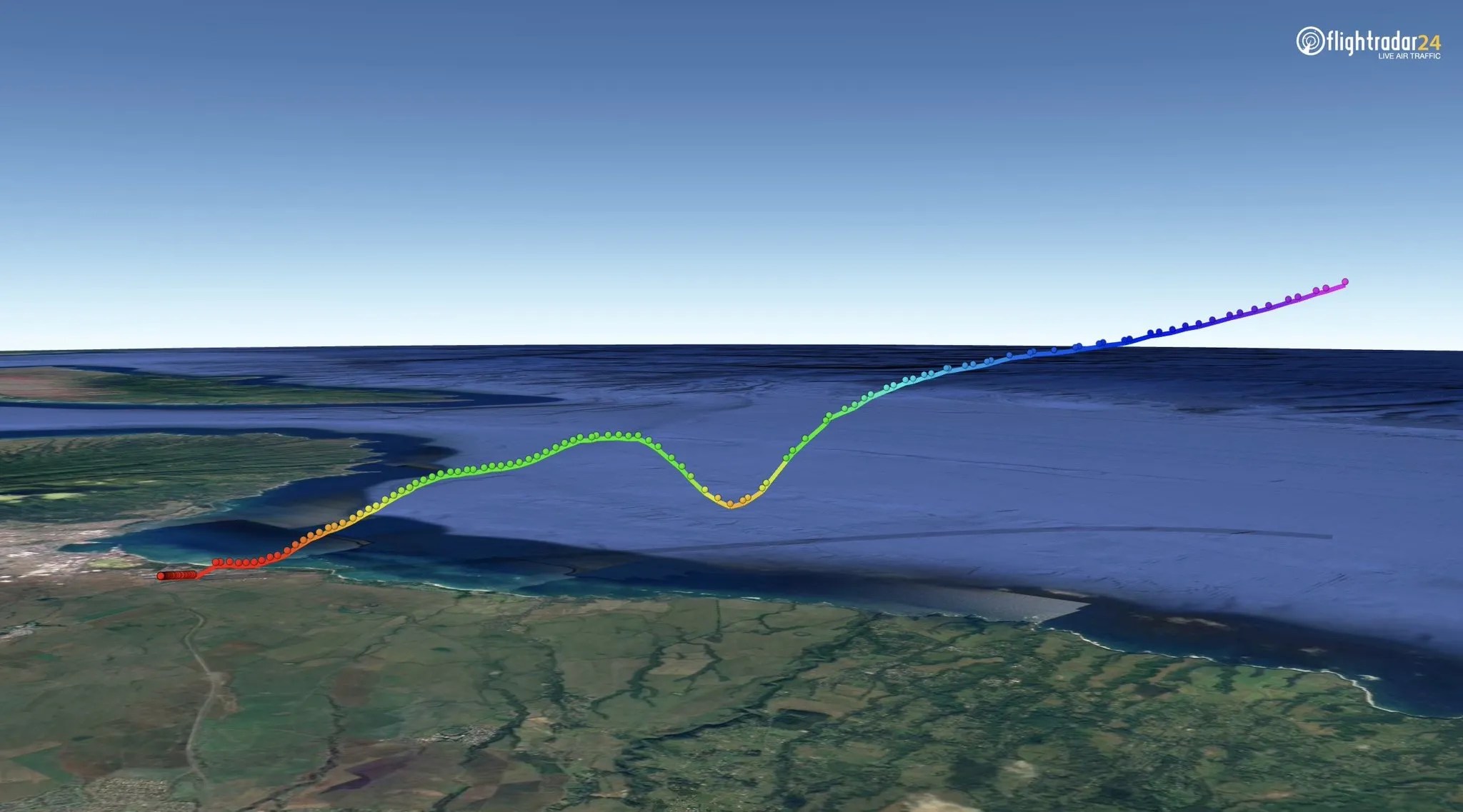

The NTSB and FAA are investigating a Dec. 18, 2022, incident in which a United Boeing 777 appeared to depart controlled flight into a steep descent after departing Maui for San Francisco, according to the industry data site The Air Current. The aircraft climbed to 2200 feet after departure and then entered the descent, coming within about 800 feet of the Pacific Ocean.
According to data distilled from FlightRadar24, the 777 descended at up to 8600 FPM before recovering, resuming the climb and continuing to San Francisco without incident. Flight loads maxed at 2.7 G’s and the entire incident occurred over a 45-second period. Weather at Maui was reported as heavy rain and a broken layer at 900 feet with a 2000-foot overcast. The incident occurred on the same day that a Phoenix to Honolulu Hawaiian Airlines flight encountered severe turbulence, injuring 25, six seriously. That flight also landed without incident.
United did not report the incident to the NTSB, but the crew filed a routine safety report after it landed in San Francisco, presumably through the FAA’s voluntary Aviation Safety Action Program and/or NASA ASRS program. The FAA reviewed the incident and said it took “appropriate action.”
