














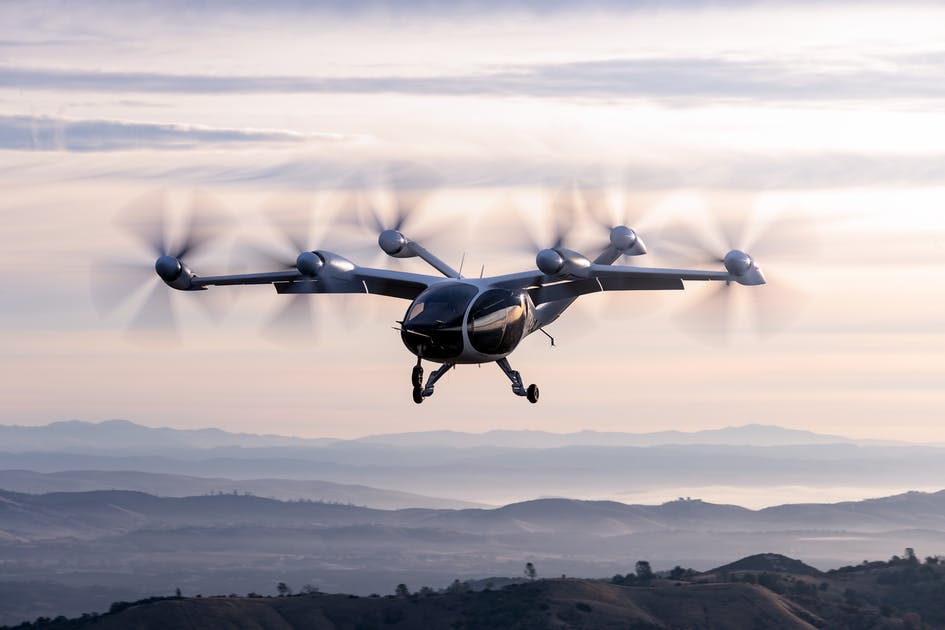

The FAA has proposed a rule that would add powered-lift operations to the regulations covering commercial ops. The rule primarily proposes updating the definition of “air carrier”, which currently only refers to “airplanes” and “rotorcraft.” According to the FAA, the proposed changes are part of “a multi-step process of updating the regulations that apply to aircraft that traditionally have not operated under these parts.”
“This proposed rule would add powered-lift to these definitions to ensure the appropriate sets of rules apply to air carriers’ and certain commercial operators’ operations of aircraft that FAA regulations define as powered-lift,” the agency said in its notice of proposed rulemaking (PDF). “This proposed rule is an important step in the FAA’s integration of new entrant aircraft in the National Airspace System (NAS).”
The proposed rule will be open for comment for 60 days after its publication in the Federal Register. The agency is also proposing a Special Federal Aviation Regulation (SFAR) to “establish temporary operating and airman certification regulations for powered-lift” while it gathers information to develop permanent regulations. Defined as “a heavier-than-air aircraft capable of vertical takeoff, vertical landing, and low speed flight that depends principally on engine-driven lift devices or engine thrust for lift during these flight regimes and on nonrotating airfoil(s) for lift during horizontal flight,” powered-lift designs have become a focal point over the last several years as companies in the urban air mobility (UAM) sphere work to develop commercial air taxis.
