
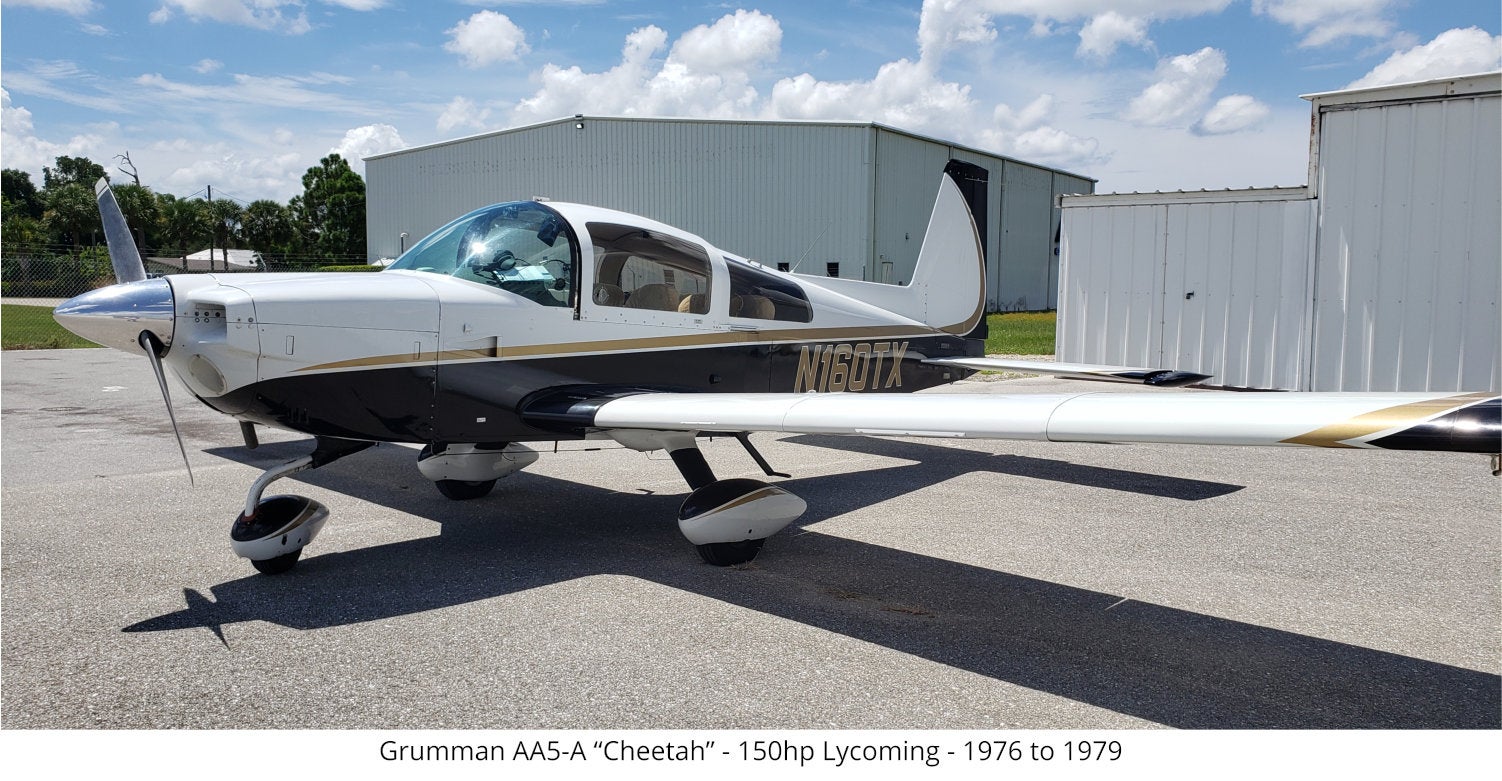

Fans of the most-desired “glued-together” Grumman American-series piston singles are breathing a sigh of relief. The FAA has rescinded an airworthiness directive (AD) originally introduced in December 2021 targeting delamination questions regarding AA-5A Cheetahs and AA-5B Tigers. The AD, which was challenged by 41 commenters, including the Aircraft Owners and Pilots Association (AOPA), was based on an AA5 Traveler that crashed on landing when, the FAA said, its “outboard elevator attach bracket on the horizontal stabilizer detached” due to bondline corrosion and delamination. The Traveler, produced for two years in the early 1970s, was the precursor to the 150-HP Cheetah and 180-HP Tiger, whose tail surfaces were redesigned (among many other refinements) largely under the direction of aerodynamic wizard Roy LoPresti.
The December AD followed up on a July AD applied to AA-5s as well as the two-seat AA-1 series (AA-1, AA-1A, AA-1B and AA-1C). The AA-5A/B mandate would have required what critics described as a labor-intensive inspection process for bondline delamination that goes well beyond current requirements.
Commenters argued that existing maintenance practices and requirements already mandate that mechanics inspect for just this sort of delamination visually and by tapping to identify areas of delamination and corrosion. AOPA recommended that the FAA issue a Special Airworthiness Information Bulletin urging owners and mechanics to ensure the inspections were effectively completed during every annual inspection.
AOPA Senior Director of Regulatory Affairs Chris Cooper said, “Additional requirements beyond those maintenance procedures that safely identify and correct aircraft damage can be burdensome, costly, and in this case, expose the aircraft to even further damage. AOPA recognizes the seriousness of delamination, and we will continue to work with the Grumman community and FAA to emphasize the importance of following the required maintenance procedures.”
In its ruling rescinding the AD, the FAA wrote, “[T]he instructions in the airplane maintenance manual are sufficient to detect the type of damage that is believed to have led to the originating accident, as well as similar damage on the rest of the airplane. The FAA further agrees that the original findings were not indicative of an unsafe condition, but instead indicative of incorrectly followed maintenance procedures. Based on this assessment, the proposed inspection in the NPRM would exceed what is sufficient to detect the main issue of bondline delamination.”