
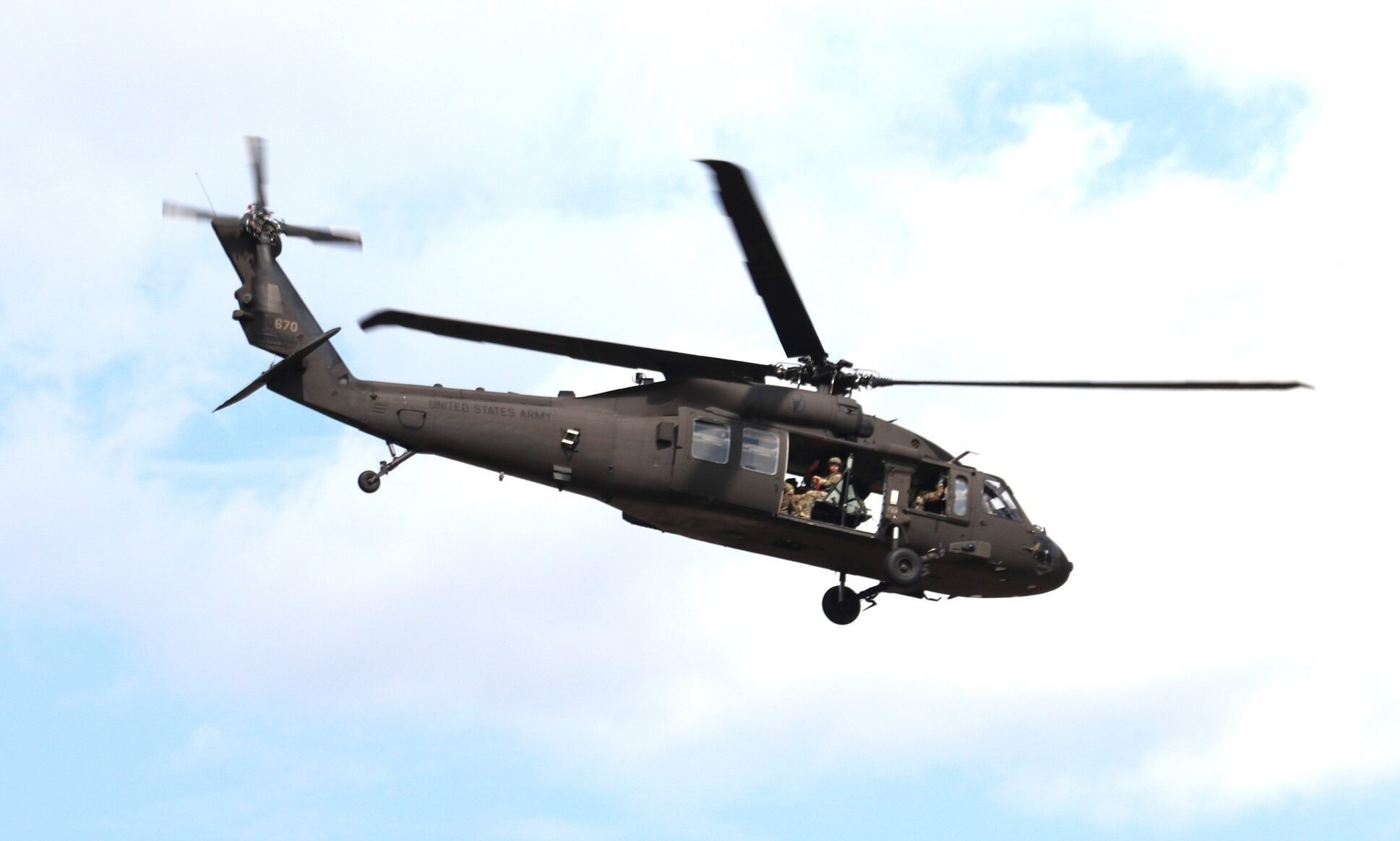

The U.S. government acknowledged the responsibility of both an Army helicopter crew and an air traffic controller in the midair collision that claimed 67 lives over the Potomac River in January. In a Wednesday court filing responding to a wrongful death lawsuit, federal attorneys admitted that the Army pilots’ failure to “see and avoid” the American Airlines regional jet, as well as a controller’s lapse in applying visual separation procedures, played a role in the accident near Washington, D.C.’s Reagan National Airport.
Nonetheless, the government did not concede that controller actions were directly responsible for the crash, stating in the filing that it “denies that any alleged negligence of the air traffic controllers on position in Washington Tower during the accident was a cause-in-fact and a proximate cause of the accident and the death of DECEDENT.”
Even so, it wrote that “the United States admits that it owed a duty of care to Plaintiffs, which it breached, thereby proximately causing the tragic accident on January 29, 2025.”
The Jan. 29 collision was the deadliest aviation crash in the U.S. in more than 20 years and occurred as American Airlines Flight 5342 approached Reagan’s secondary runway and collided with a Black Hawk helicopter on a routine training mission. Both aircraft plunged into the Potomac.
Investigators noted that the Black Hawk flew 78 feet above its prescribed altitude. According to the NTSB, the FAA documented 85 near misses in the area over a three-year span.
While the government accepted partial blame for the collision, it denied that airspace over Reagan constituted an “accident waiting to happen” and pushed back against broader claims of systemic failure.
American Airlines and its regional partner, PSA Airlines, have filed motions to dismiss, contending the federal government bears the primary responsibility for the collision.
Robert Clifford, an attorney for the family of one victim, said the filing marked an acknowledgment of “the Army’s responsibility for the needless loss of life.”
Meanwhile, the FAA has since suspended visual separation protocols near the airport and restricted military helicopter flights in the vicinity. A provision related to the DCA airspace that would require military helicopters to utilize warnings compatible with commercial aircraft TCAS systems was included in a proposed version of the 20216 National Defense Authorization Act. The provision drew significant backlash from the NTSB and others, who noted that the provision allows the requirement to be waived. NTSB Chair Jennifer Homendy contended in a letter that the requirements would essentially return the situation in practice to that which was in place prior to the Jan. 29 crash.