

The National Business Aviation Association estimates that so-called “hangar rash”—accidental ground damage involving business aircraft—can run as high as $150 million per year, industrywide. The damage includes much more than just the cost of repairs, which can run into tens of thousands for even a minor scratch. There is also the cost of fleet downtime and diminution of resale value for an aircraft with damage history. And with composite airframes, damage repairs can run exponentially higher in cost than with traditional aluminum aircraft. All these factors can also cause insurance rates to increase exponentially.
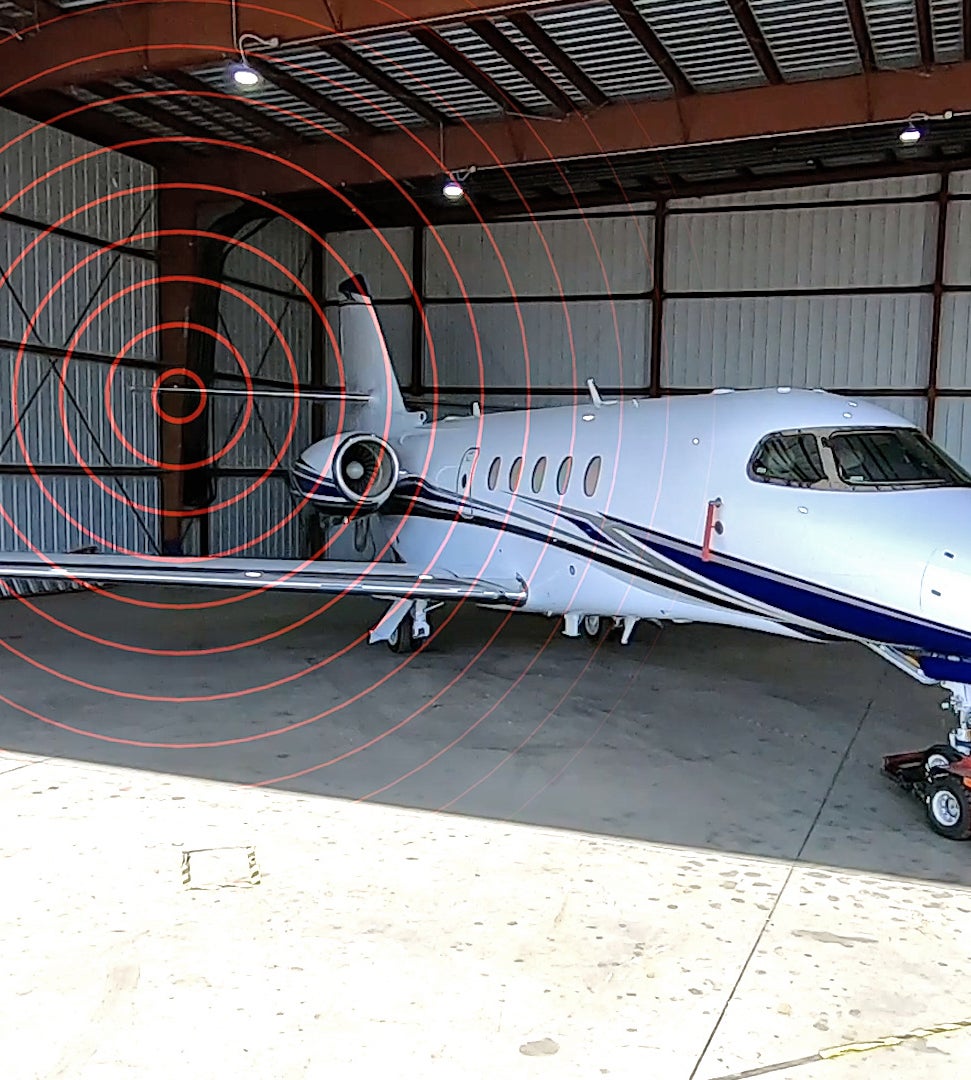
With this in mind, a California company has developed an Artificial Intelligence-based product that makes moving aircraft in and out of hangars safer. Hangar Safe consists of an array of high-definition cameras mounted inside the hangar. They are connected to proprietary software that works on the same proximity-warning principles as automotive backup cameras. There is nothing installed on the aircraft, and all that is required inside the hangar is electrical power and an internet connection.
When the cameras detect a dangerously close situation, sirens and flashing LED lights warn the tug drivers and wing walkers. Those roles are not eliminated, just enhanced by Hangar Safe technology, according to the company. And should the warnings go unheeded and the aircraft gets too close to an obstruction, the system sends an email to the hangar manager with video recording of the event.
To date, the system can only warn of danger involving aircraft in peril of contact with the structure of the hangar. But according to Hangar Safe, software that can also detect when one aircraft gets dangerously close to another aircraft will be available sometime next year.
Hangar Safe is a patented, subscription-based product costing $900 per month and up, per hangar, based on the size of the building. There is also a one-time installation fee, starting at $2,500—depending on the size and complexity of the hangar interior. Hangar Safe says it is currently appropriate for hangars of 10,000 square feet or larger, but the company invites anyone interested in exploring prospects for a downsized version to contact them.