















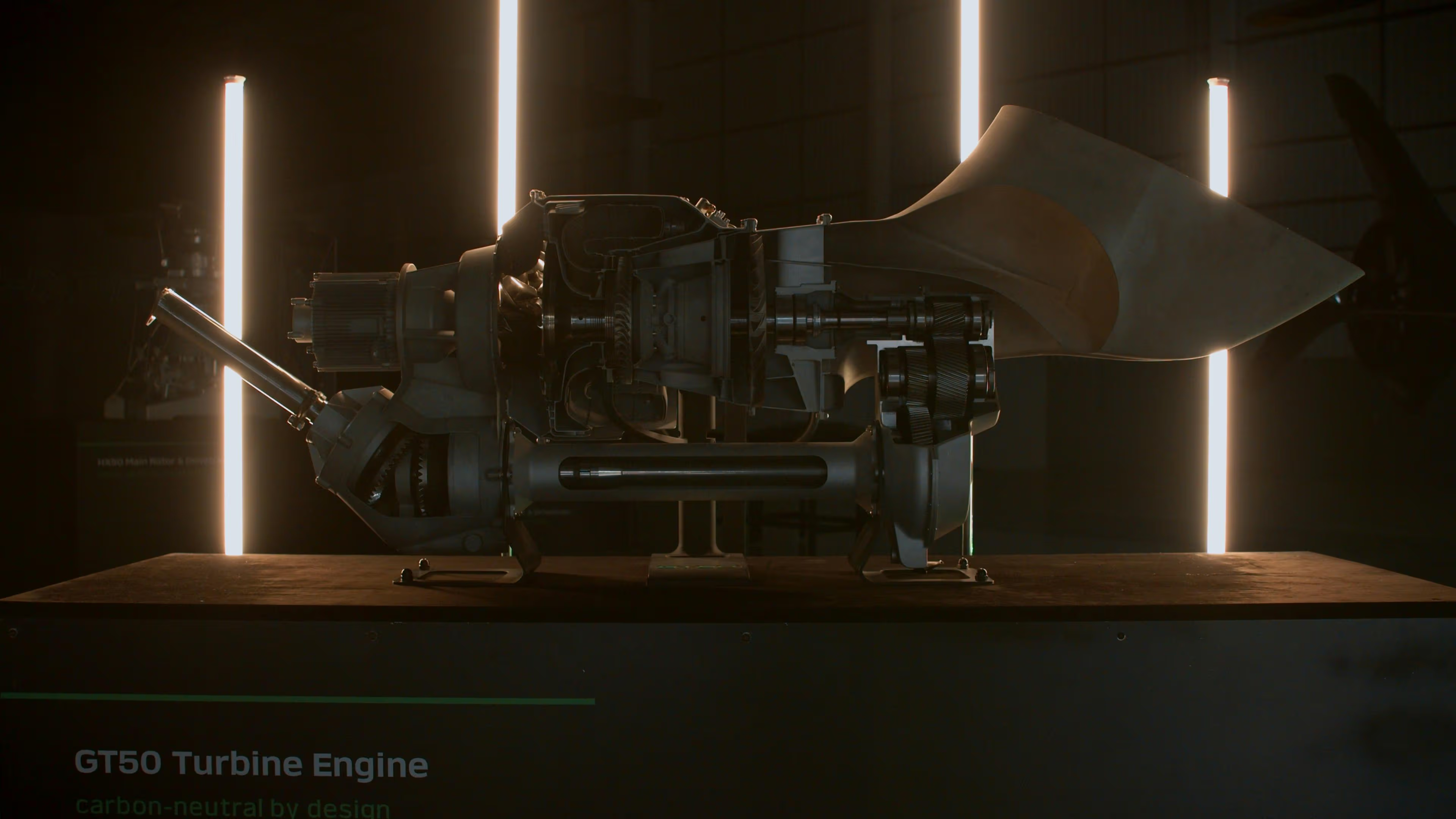

Hill Helicopters said Wednesday that its first GT50 prototype reached self-sustaining operation during a July 20 test, marking the first time the engine ran under its own power. The company describes the GT50 as the first helicopter turbine engine designed, manufactured and developed entirely in Britain since the 1960s. Hill intends to use the engine in its five-seat HX50 helicopter.
Initial Runs
Hill said engineers first checked the lubrication, cooling, ignition and instrumentation systems. They then cold-cranked the engine at progressively higher speeds to check for vibration, internal contact and other mechanical issues. The engine operated near 27,000 rpm after reaching self-sustaining speed. It remained stable at approximately 24,000 rpm and briefly reached 33,000 rpm, according to the company.
“Given that this is our first engine, we have been intentional to put a lot of sensors and instrumentation in various positions in the engine,” Eric Welch, who supports the GT50 program’s instrumentation and control systems, said during the company presentation. “We’re measuring temperatures, pressures, speeds, flow rates, vibration.”
Testing and Schedule
Before the powered run, engineers found that the lubrication system’s pressure pumps were supplying more oil than the scavenge pumps could remove. Hill said the team recalibrated the pumps and cleared the excess oil before continuing. The company subsequently ran the engine a second time and reported similar results. A borescope inspection conducted between the runs found no internal rubbing, according to Hill.
“The next stage now is to push the core of the engine all the way through its operating range,” Hill founder Jason Hill said during the presentation. “As we do that, we can then determine whether or not we’ve got the compressor and the turbine matched properly, and just tweak the nozzle guide vane areas as required to get those things working exactly as designed.”
Hill lists design ratings of 400 hp at maximum continuous power, 440 hp for takeoff and 500 hp for up to 30 seconds. Those figures were not demonstrated during the initial runs. Engineers plan to conduct acceleration, deceleration and endurance testing before adding the power turbine, drivetrain and aircraft accessories. Hill currently projects HX50 ground testing around February 2027 and a first flight in April, assuming the program remains on schedule.


Reminds me of Boom Supersonic:
(Boom has cleverly packaged te new engine into an electricity generating module offering to AI data centre market, giving early operating experience with the engine,)