















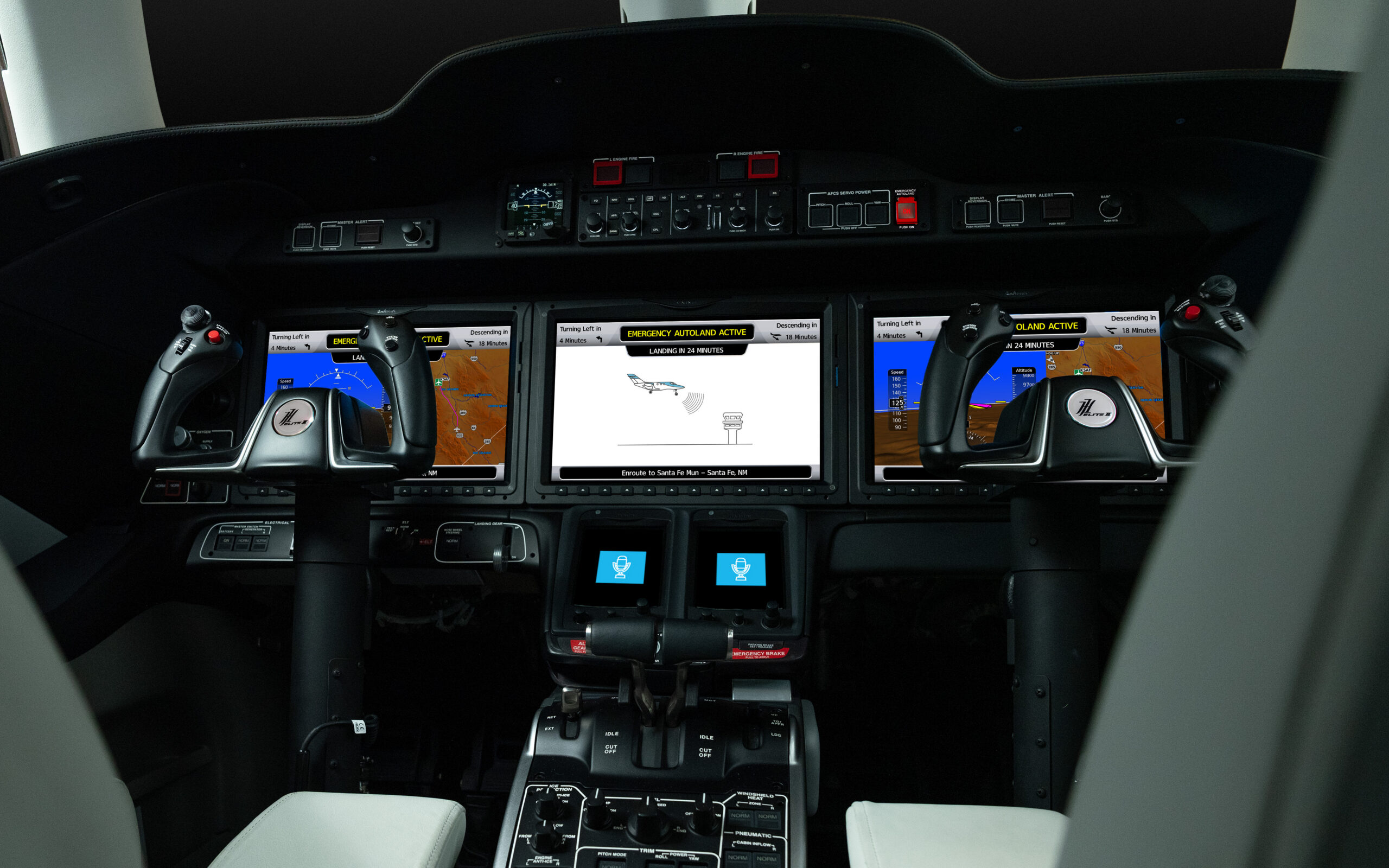

Honda Aircraft Company announced its HondaJet Elite II received Federal Aviation Administration (FAA) certification for Emergency Autoland (EAL), making it the first production twin‑turbine very light jet available with the technology.
The system is designed to autonomously land the aircraft if the pilot becomes incapacitated. Emergency Autoland can be activated manually or automatically, and it handles everything from communicating with air traffic control to selecting a suitable airport, navigating the approach, and executing a full landing — all without pilot intervention.
Honda Aircraft said it is seeking international regulatory approvals to make Emergency Autoland available on Elite II jets worldwide.
“Adding Emergency Autoland to the HondaJet Elite II demonstrates our commitment to delivering new value to our customers,” said Honda Aircraft Company President & CEO Hideto Yamasaki. “I’m proud that our team is fulfilling on this promise by offering Emergency Autoland and giving our HondaJet Elite II customers greater peace of mind during every flight.”
The Elite II, which entered service in 2022, already features upgrades over the original HondaJet, including increased fuel capacity, higher maximum takeoff weight, and Garmin G3000 avionics. Its recent FAA certification of the autothrottle system paved the way for Emergency Autoland integration.
The system’s real-world relevance was highlighted in December 2025 when a Garmin-equipped Beechcraft King Air B200 autonomously landed in Colorado following a sudden loss of pressurization. The crew remained conscious but allowed the system to complete the landing, marking the first in-service activation outside of tests.
With this certification, Honda joins a small but growing group of manufacturers bringing advanced autonomous safety features to business aviation. U.S. Elite II owners can now equip their jets with Emergency Autoland as part of the production line.

Their jets are not living up to the safety and performance standards of their cars. It will be interesting to see if this autoland system has better luck bringing the pocket rocket to a stop on a runway than pilots have been having …with six wrecks in a very small and newish fleet mostly due to braking/steering issues