
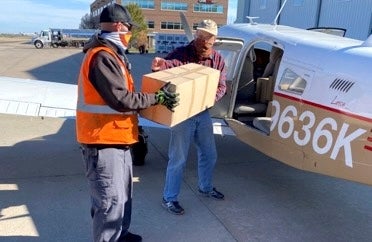

General aviation operators sprang into action to provide much needed relief for victims of Hurricane Helene. But the initiative needs to be organized, and the Air Care Alliance (ACA) has coordinated volunteer pilots from Operation AirDrop, AeroBridge, Angel Flight Soars, Pilots N Paws and others to make deliveries of essential supplies and resources more efficient.
ACA advised aircraft operators, “Pilot enthusiasm can often outweigh capacity to help. We must ensure that our desire to help does not add to an already chaotic situation.” In that vein, the organization offered a series of 11 Best Practices for volunteers.
First, ACA recommends coordinating all flights with an existing disaster relief flight charity to ensure resources are maximized. Next, the Alliance highly recommends operating rescue and relief flights with two pilots to help manage the unusual workload. Third, pilots are reminded to stay on top of Notams and Temporary Flight Restrictions (TFRs).
ACA notes the importance of pilot experience in a disaster situation and recommends that relief pilots be instrument rated and current. Onboard traffic avoidance equipment is important as radar service could be spotty, and there is a probability that traffic could be congested in the service area. Pilots are also warned that fuel supplies can become unreliable due to power outages and other extreme weather factors. There could also be long waits to receive fuel and payment options might be limited to cash.
Pilots are also urged to consider that mechanical services might not be available at some of the locations they will be flying to, so even something as simple as a flat tire could become a significant issue. ACA warns against dropping supplies on a ramp in a disaster area, recommending that pilots coordinate with relief flight charities to avoid logjams. Also, pilots are admonished to avoid unnecessary flights “for curiosity’s sake,” which might impinge on critical airspace. Also, ACA reminds volunteer pilots that airports’ situations and security concerns in disaster areas are constantly changing: for example, some might be placed under military control.
Finally, ACA advises that pilots “recognize the end of a mission,” meaning that a continuation of supply deliveries after the fact “can cause disruptions to normal local commerce.”