














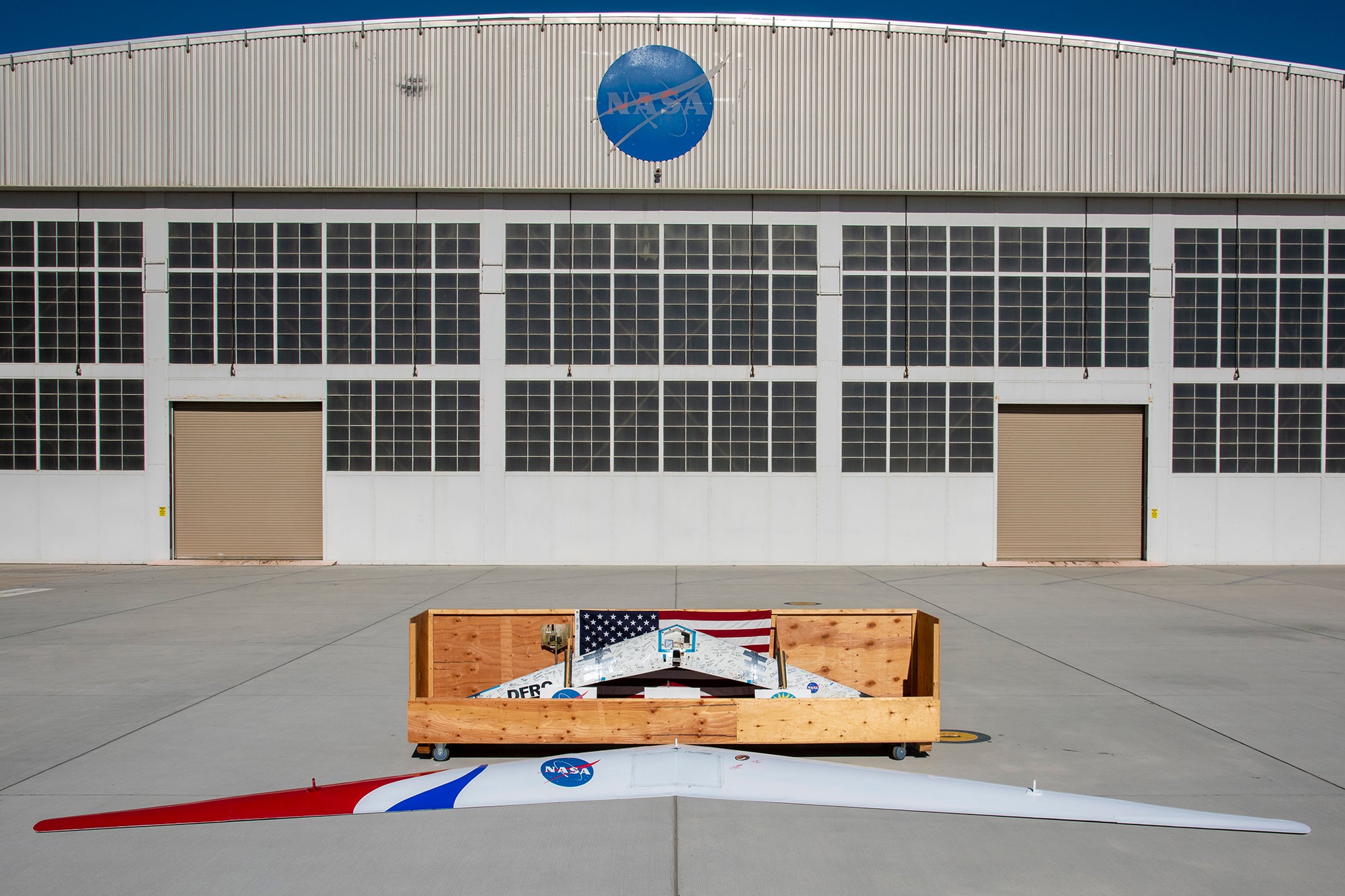

NASA is saying goodbye to two of its Preliminary Research Aerodynamic Design to Lower Drag (Prandtl-D) aircraft. The aircraft design, which includes a twisted wing and no tail, has been used by student interns at NASA’s Armstrong Flight Research Center for research, data collection and flight tests focusing on wing design optimization theories. Prandtl-D1 is being shipped to the Smithsonian National Air and Space Museum Washington, D.C., where it will be featured in the National Air and Space Museum Innovations Gallery while Prandtl-D3 is headed to the California Science Center in Los Angeles, California.
According to NASA, the goal of the Prandtl-D program is to gather data and test a 1932 paper by Ludwig Prandtl on the best solution for aircraft wing efficiency. NASA says it plans to continue the highly competitive internship program “to gather research and data collection on proverse yaw through the non-elliptical bell-shaped span load distribution in the hopes to offer a new method of aircraft control and efficiency for future aeronautics.” Each year since its creation in 2015, the Prandtl program has received an average of 1,500 applications from high school to graduate-level students, with only 20 selected for the annual summer internship.
