














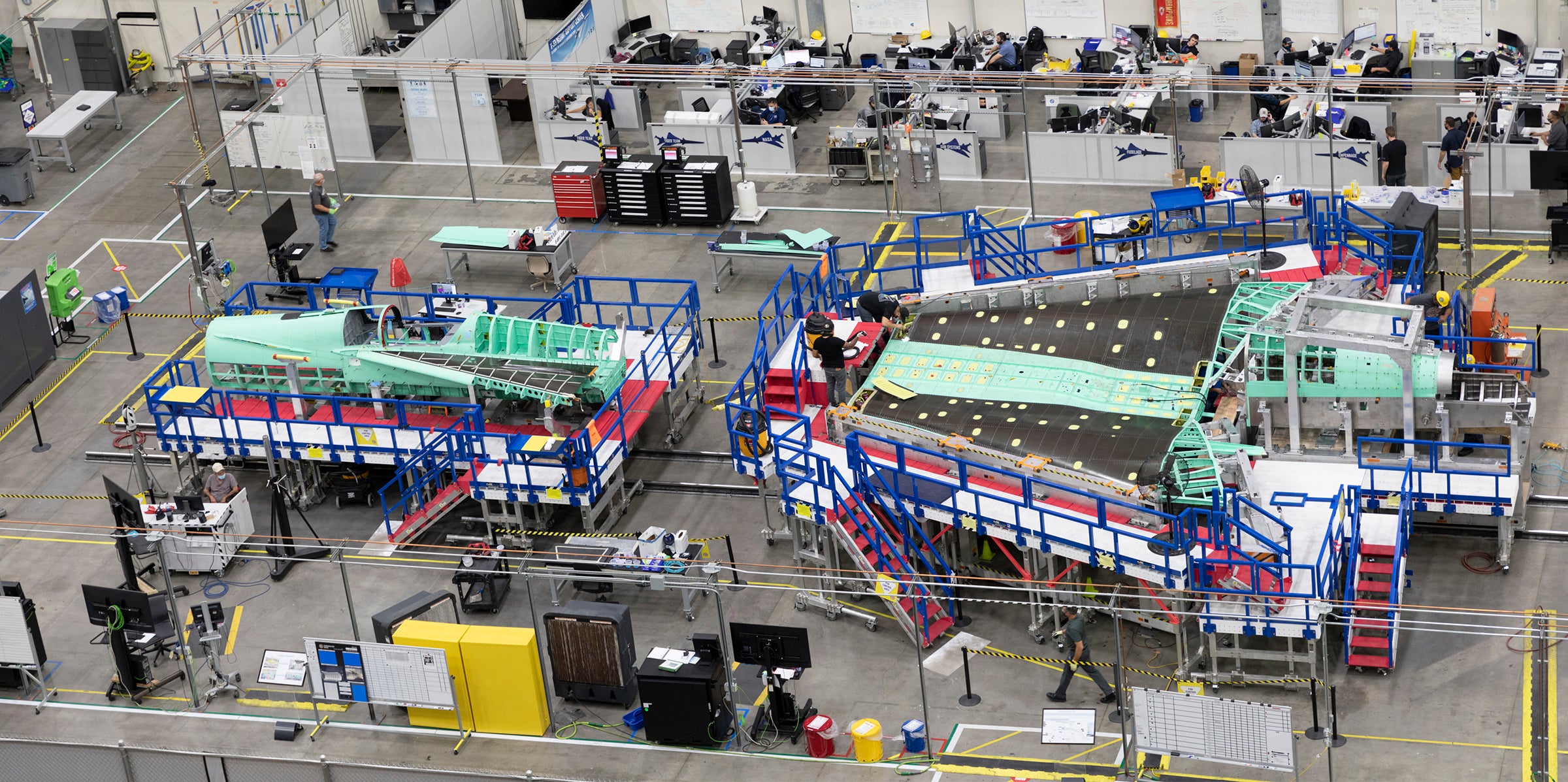

Construction of NASA’s X-59 Quiet SuperSonic Technology (QueSST) aircraft has reached the halfway point, according to an announcement from the agency last week. The X-59 is being assembled by Lockheed Martin at the company’s facility in Palmdale, California. NASA also announced that it has awarded Lockheed Martin a $40 million contract to provide support for the community overflight response phase of the Low-Boom Flight Demonstration (LBFD) mission.
“In 2024, NASA will fly the X-59 over select communities to measure public perception of the sound,” the agency said. “The data from these tests will be given to U.S. and international regulators, potentially opening the future to commercial supersonic flight over land.”
As previously reported by AVweb, NASA officially cleared the X-59 QueSST aircraft for final assembly in December 2019. Construction and systems integration are expected to be completed next year with the aircraft’s first flight scheduled for 2022. The X-59 was designed to test “technology that reduces the loudness of a sonic boom to that of a gentle thump.”
