















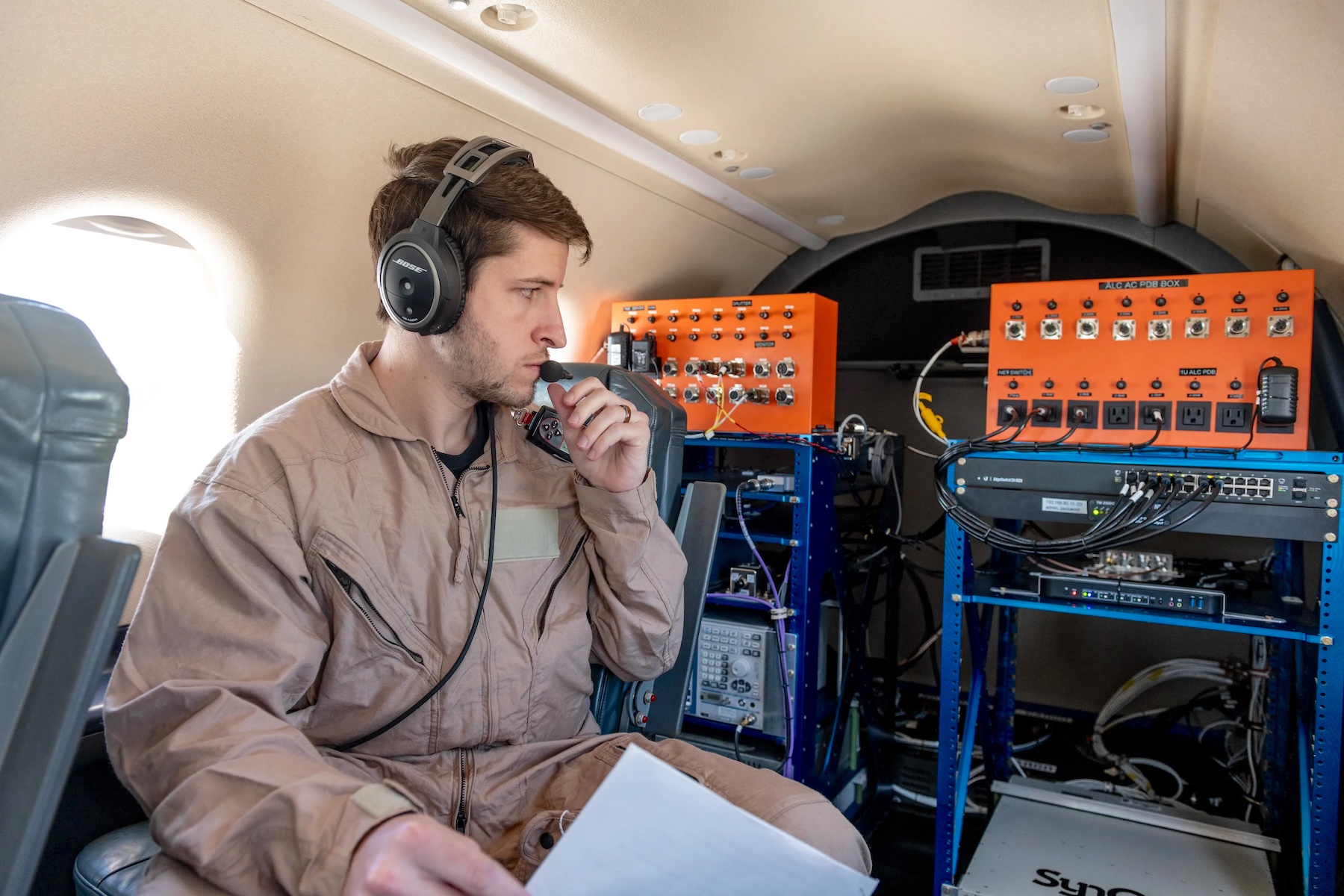

NASA reported today on research earlier this year to use 5G cellphone technology to support urban air mobility communications in the future. The research was performed at NASA’s Glenn Research Center in Cleveland and included two specialized radio systems to study the possible application of 5G tech.
Casey Bakula, lead researcher for the project at Glenn, said, “The goal of this research is to understand how wireless cellphone networks could be leveraged by the aviation industry to enable new frontiers of aviation operations. The findings of this work could serve as a blueprint for future aviation communication network providers, like satellite navigation providers and telecommunications companies, and help guide the Federal Aviation Administration’s plan for future advanced air mobility network requirements in cities.”
The testing involved NASA researchers monitoring one radio in the agency’s Pilatus PC-12 turboprop single and a second radio on the roof or the Glenn Center. Test flights evaluated signal transmissions on a radio frequency band dedicated to drone-control testing by the Federal Communications Commission (FCC). NASA said that the cellphone communications infrastructure is able to manage large amounts of data with a very low signal transmission delay compared to satellite systems. That “could make them ideal for providing location data between aircraft in busy city skies,” NASA said.


This is getting scarier and scarier by the week.
All autonomous systems need a PACE comms plan. PACE = Primary, Alternate, Contingency, and Emergency. I do work on military autonomous aircraft, and it’s always the radios and sensors that kills autonomy. No surprise since autonomous systems need information, and radios and sensors are what provide it. My strong recommendation is that civil autonomous aircraft have multiple ways to communicate, the more dissimilar the better.