
















Navy Seeks Carrier-Based Autonomous Combat Aircraft

RFI calls for two prototypes capable of catapult launches, arrested landings and carrying as much as 10,000 pounds of external weapons.

Navy Seeks Carrier-Based Autonomous Combat Aircraft
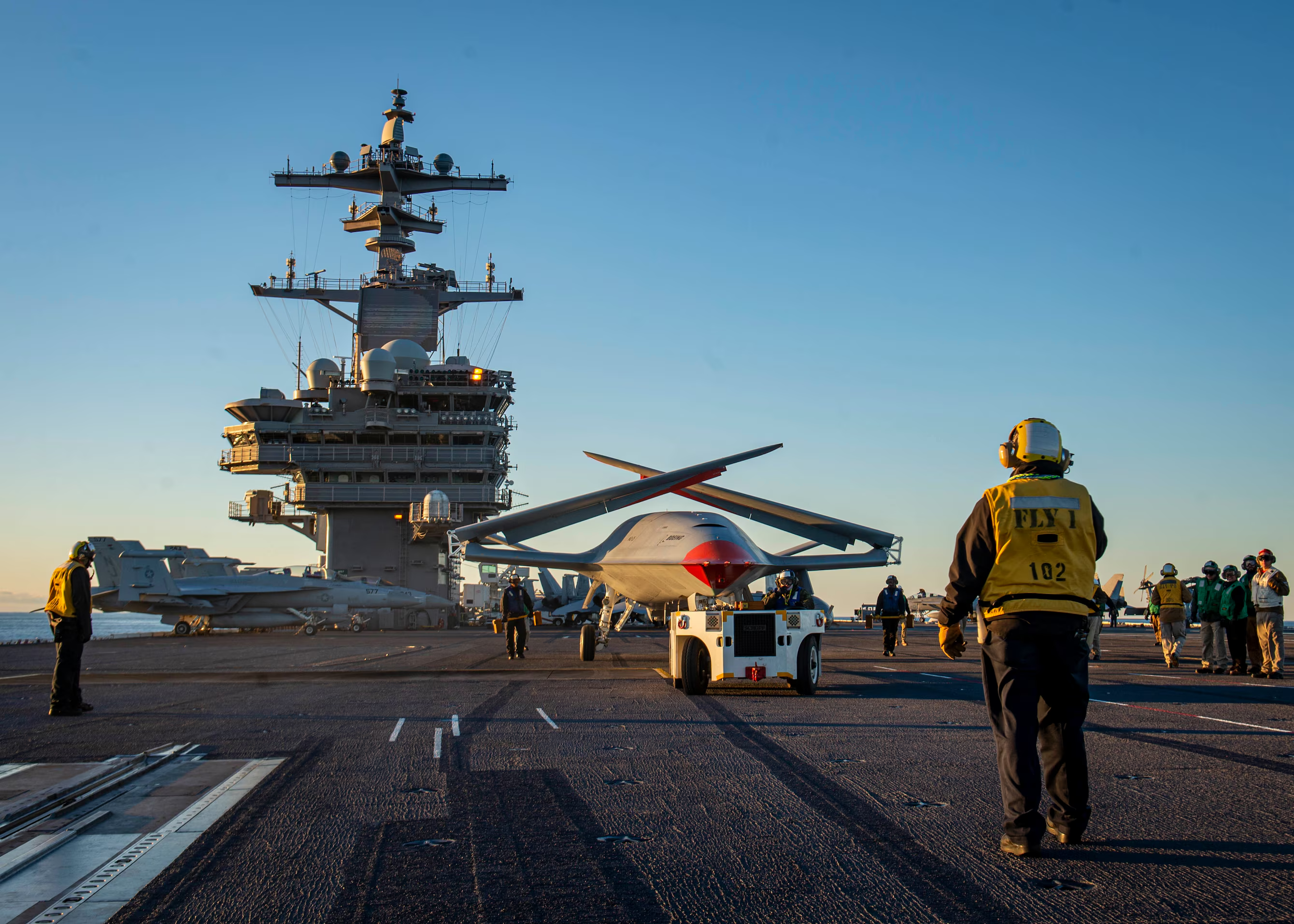
A U.S. Navy MQ-25 Stingray, an uncrewed carrier-based tanker. The Navy's new request is asking for armed autonomous combat aircraft designed to fly alongside crewed fighters. [Courtesy: U.S. Navy]
Gemini Sparkle

Key Takeaways:

  • The U.S. Navy has issued an RFI for autonomous, carrier-based Collaborative Combat Aircraft (CCA), seeking two functional prototypes within three years to fly alongside crewed fourth- and fifth-generation aircraft.
  • Key operational requirements include catapult takeoff and arrested landing capabilities on Ford- and Nimitz-class carriers, along with the ability to carry four external weapons weighing up to 2,500 pounds each.
  • The program outlines a target cost of $30 million per aircraft, requires the design to fit within the deck and hangar footprint of an existing fourth-generation fighter, and relies on the MD-5 mission control system.
See a mistake? Contact us.

The U.S. Navy issued a request for information Aug. 31 seeking industry proposals for its first increment of carrier-based Collaborative Combat Aircraft, autonomous uncrewed aircraft intended to operate alongside current and future carrier aircraft. The Navy wants two fully functional prototypes capable of meeting shore-based carrier certification requirements within three years of an agreement award.

The aircraft must be compatible with Gerald R. Ford- and Nimitz-class carriers and perform catapult takeoffs and arrested landings. Requirements also call for designs capable of carrying four externally mounted weapons weighing up to 2,500 pounds each.

The Navy has set an affordability goal of $30 million per aircraft and wants the designs to take up no more deck and hangar space than an existing fourth-generation fighter.

The aircraft would use the Navy’s existing MD-5 Unmanned Carrier Aviation Mission Control System and support single- and multi-aircraft strike missions. Stars and Stripes reported that the program is intended to add range and weapons capacity to carrier air wings while supporting operations alongside fourth- and fifth-generation crewed aircraft. Industry responses are due Sept. 18.


Matt Ryan

Matt is AVweb's lead editor. His eyes have been turned to the sky for as long as he can remember. Now a fixed-wing pilot, instructor and aviation writer, Matt also leads and teaches a high school aviation program in the Dallas area. Beyond his lifelong obsession with aviation, Matt loves to travel and has lived in Greece, Czechia and Germany for studies and for work.
Sign-up for newsletters & special offers!

Get the latest stories & special offers delivered directly to your inbox

SUBSCRIBE