
















The National Transportation Safety Board (NTSB) on Tuesday recommended that the FAA revise its runway condition assessment matrix, or RCAM, to better account for braking performance during periods of heavy rainfall.
According to the NTSB, the recommendations follow investigations into 11 runway overrun accidents and incidents between 2008 and 2022 involving landings on wet runways. The agency said the current RCAM does not account for the progressive loss of wheel braking friction associated with increasing rainfall intensity, which can affect landing distance calculations.
The NTSB is also recommending that the FAA add more rainfall intensity descriptors to aviation weather reports. The agency said current weather reporting does not identify rainfall rates above the existing heavy rain threshold of 0.3 inches per hour.
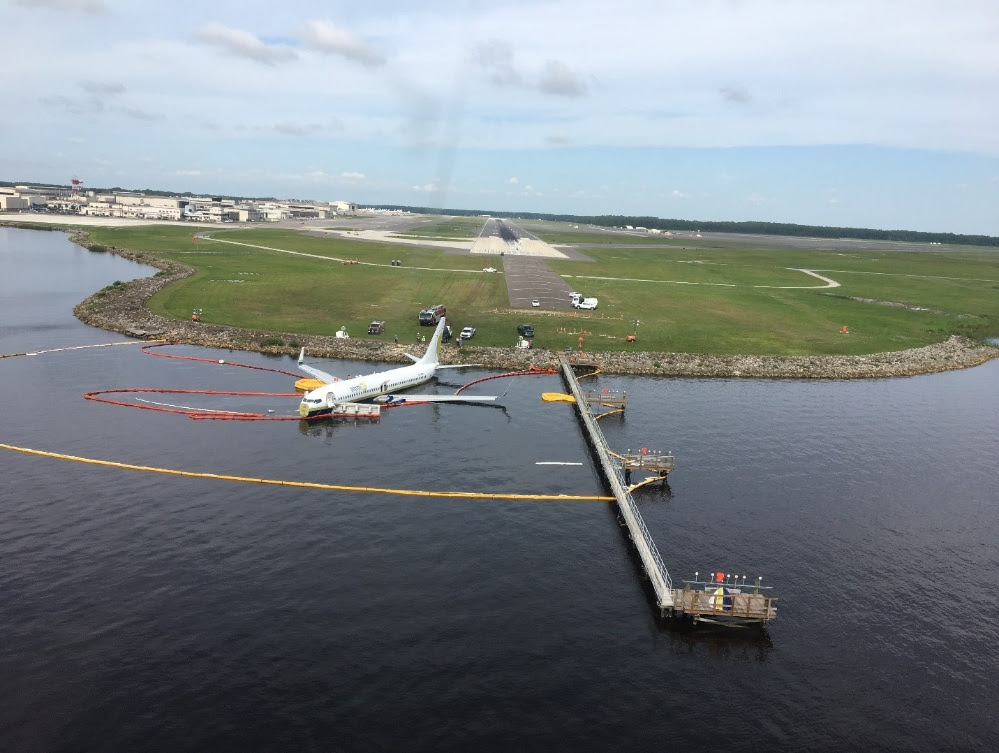
In the 2019 Miami Air Flight 293 overrun at Jacksonville Naval Air Station, for example, rainfall rates were found to be between two and eight times that threshold. The Boeing 737 departed the end of Runway 10 and came to rest in shallow water in the St. Johns River.


Thrust reversers!!! Landing on: ice, heavy rain, or anything else that makes a runway slick; thrust reversers are necessary! The pilots should have been ready for a slick runway landing using their thrust reversers! An oil spill on a runway also probably needs thrust reversers. Talking around an issue without talking about the details is offensive! Wake up!!!
Thrust reversers are over rated. Pilots need to pay attention to the contaminated runway performance numbers and actually follow them. You would be amazed at how much water, ice, or snow on runway will dramatically increase takeoff and landing numbers on jets with 100kt+ takeoff or landing speeds. Whether grooved or not makes a big difference as well. No matter how detailed the Matrix is, it does no good if pilots don’t follow the performance charts for those conditions!