















The National Transportation Safety Board (NTSB) released its preliminary report on the June 8 crash of a Cessna 414A that killed all six people on board. Investigators noted that the pilot reported control difficulties and made several mayday calls before radar contact was lost.
The twin-engine aircraft, registered as N414BA, was on a business flight returning to Phoenix, Arizona, when it went down roughly 2 miles offshore near Point Loma in San Diego, California.
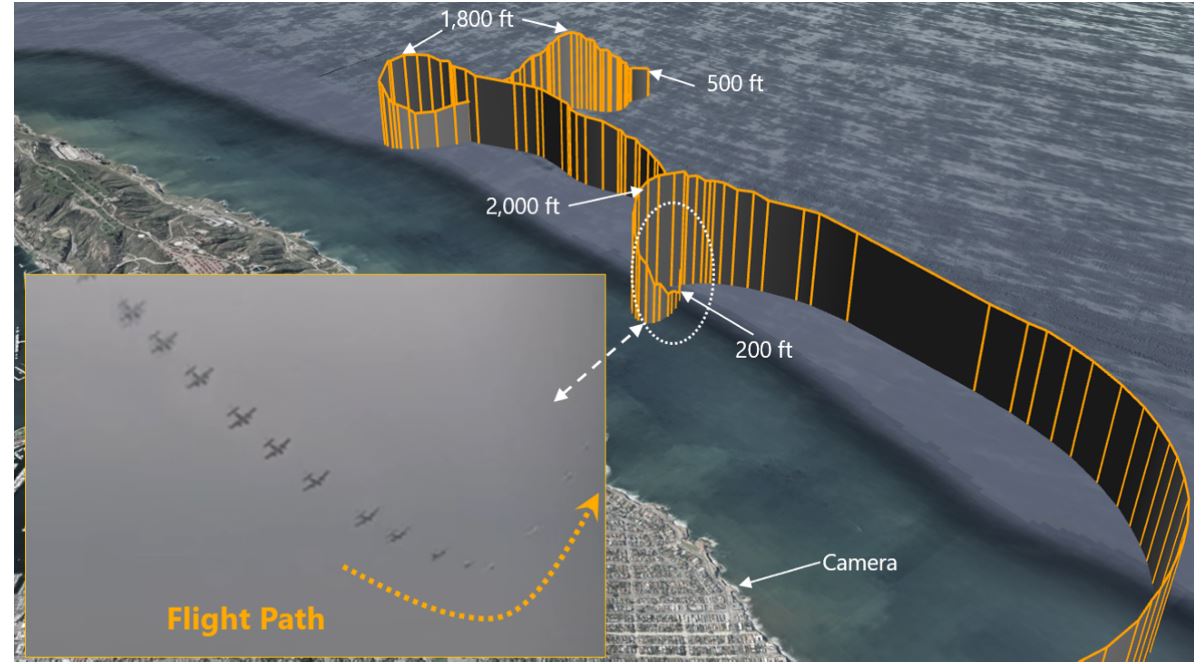
According to the report, the pilot checked in with SOCAL Departure after takeoff at 1,600 feet and was instructed to make a left 180-degree turn. The airplane briefly climbed to around 2,000 feet before entering a steep, uncontrolled descent to 200 feet. Air traffic controllers issued a low altitude alert and directed the pilot to climb to 4,000 feet. The pilot acknowledged but reported he was “struggling” to maintain both heading and altitude.
Controllers advised the pilot of a nearby airport just one mile away, but he said he could not see it. Witnesses described hearing erratic radio transmissions, including multiple mayday calls, before the airplane disappeared from radar.
Weather conditions at the time included overcast skies with ceilings reported around 1,000 feet, limiting visibility.
A fellow pilot and friend of the accident pilot told investigators that the pilot was familiar with the aircraft, having logged about 50 hours in the Cessna 414A. The airplane was not equipped with an autopilot or modern glass cockpit, meaning it required hand-flying throughout the flight. Just days before the crash, the pilot had practiced simulated instrument approaches with a safety pilot on board. While the friend noted the pilot expressed some nerves about operating in busy Southern California airspace, he described him as proficient and prepared.
The NTSB’s investigation into the crash remains ongoing.

Pure NIGHTMARE FUEL.
I would never fly in much less desire to become a pilot of a death trap light twin much less one without modern aviation.
Not even once.
I wouldn’t blame the older avionics. Lots of us old farts flew a lot of IFR in what you’d call a death trap. Sure, there’s better equipment out there now, but the old stuff still works just fine. Besides, the NTSB seems to think there was a control problem. Who knows, maybe the “control problem” rested with the pilot but, if that’s the case, you still can’t blame the airplane.
~ 250h on 414 and never perceived this airframe as a “deathtrap”. Especially with no Autopilot in the aircraft, struggling to maintain heading/ altitude is a bit puzzling.
You do you. I have flown many of them with basic instruments and radios and they worked just fine.
If you are dependent on modern electronics to fly any airplane at all, you may want to rethink what happens when it blows a fuse.
I can report that I am dating a woman whose first name is Jennifer but it does not make it true. My opinion is that this event was just a simple case of pilot disorientation and poor judgment flying when he should not have done so. If my memory is correct, his approach into the airport a day or so prior was marred with substandard piloting.