















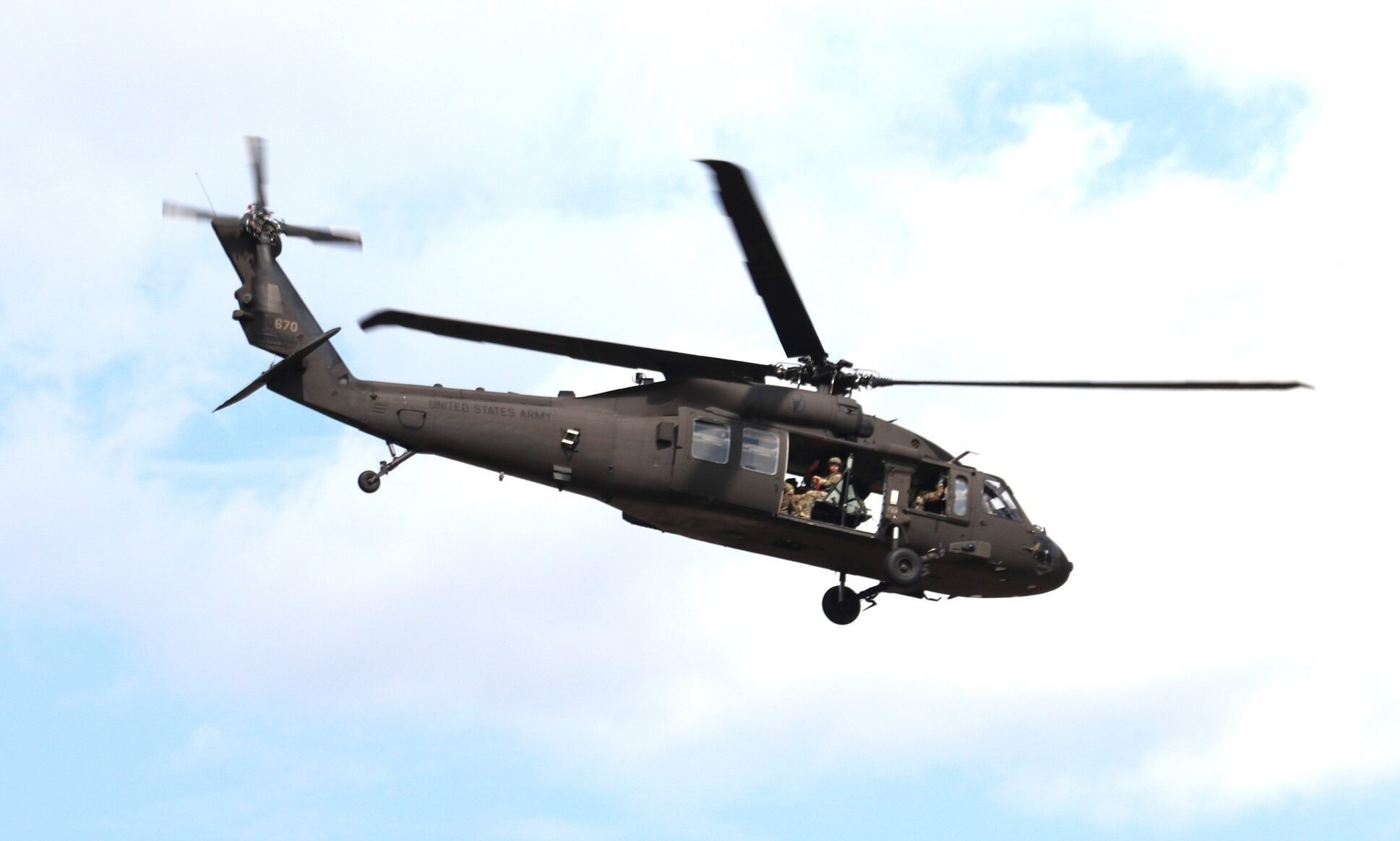

NTSB Chair Jennifer Homendy sent a letter to congressional leaders on Wednesday, urging the removal of a provision in the 2026 National Defense Authorization Act. Homendy wrote that Section 373, despite adding language around alerting systems, would in practice allow military departments to conduct rotary wing training missions in the Washington, D.C., Metropolitan Area Special Flight Rules Area under conditions similar to those in place before the Jan. 29 midair collision near Ronald Reagan Washington National Airport.
Homendy wrote that Section 373 of the NDAA would rely on warnings compatible with commercial aircraft TCAS systems. She noted that TCAS is inhibited during low-altitude descent to avoid nuisance alerts and did not prevent the crash despite issuing an alert nearly 20 seconds before impact, according to the agency’s findings.
Under the proposed language, the Secretary of a military department—concurring with the Secretary of Transportation—could waive the warning requirement if it is deemed in the national security interest and accompanied by a commercial aviation compatibility risk assessment.
Homendy wrote that the NTSB has concerns about whether military departments can fully assess risks in the complex D.C. airspace and added that congressional notification of extended waivers does not ensure that safety considerations are met. The letter states that the provision presents an unacceptable risk and affirms the agency’s readiness to assist lawmakers in addressing the issue.
The accident, which remains under investigation, involved a PSA Airlines CRJ700 operating as American Airlines Flight 5342 and a U.S. Army UH-60 Black Hawk helicopter, resulting in the loss of all 67 passengers and crew aboard the aircraft and the helicopter’s three-member crew.
According to the NTSB, part of the investigation centers on limitations in awareness and alerting technologies, including ADS-B.
Following the collision, the FAA and Department of Defense reached an agreement requiring military aircraft in the region to broadcast their position via ADS-B Out, a capability the agency has long advocated.


After GPS was released for public use by Pres. Reagan, ADS-B was envisioned as an inexpensive air-to-air replacement for TCAS, which is limited to last-minute vertical escape maneuvers. Even after successful IFR use in Alaska under Capstone and the successful OpEval-2 in 2000, the next OpEval-3 was cancelled and the system was shelved. Position reporting to ATC by ADS-B OUT was so dramatically improved over radar that it was mandated by FAA. DOT and Congress now have a great opportunity to re-energize ADS-B IN and mandate the system for all, which makes it affordable by all. Controllers can relax with a backup role and concentrate on traffic management. Extending this to all aircraft might require more controllers, but the stress would be much less.
Reminds me of the LAX crash in 1991 when a USAir 737 landed and collided with a SkyWest Metroliner holding in position at an intersection. Quickly, new rules were handed down that prohibited position and hold at night at an intersection, nationwide. However, a waiver was issued because the new rule severely hampered the operations at a major airport. Who received the waiver? LAX!!
Having ADS-B in mandated would not have prevented the DCA collision. ADS-B in is advisory only, still relies on pilots having visual contact before making maneuvers to avoid traffic. The only way to prevent further issues with military helicopter traffic and airliner traffic in DCA would be to ban one or both. DCA needs to be closed, the secret service has wanted it closed for years. Congress is not about to put any restrictions on DCA traffic that would inhibit their use of DCA for themselves. Can you imagine the outcry if a general aviation aircraft would have been involved in this accident?
I agree with you 100%, based on the current treatment of ADS-B IN by FAA. The only purpose of FAA ATC is to advise the pilot what he needs to do to prevent a collision. Full processing of ADS-B IN data would provide the same directly to the pilot, and to a far greater degree of reliability and lower false alarm rate than either ATC or TCAS. In fact, given GPS and ADS-B inputs, I am reasonably certain an app could be written for a smartphone. Who knows what AI would bring to the game? P.S In case you hadn’t noticed, it’s all neanderthal FAA/Industry/Union politics.
All lawmakers (political, administrative, civil service, whatever) and air traffic controllers who intend to opine on this should spend an hour or three in the right front seat of a piston single at night. Shoot some approaches, enter Class B airspace, see what it’s like. That will inform their thinking.
Are they up to the challenge of situational awareness? Do they understand that the system MUST depend on the people in the left front seat to get it all right all the time?
Plus, they should read what top conspicuity experts have to say about human inability to “paint” in the brain a correct picture from a few dots of light out the glareshield.
Understand the human factors problem you are dealing with, rather than just lashing out at symptoms!
The DCA accident was a mix of colossal policy and operational screw ups. Even if the Helo had been squawking ADS-B out, it wouldn’t have prevented the accident. The policy of allowing conflicting low altitude Helo traffic to cross short final within 150’ vertical feet of an airplane on final is something the FAA flight standards and air traffic safety arm would never sign off on without being directed to do so from someone or a group of people in a very high political positions. I have yet to see anyone to be held accountable or even identified as responsible for this policy debacle.
Operationally, it’s clear the that the Helo PIC screwed up. I would argue the controller also screwed up by even allowing the Helo to proceed beyond Haines Point until the CRJ was beyond the point of conflict… should have been handled like an airport surface operation.
ADS-B specifications were developed to support self-separation, but stopped short of including conflict and collision avoidance applications specifications to support it. TCAS algorithms could easily be adapted to do so, but there have been too many political obstacles, namely controller and pilots unions and airlines not wanting the liability. ADS-B messages would also need to include intent information (beyond the just the state vector) to minimize false alerts, e.g. current nav waypoint and next waypoint with a new course. Regardless, the controllers would still need to be the primary separation authority on and around airports with conflict and collision avoidance as backups.
Finally, a secondary form of RNAV would be needed to mitigate GPS interference, e.g. dme/dme, pseudo-lites, eLORAN. All of that, plus automated datalink hand-offs and clearances would represent “Modernization of the ATC system”, not the BS Duffy is being sold about updating the radars. Radar updates are certainly needed to make a transition to a modernized system that would take well more than 3 years to complete, but updating the radar system is not modernization of the ATC system.