


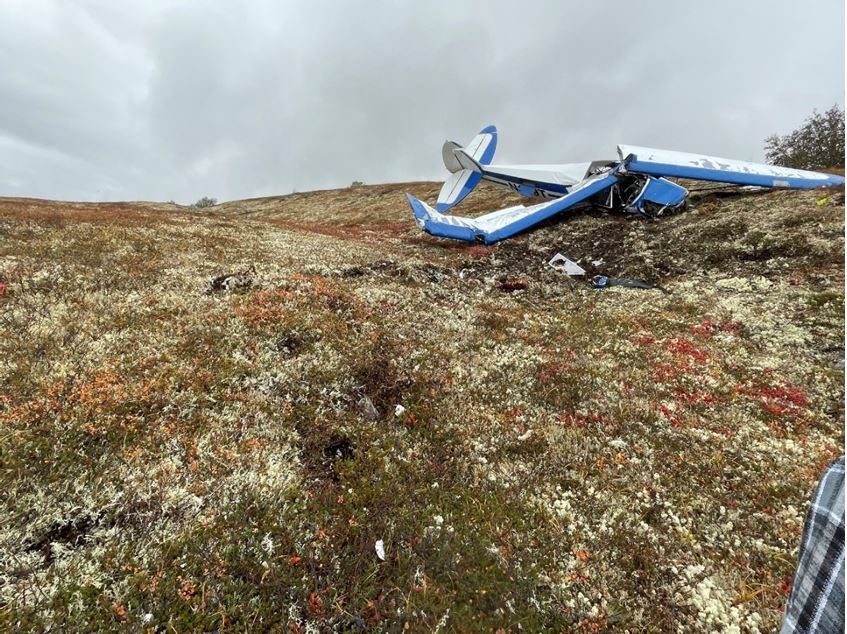

Investigators found the 2023 crash that killed Eugene Peltola Jr., husband of former Alaska Rep. Mary Peltola, was caused by an overloaded aircraft, improperly secured cargo and challenging flight conditions.
The National Transportation Safety Board (NTSB) released its final report on Tuesday, noting that Peltola was flying overweight and had mounted moose antlers on the aircraft’s wing strut, creating significant drag and imbalance. The NTSB stated that while mounting antlers outside the aircraft is not unusual in Alaska, it must be formally approved by the FAA, which had not been done in this case.
The accident occurred on Sept. 12, 2023, near the remote community of St. Mary’s in western Alaska. Peltola, the only person on board, was flying a Piper PA-18-150 Super Cub to transport moose meat and antlers for a hunting party he had flown out days earlier. Investigators determined he did not weigh the cargo and had loaded meat into the passenger seat and a belly pod without proper restraints.
The report found that the aircraft was approximately 117 pounds over its maximum takeoff weight.
The aircraft became briefly airborne before crashing moments later in hilly terrain. According to the NTSB Peltola died within two hours of the crash. Due to the remoteness of the site—400 miles from the nearest hospital—emergency medical treatment was not possible.

Is a super cub 117 pounds over gross really “over gross”?
You and I know that PA18 carry much more than that. Other pilots, not me. Unsecured load is something else. As the load increases the CG limits tighten up usually. Still, the family is suffering because of crash.
My immediate thought too— wonder how many times today a PA18 will be flown even more over gross without issue. I suspect this had more to do with drag or CG than 117 lbs. over.
On the theme of “paperwork is what makes airplanes fly”, it was surprising to me that you can (and should, and people do) get FAA approval for flights with external moose antlers. I’m really curious about how they approve such a thing–do you have to do a drag analysis? Does it depend on the aspect of the antlers?
It was my conclusion, that the accident would have never happened if that external load approval had been in place. I guess a Cub will fly 100 pounds over gross, except when that weight shifts or upsets the aicraft CG.
Shifting of load could put CoG to a location that makes the airplane uncontrollable, report seems to suggest loads did not shift much (cabin and cargo pod).
With draggy things tied to wings?
That could increase stall speed?
Test power setting with and without.
And carefully test stall speed with and without.
Will be approximate as antler size varies (those were large relative to wing chord though blades of them significantly below wing).
Super Cub at 117lb overweight, which causes a large drag problem because you’re having to pitch up more to get more lift, might not be a problem. Moose antlers causing large drag increase, might not be a problem. Both together? You’re now taking a huge hit in drag. Might still fly if you could dive it off a cliff. But climb? Who knows unless you test it on a very long runway.
Here’s more to this story which makes it more significant:
Thanks for the link, Klaus!
Possible effect on stall speed as well, brief statement in report that airplane rolled right after takeoff.
(Alaska Public Media says antlers were on one side, IOW only one set. Thus asymmetric drag and perhaps lift.
First takeoff did not have antlers, if I understood correctly.
Also NTSB muttered about a number of modifications incorporated, inference is without testing cumulative effect.
Yes, test.
Runway looks rough, albeit huge tires.
Note airplane rolled just after liftoff - was that deliberate to avoid ridge or a stall?
Sad.
Roll was to the side that had the antlers strapped on.
Simple answer–prohibit hunting…T.I.C…