














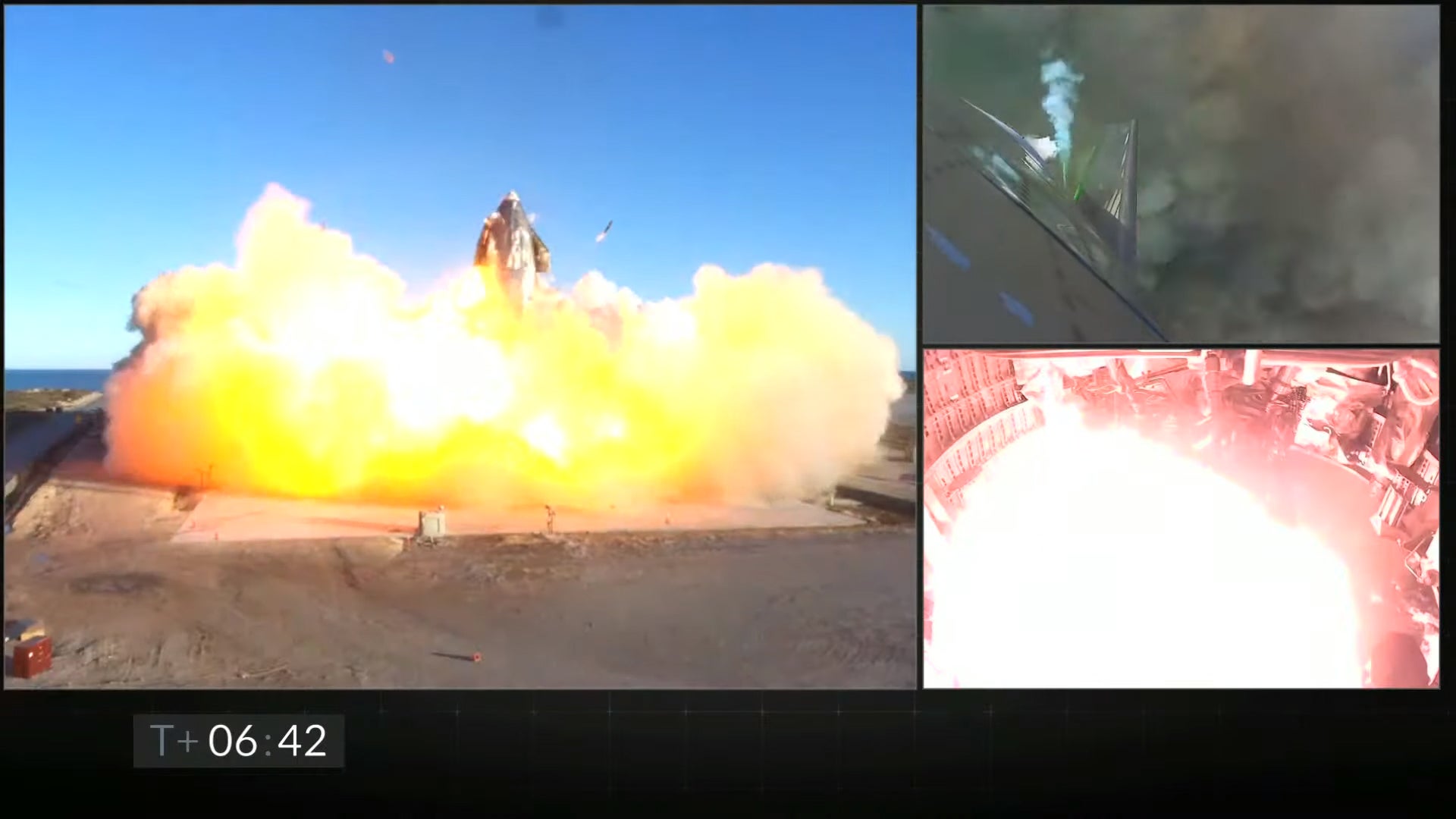

SpaceX’s latest Starship prototype exploded during landing following a successful high-altitude flight test on Wednesday. The uncrewed prototype, serial number 8 (SN8), flew for 6 minutes 42 seconds, completing a series of planned maneuvers and returning to the landing pad before the crash. The test took place at SpaceX’s facility in Cameron County, Texas.
“Successful ascent, switchover to header tanks & precise flap control to landing point!” SpaceX CEO Elon Musk said on Twitter. “Fuel header tank pressure was low during landing burn, causing touchdown velocity to be high & RUD, but we got all the data we needed!”
According to SpaceX, test objectives for the flight included evaluating how SN8’s three Raptor engines perform, the overall aerodynamic entry capabilities of the vehicle and how it manages propellant transition. In keeping with its testing philosophy, the company has at least two additional prototypes built and ready to go. As previously reported by AVweb, SpaceX has lost a number of other Starship prototypes during testing.
