














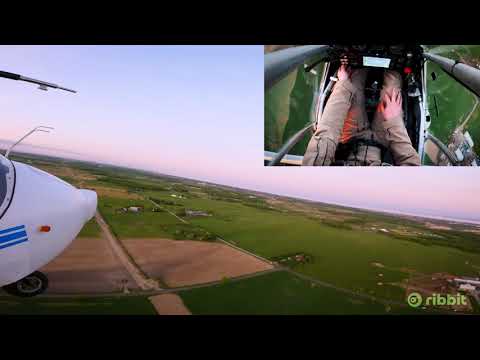

Transport Canada has signed a one-year contract with an autonomous aircraft startup to provide pilotless cargo service to remote northern communities using a light aircraft. Ribbit Airlines founder Jeremy Yang told CTV News the Ontario-based company has developed software and hardware that will enable the autonomous missions to operate on a schedule with minimal human intervention. “From gate to gate, the airplane does everything itself,” said Wang, who began working on the project as a grad student at the University of Waterloo.
Yang said the Transport Canada deal is a research tool for both entities. Although he said the technology is thoroughly tested and believed to be safe, the contract will enable a real-world trial. As for the regulator, direct involvement in the operation will inform its promulgation of regulations and standards for this new type of operation. Yang said his company is aiming to apply the tech to aircraft with six to 19 seats because that’s the “sweet spot” where the cost of training and hiring aircrew has an outsized impact on the economics of small cargo operations.
Remote communities in the vastness of Canada’s North are an ideal proving ground because many are already utterly reliant on air transport for things their residents can’t provide for themselves and because there is no controlled airspace where the pilotless project will be carried out. Yang said technology isn’t quite to the point where accurate interaction with ATC can be guaranteed and a ground-based pilot monitoring the radio would be necessary. He foresees those challenges being overcome to the point where autonomous passenger service will be certified.
