















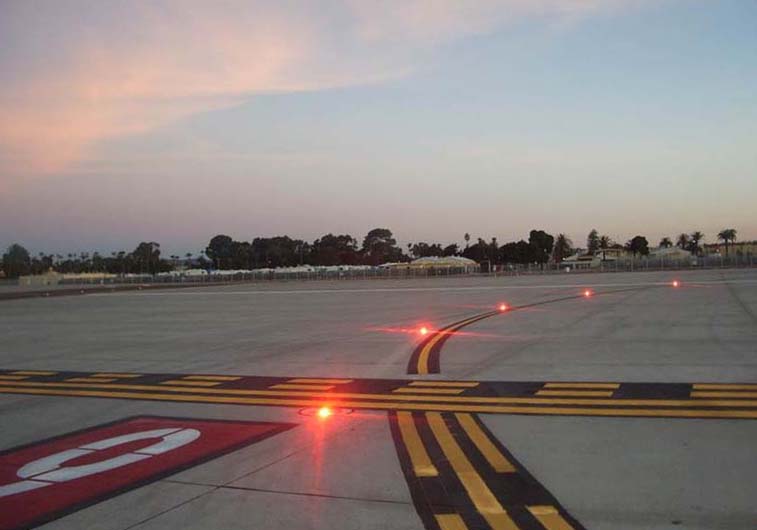

A new study was released examining where runway incursions are most common across the U.S., using recent data from the FAA’s Aviation Safety Information Analysis and Sharing system. The review by Upgraded Points took a look at data from more than 400 U.S. airports from between 2021 and 2024. Specifically, the study examined both total incursions, as well as total events classified as higher-risk Category A or B, in which a collision was narrowly missed or could have occurred.
The report found that Dekalb–Peachtree Airport (PDK), a primarily non-commercial airport in Atlanta, led the list with 103 incursions, followed by Chicago Midway International (MDW) with 89 and North Las Vegas Airport (VGT) with 88. Boston Logan International (BOS) and Chicago O’Hare International (ORD) each reported 83 incidents. While most fell into the lower-risk categories, BOS and MDW were among eight airports that together accounted for nearly a third of the nation’s most serious incursions. San Francisco International (SFO), Montgomery Gibbs Executive (MYF), Long Beach (LGB), and San Diego International (SAN) also ranked in that group.
According to FAA data cited in the study, pilot deviations were the leading cause of incursions overall, while controller errors played roles in most Category A and B events. High-risk incursions rose steadily from 2017 through 2023, peaking at 21, but fell sharply last year to seven—the lowest total since 2010. The FAA has credited its 2023 Safety Call to Action for the decline. It has also rolled out a variety of incursion-prevention technologies while private industry continues to develop further resources as well. Upgraded Points said the findings show that while incursions remain relatively rare, both large commercial hubs and general aviation fields face similar risks.


0 replies