














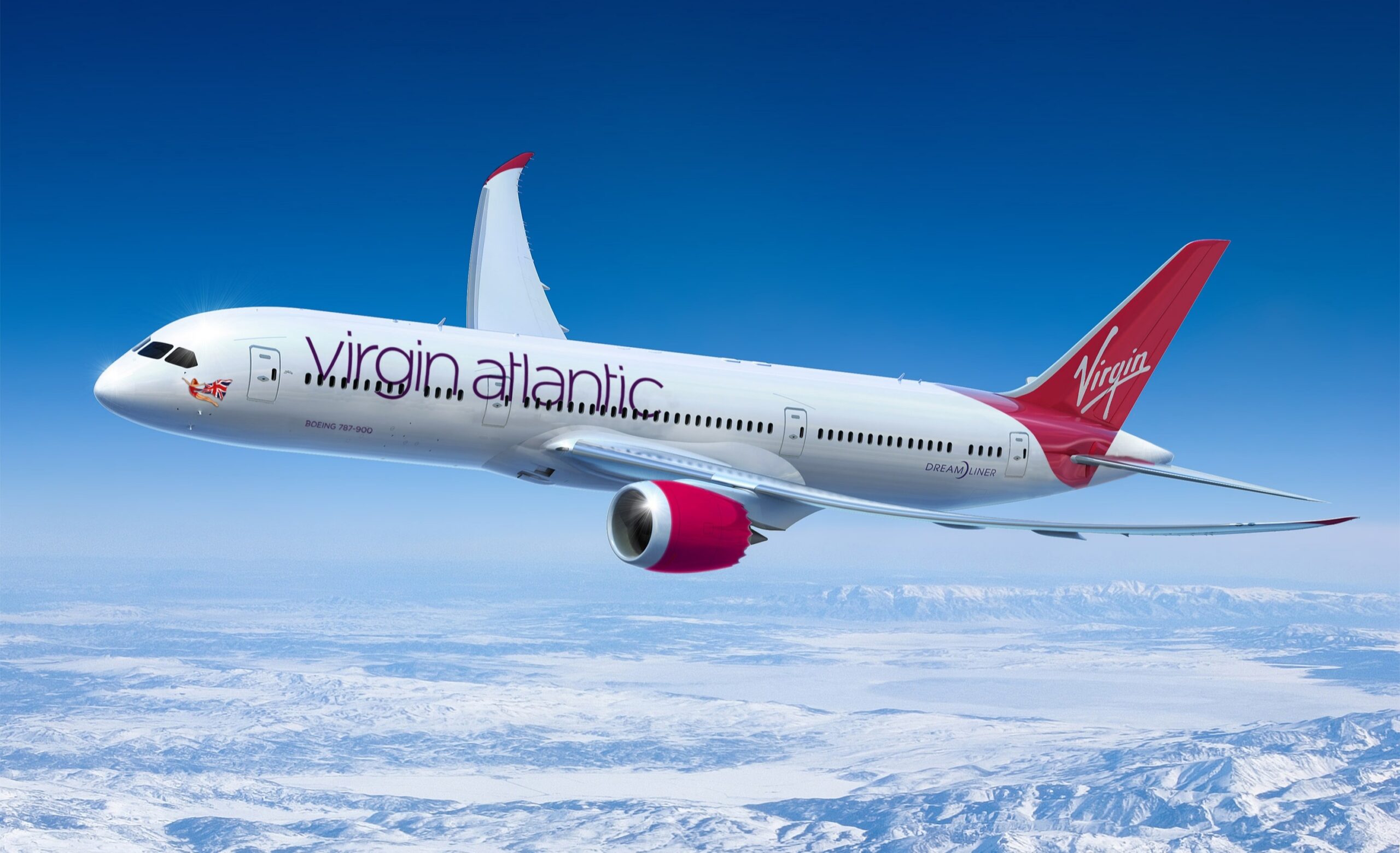

With airlines ever under the gun to reduce carbon emissions, they’re sponsoring ever more ambitious demonstrations of sustainable aviation fuel. The latest comes from Virgin Atlantic and Rolls-Royce, who have announced a plan to fly a trans-Atlantic flight on 100 percent SAF in November 2023. Air bp and Virent, a biofuel subsidiary of Marathon Petroleum, are also partners in the demonstration.
Rolls-Royce said last month that it has successfully run a Trent 1000 engine on an SAF blend, clearing the way for the demonstration flight in a Boeing 787 for Nov. 28, 2023. Air bp and Virent will supply 60 tons of SAF to support the project.
SAF can be produced through seven major chemical pathways and for this demonstration, the fuel will be produced through hydroprocessed esters and fatty acids, known as HEFA. This method typically uses waste vegetable oil, fats and oil residues as feedstocks. The project will also employ the SAK pathway, which yields synthetic kerosene through the Fischer-Tropsch process, using a variety of feedstocks.
SAF, according to Virgin, typically reduces carbon life-cycle emissions by up to 70 percent because credit is given for the carbon already absorbed in the feedstocks. The airline industry is aiming for net-zero emissions in 2050. It has a long way to go. SAF currently represents less than 0.1 percent of Jet A volume. SAF is two to four times more expensive that petroleum-derived Jet A.
