














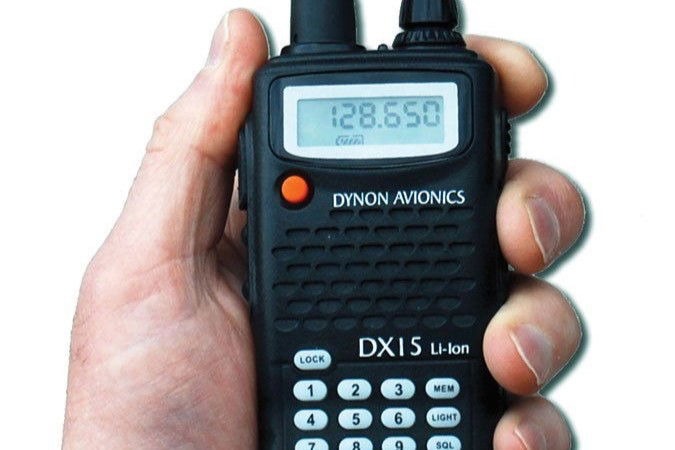

Reliable aviation communication is critical for safe operations, and while most U.S.-registered aircraft have a working VHF radio, a hand-held unit is an essential backup tool in case the primary radio fails. The FAA requires aircraft in most controlled airspace to have a two-way radio, making a handheld a key piece of redundant equipment. The choice of which radio to carry depends on a pilot’s specific mission.
Icom A25N
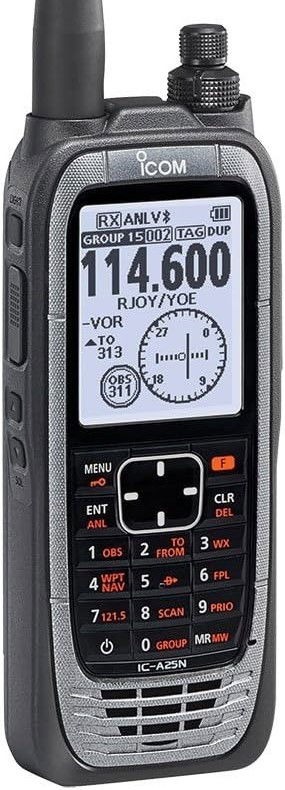
For pilots prioritizing extended range, the Icom A25N offers 6 watts of power, enabling transmission from 8 to over 15 miles at altitude. It is a Comm/Nav unit with 300 memory channels, a lithium-ion battery providing up to 10.5 hours of operation, and features like Bluetooth, GPS, VOR navigation, and a backlit LCD. Included are a belt clip, wall charger, antenna, battery pack, headset adapter, and carrying case. Downsides include a high price point ($504.52) and potentially complex Bluetooth connectivity.
Icom A16
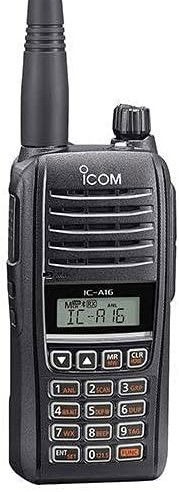
If battery life is the main concern, the Icom A16 provides 17 hours of operating time from its lithium-ion battery. This rugged, water-resistant, comm-only radio has 6 watts of power, 200 memory channels, and an extra loud speaker. It comes with a wall charger, charging base, belt clip, battery, and wrist strap. However, it lacks built-in Bluetooth and its menu navigation can be difficult. Its price is $249.
Yaesu FTA-250L
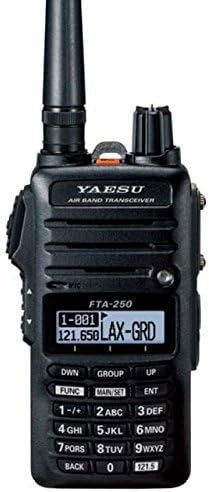
The Yaesu FTA-250L is one of the smallest radios available, making it ideal for flight bags where space is limited. This comm-only radio features 5 watts of power, a 250-channel memory, a lithium-ion battery, a rugged case, and NOAA weather alerts. It includes a battery, 110-volt and 12-volt DC charger with cradle, antenna, belt clip, and headset adapter. Its disadvantages are complex programming and the potential need for a screwdriver to use the headset adapter. It is priced at $198.89.
Yaesu FTA-850L
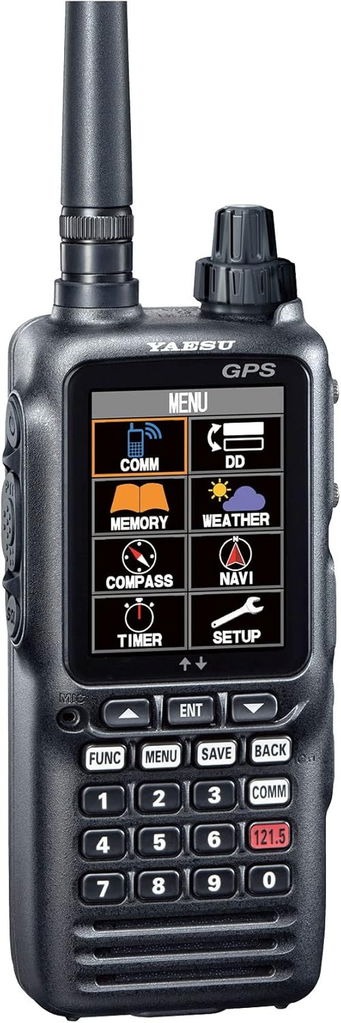
For those who need built-in GPS, the Yaesu FTA-850L is a full-featured Comm/Nav radio with a large color display. It has 4 watts of power, 400 memory channels, and a lithium-ion battery that lasts for 12 hours. It offers VOR, LOC, ILS, and GPS navigation, along with Bluetooth capability and a loud audio output. The package includes the battery, chargers, an alkaline battery tray, antenna, belt clip, headset adapter, and USB cable. At $473.29, it is one of the more expensive options and has complex programming requirements.
Sporty’s L6
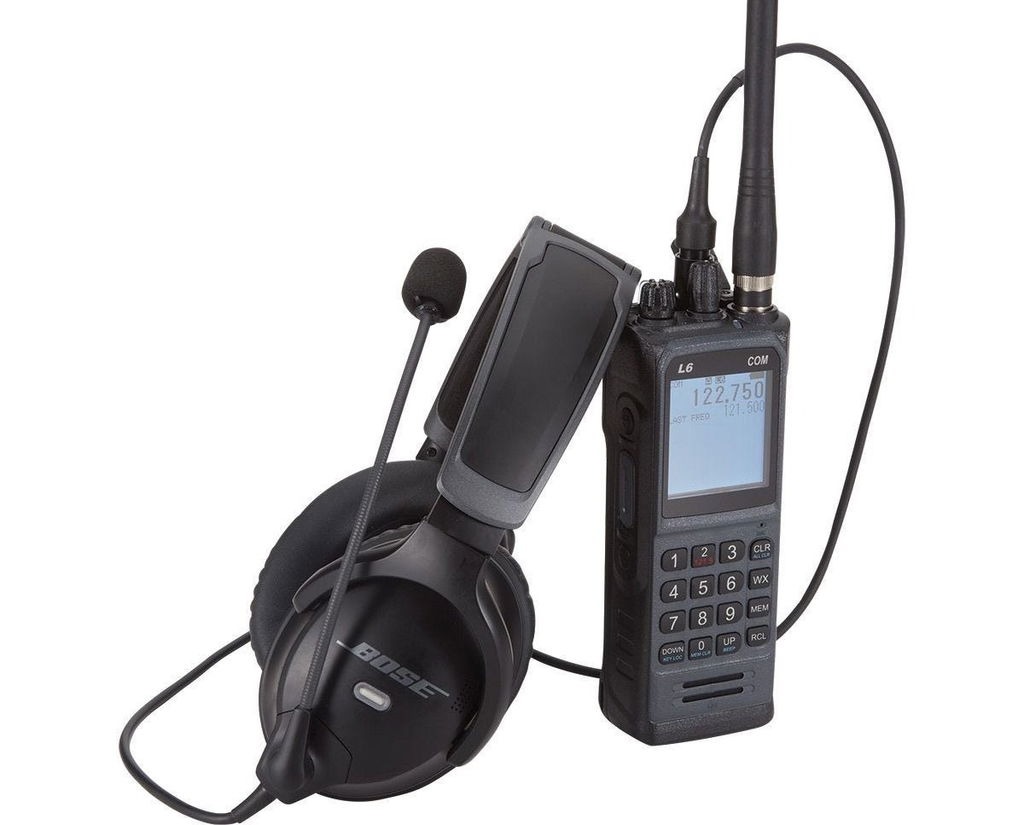
Sporty’s L6 is designed for ease of use, allowing pilots to plug their headset directly into the radio. This comm-only unit has dedicated knobs for volume and squelch, 6 watts of power, and 20 memory channels. It is powered by six AA batteries and features six-pin jacks for LEMO headsets, a 3.5mm earbud jack, a USB-C power port, and a backlit screen. It comes with an alkaline battery pack, wrist strap, antenna, belt clip, power cable, and wall adapter. It is larger and heavier than other units. The price is $229.
Yaesu FTA-550AA
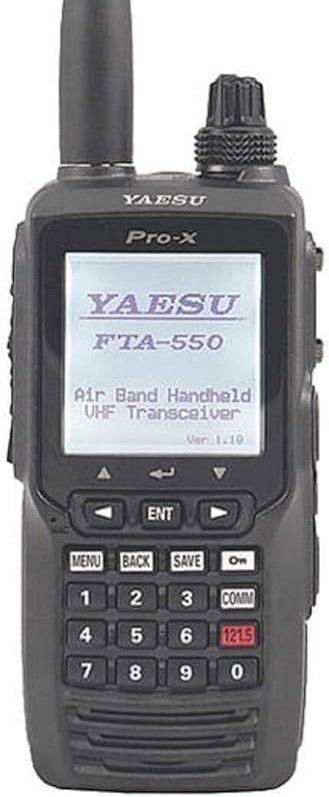
The Yaesu FTA-550AA is a feature-rich and affordable option at $199. This Comm/Nav radio provides VOR and localizer navigation features, a large display, 5 watts of power, and 200 memory channels. It runs on six AA batteries and includes an alkaline battery pack, wrist strap, antenna, belt clip, power cable, and wall adapter. A main disadvantage is that the AA batteries do not last as long as lithium-ion alternatives, and its programming can be complex.
When selecting a radio, consider if you need Comm/Nav capabilities, as backup navigation is often covered by installed GPS, an iPad, or a cell phone. Also, consider battery type; rechargeable batteries are convenient for frequent use, but their charge must be maintained, which can be a drawback for a backup device. While feature-rich radios are attractive, simplicity can be crucial when dealing with an emergency. It is essential for pilots to learn how to use their radio before it is needed in a critical situation.
Regarding regulations, FAA-certificated pilots flying within the U.S. do not need a separate radio license. However, pilots on international flights must obtain a Restricted Radiotelephone Operator Permit from the FCC. Civil aviation radios typically use VHF frequencies (108 to 137 MHz) and UHF frequencies (300 MHz to 3 GHz). Comm radios operate from 118 to 137 MHz, while Nav radios use 108 to 117.95 MHz for VOR navigation.
AVweb may earn revenue from the products available on this page and participate in affiliate programs.

“pilots on international flights must obtain a Restricted Radiotelephone Operator Permit from the FCC”
Does this include flights in North America? In particular, as to my interest, Canada. Didn’t know if there are special rules for our bordering neighbors.
This is simply advertising. There is not additional value offered by the author of the article which looks like AI to me.
Looks like one of the advertisers sells the portables in question. I guess this is the new bosses implementing their new management style. Editorial content friendly to sponsors has long been expected, especially for “free” media…
I think if you have the right shoes for pilots and own the right headset for pilots you may not need a FCC license for your handheld radio for pilots.
Could be wrong, though.