
















[Editor’s note: this is the first piece in a multi-part series]
The Call That Started It All
I remember playing a football game on my Xbox one cold afternoon in my college apartment just outside Boston when I got a call from my dad.
“Blake, you should take your plane and travel across the whole country this summer.”
It was just like that. I loved the idea but did not grasp how big of a challenge this would be.
My initial thought was “one to two nights each city, one week Gulf Coast, one Pacific Coast, one week northern U.S., then a week to make it back to Florida.”
Man, was I wrong.
This was the kind of thing I had always wanted to do, but I’d never thought of doing it on this scale, nor at this age. I certainly didn’t realize how much it would put my skills to the test.
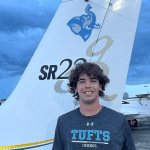
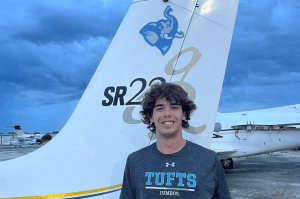
Though I considered myself a great aviator before the trip—being the youngest to graduate from my flight school, flying in all kinds of geographies and even teaching my own class at Tufts University—I did not compare to the aviator I am now.
When you take on the challenges that flying across the country offers, you learn things that simply aren’t taught in flight school.
Laying the Groundwork
The first call I made was to my friend, Dylan Tamaroff. If I was going to do this, I wanted my wingman.
The final days of college flew by and, a couple of months later, I was a Tufts graduate. It was time to start planning what seemed like a one-month, relaxing trip.
Would it be the most exciting, fun, exhilarating trip of our lives? Yes. Was it even the least bit relaxing? No.
I have been back for a month now and feel an urge to share my journey—how we completed each flight, things we saw, funny stories from the air and ground, lessons we learned, the best place to go squid fishing in Sydney, Nova Scotia, to the best Ukrainian food in Santa Monica, California. Close encounters with bears in Campbell River, British Columbia, to flying into one of the hardest airports in Colorado.
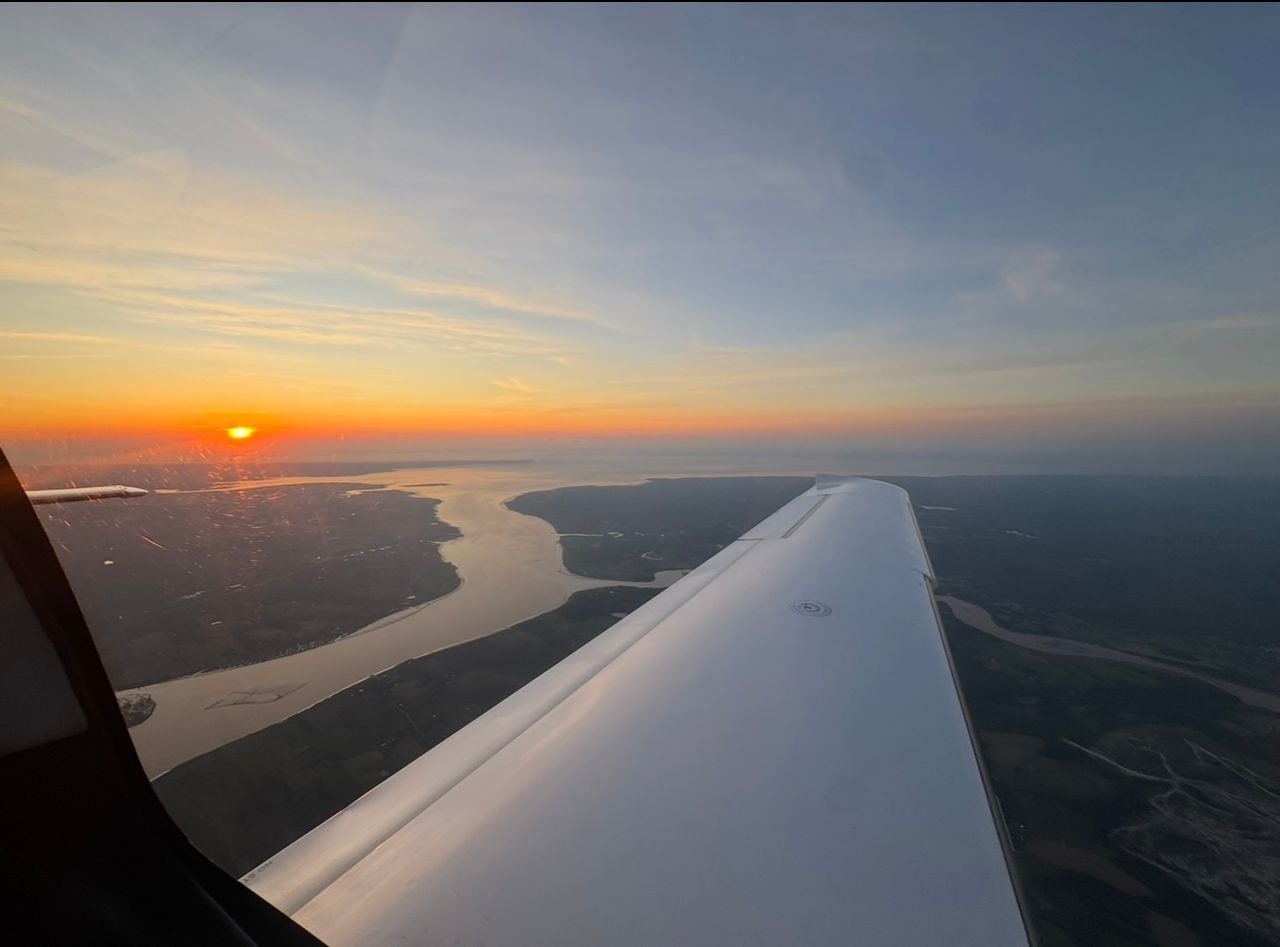
There is so much to share about my 13,000 mile, 100 hour, 4 U.S. corner, international journey
Mission 1: KPYM–KIAG — The Kickoff
The two weeks leading up to the trip, we put on our game faces and got to work. In a little over a week, we planned the entire trip—starting in Bedford, Massachusetts (KBED), and finishing in Fort Lauderdale, Florida (KFXE). Lots of thought went into each destination: runway lengths, fuel prices, maintenance on field, terrain, proximity to alternates and instrument approaches.
We made a detailed plan to fly across the country, starting June 25 and landing back in Florida on Aug. 30 (just in time for the Miami football season). Proud of our work, we presented it to our parents, who saw a two-month trip across all kinds of national parks, cities and friends’ houses, spending two nights in each location.
It was noted, calendared and put into plan …
What a waste of two weeks. Not one leg of our meticulously detailed itinerary went to plan. And from the bottom of my heart, I would not have wanted it any other way.
Takeoff at Last
June 25, 2025. Dylan, my girlfriend, Vlada, and I got into the car in Belmont, Massachusetts, with all our clothes and equipment for two months. Vlada was only joining us for the first few legs until she met up with us again in the Rockies, so we had extra weight the first few legs.
The maximum takeoff weight in the SR22, non-turbo Generation 2, is 3,400 pounds. We thought were just about 5 pounds under that. The night before the trip—at my friend’s house—we realized we were in fact 20 pounds overweight.
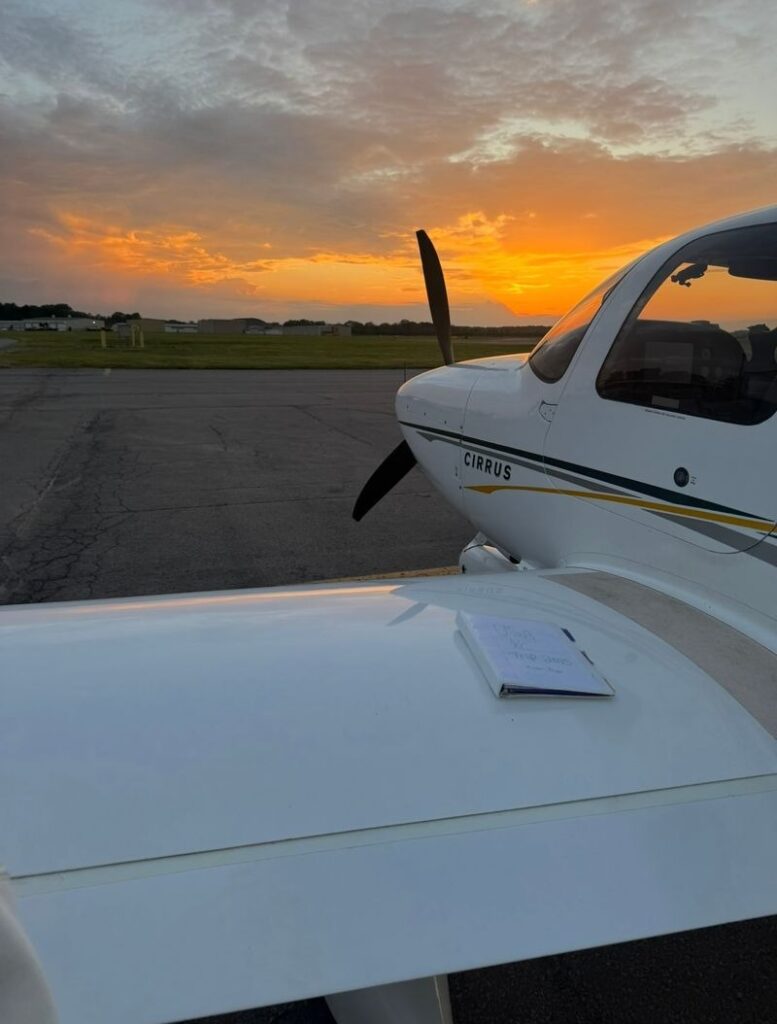
And so it began. Until 1 a.m. the night before, we were weighing every wrapper, book and can of oil to find ways to be under maximum takeoff weight (MTOW) and meet the performance requirements for any standard instrument departures (SIDs) on a given departure.
After getting rid of a little over 25 pounds, we knew we should be fine. Regrettably, we did not know the exact weights of the items already in the plane (the cover, tow bar and window shades), so we had to give our best estimate the night before.
The next day at the airport, we laid out every single item on the hangar floor with its weight sharpied on the top. After ditching the items I mentioned from the trunk, we were finally under MTOW and met (by a lot, actually, because we were at sea level) the performance requirements.
We realized how things really add up. Ditching things like headphone covers, cardboard boxing, plastic wrappers, notebooks and bug spray cans made a difference.
Plans Change Fast
It was time to begin our journey: Bar Harbor, Maine.
Wrong.
Weather closed in and our first mission became Niagara Falls, New York.
Right off the bat, we already deviated from the carefully planned itinerary. The flight, though one of the most boring, ended up being one of the most remarkable.
It marked the first flight of the adventure. I vividly remember turning right onto the runway at Plymouth Airport, putting in the power and releasing the brakes.
The moment we started accelerating, it hit me: We were really doing this. It was go-time.
It was a relatively smooth flight—about as underwhelming a flight as you could ask; we would come to appreciate that sort of flight weeks later. Landing in Niagara gave us a huge sense of accomplishment.
It was actually happening. Additionally, it was more than a three-hour flight, which was quite long for what we were familiar with.
A Detour to the Tables
The first thing on our minds, Niagara Falls? Nope—the $5 blackjack tables in Niagara.
After an all-you-can-eat Indian buffet, the three of us set off in hopes of paying off the fuel expenses for the flight. I brought $50, and Dylan, $20.
I lost it all in just under five minutes when the man to my left stood on a 16 vs. a face card and left me to bust. Luckily, Dylan doubled his money.
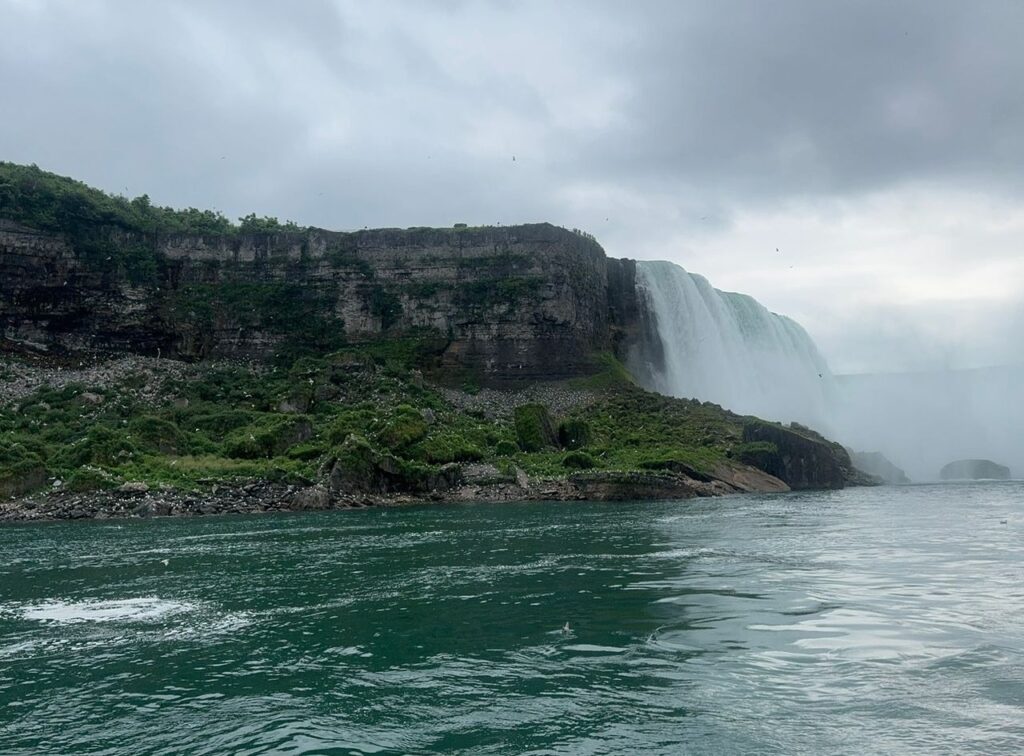
Not enough to pay off the fuel, and certainly not worth the cost of Vlada’s criticism, as she would have preferred to see the falls at night, not a tobacco-filled casino. I guess we live and learn.
After two nights in Niagara—seeing the falls, fireworks shows and Dylan getting locked in the hotel bathroom (true story)—it was time to fly to Bar Harbor … Wrong again.
To be continued…

Man, I’m impressed in a Cirrus no less! Would have been worth reading had it been in an older open cockpit bipe. Oh wait, that’s been done decades ago.
Must be nice. When I was 21 was happy when I could scratch together 38/hr (plane and instructor) just to get an hour in the 150.
Hope this gentleman realizes his good fortune
In the summer of 1976 after high school graduation I was inspired by Richard Bach’s book “Nothing by Chance,” about him flying around the country selling rides in his Curtis Jenny. I flew halfway across the country and back in a 1948 Luscombe with no communication or navigation radios, using only maps and pilotage. I’d stop for fuel at uncontrolled airports. Now that was an adventure! I slept in a tent under the wing at night. I was surprised to learn that kind FBO operators would loan you a car to go get a bite to eat. When I asked “You’re going to lend me your car?” He responded “Well, I’ve got your airplane.”
Minor correction: Bach flew a Travel Air 4000 in Nothing by Chance, not a Curtiss Jenny.
omg wow thats so cool, i really wanna do that one day!!! pilot sounds cool too, im excited for the future versions of this!!
Thank you for the article! Reading about the triumphs and tribulations in traveling the US was exciting and inspiring. I look forward to reading more articles in the future.
Wow, this is so inspiring and makes me believe that everything is possible! Reading this brought me back to those crazy, exciting first days and at the same time I can’t believe I actually lived it! Thank you for making me a part of this incredible journey, and to you and Dylan for being the amazing pilots who kept me safe and entertained😂. Looking forward for the second part!
I think a lot of staying true to yourself is the act of spending some here, and spending some over there. For now you stand separate from your peers, life ahead and aware of busy happenings. Believe in what’s there. Remain intact. Collect your processes and release the greatest of directions into what was once there before. Find and utilize unique moments and see to it that they rotate as every day is a new day, and every night is dark. As the great ones say, the pilot and plane are both knives to a homemade steak.
I would like to speak to these pilots immediately. What an incredible and fascinating read. I’m sure the two gentlemen are very good looking as well.
I was blessed to be part of a trip like this when I was instructing. Our flight school did one every year. Four 172s, two students, an owner, a renter, and three instructors. About 65 hours of flying over 18 days. There’s no better way to tour the country!