
















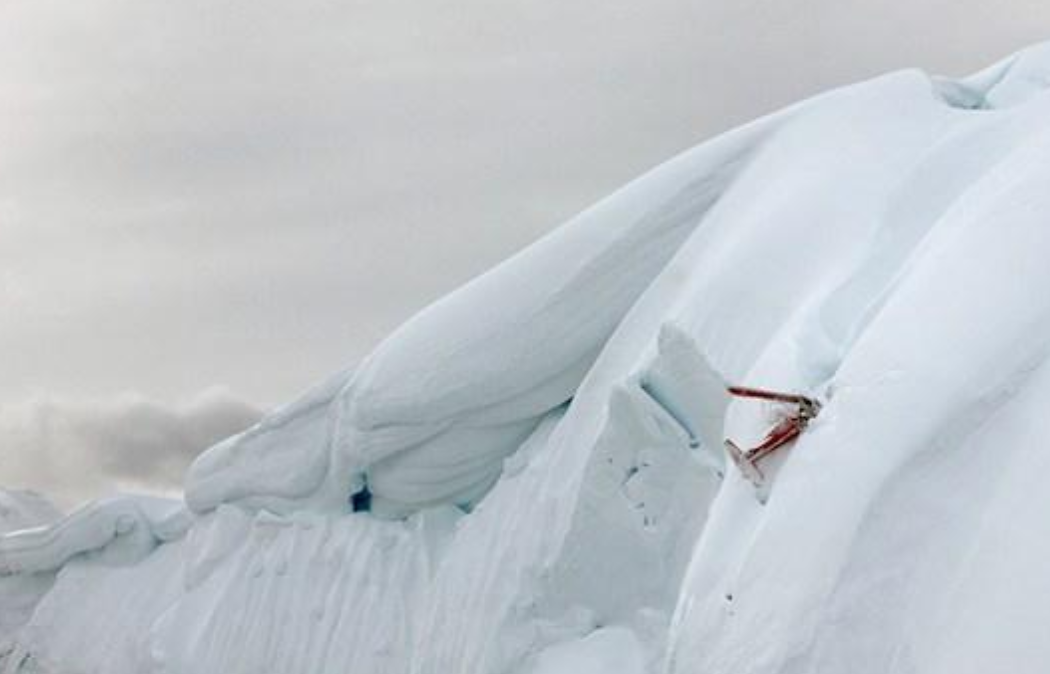
The National Park Service has ended its efforts to reach the crash site of a de Havilland Beaver, operated by K2 Aviation, thathit the side of a mountain during a sightseeing flight in Denali National Park last week. In a news release issued on Friday, the NPS said after the weather cleared, a ranger inspected the site for nearly an hour while suspended below a helicopter. He confirmed that the pilot and four passengers were still in the airplane, and all were dead. The NPS said no attempt will be made to recover the bodies or the wreckage. “Hazards at the crash site include, but are not limited to, avalanche danger, steep snow/ice, crevasses, unstable seracs (blocks of ice loosely attached to the mountain) and aircraft-related concerns such as protruding pieces of jagged metal,” the NPS wrote.
“The aircraft is broken in half behind the wing, and the tail section of the fuselage is actively pulling down the aircraft towards a glacier 3,500 feet below,” according to the NPS. “Additionally, more than two and a half feet of new snow has fallen at the crash site and loaded the nearly 45-degree slope just above the aircraft. … The crevasse where the wreckage sits is a dangerous and potentially fatal terrain trap should even a small avalanche occur.” Clint Johnson, chief of the Alaska region NTSB, agreed with the Park Service’s decision. “It’s a tough decision, but I support the decision 110 percent,” Johnson told theAnchorage Daily News. “We’re used to working in tough spots, but this is out of our league.”

