
















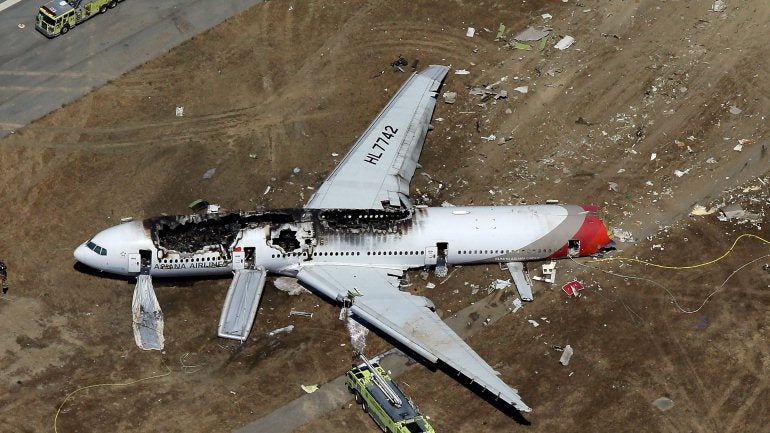
Asiana Airlines has reportedly changed the way it trains its pilots in the wake of the 2013 crash of Flight 214 in San Francisco, opting for what the Voice of America describesas a “friendlier” cockpit. “It’s a reality that within our country there is a leaning toward a patriarchal culture and many pilots work and fly within the strict military order,” Asiana’s CEO Kim Soo-cheon told reporters in Seoul last week. The NTSB highlighted significant cockpit culture issues on the flight deck of the Asiana Boeing 777 on a clear, calm summer day when the pilots allowed the aircraft to get low and slow on a visual approach to SFO. There were four pilots up front but only one of them said anything as the big Boeing wallowed into a seawall 34 knots below its target speed. Three people died as a result of the crash and 182 were injured.
Although the VOA report didn’t go into detail about the training shift, it’s believed the new methods are aimed at reducing the “cockpit hierarchy” that may have been have been a factor in the crash and stress more open communication between all pilots on the flight deck.During the December NTSB hearing it was revealed that pilot Lee Kang Kuk, who was on his operational checkride as a captain, was “very concerned” about making a visual approach and told investigators “it was very difficult to perform a visual approach with a heavy airplane.” The junior pilots on the flight deck apparently watched as their superiors took the 777 to the brink of a stall before one of them said “It’s low” and another called belatedly for a go-around.

