
















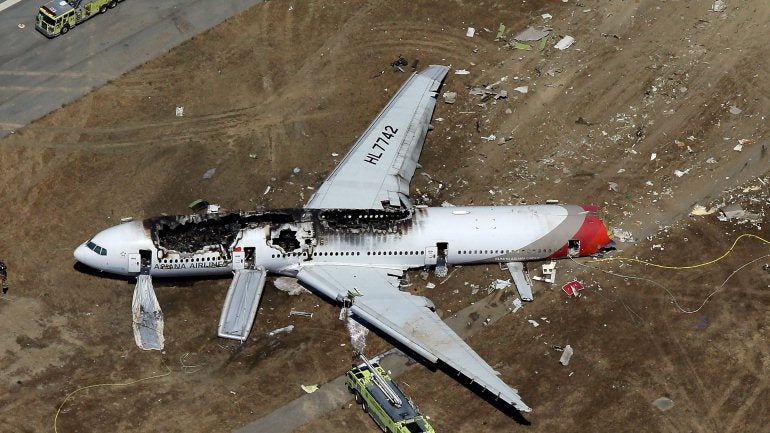
The pilot in the left seat of Asiana Flight 214 that crashed in San Francisco in July told the NTSB he didn’t feel comfortable flying a visual approach on that cloudless, calm day, nor did he feel well enough trained to operate the Boeing 777’s automatic flight systems. The NTSB held a public hearing Wednesday on its investigation of the landing accident, which resulted in three deaths and 182 injuries. One of the passengers who died was killed after being struck by two fire trucks, 11 minutes apart, in the aftermath of the crash. According to documents released at the hearing, Capt, Lee Kang Kuk told NTSB investigators “it was very difficult to perform a visual approach with a heavy airplane.” Although the PAPI lights and localizer were working, the glideslope was as unserviceable due to construction work and the lack of that instrument landing aid made Kuk “very concerned” on what was his first landing at SFO. The 777 was 34 knots slow when its tail hit a seawall before the threshold of Runway 28L. After shedding the tail, the rest of the plane became briefly airborne as it rotated almost 360 degrees before coming to rest in flames beside the runway. The NTSB also released a surveillance camera video of the crash.
A pilot who flew with Lee on flight two days earlier wondered about his competence and described him as “not well organized or prepared.” Lee said he was blinded by a bright light from outside the cockpit at a critical moment but no one else saw it. In fact the first indication that any other crew member gave that they were worried about making the runway was a few seconds before impact when an unidentified crew member warned, “It’s low.” Another crew member then called for a go-around but it was too late. Much of the hearing focused on the operation of the stall-prevention devices on the aircraft but John Cashman, the retired chief pilot on the 777 for Boeing, said it’s the pilots’ ultimate responsibility to make sure everything is working properly. “The pilot is the final authority for the operation of the airplane,” he said.

