
















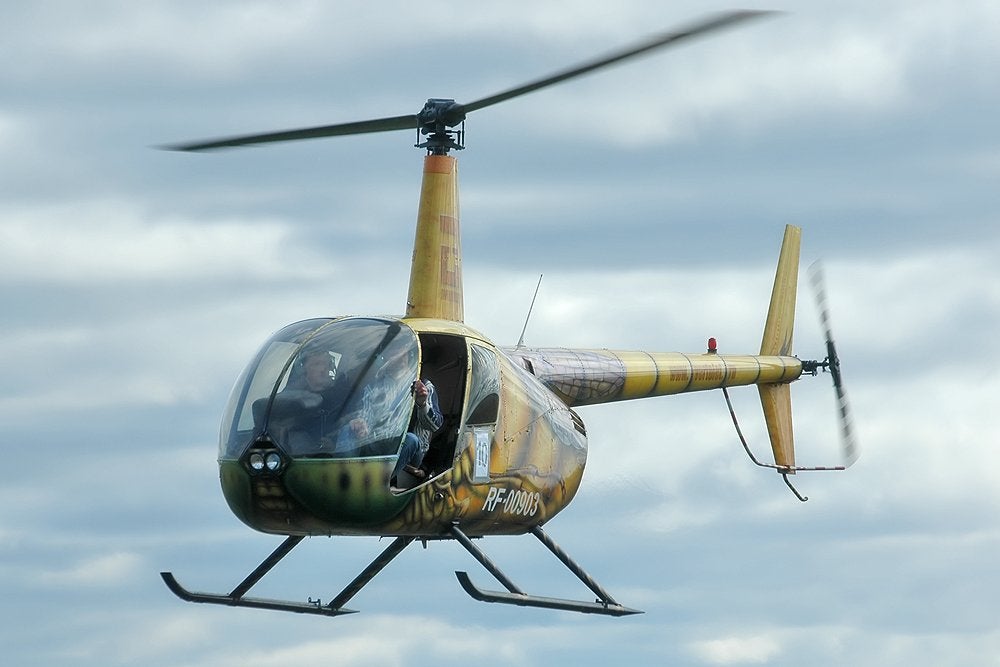
Aviation authorities in New Zealand and Australia have grounded a significant number of Robinson R-44 helicopters in response to a fatal crash in New Zealand last week. The affected aircraft have main rotor blades with the part number CO16-7. The groundings affect 80 aircraft (of 184) in New Zealand and an unknown number of the 400 R-44s in Australia. “The risk is the blade literally could come apart and that could have catastrophic consequences for the helicopter,” Peter Gibson, a spokesman for Australia’s Civil Aviation Safety Authority, told ABC News. There has been no indication from the FAA or any other aviation authorities that they intend to follow Australia and New Zealand in the flight ban. Phone and email messages left with Robinson’s Torrance, California, headquarters have not yet been returned.
The groundings came two days after an R-44 went down near Queenstown last Thursday, killing pilot Stephen Combe, 42, and passenger James Gardner, 18. Investigators issued the New Zealand flight ban immediately after their preliminary examination of the wreckage pointed to an in-flight rotor blade failure. On Jan. 23, another New Zealand R-44 experienced a partial failure of a rotor blade.“In that incident the pilot experienced severe vibration but was able to land the aircraft safely,” Graeme Harris, New Zealand’s director of civil aviation, said in a statement. “The blade from that incident is currently en route to the manufacturer and the U.S. Federal Aviation Administration for analysis.”

