
















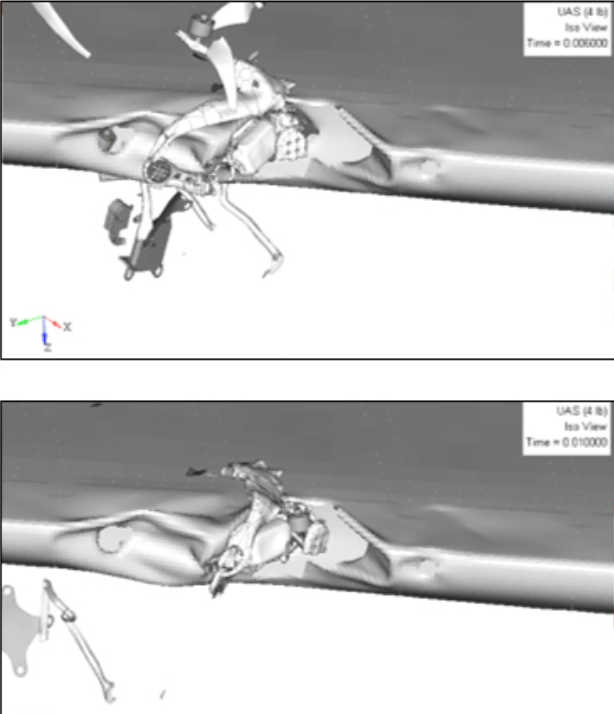
A yearlong study by a consortium of university researchers has found that drone strikes are likely to inflict more damage on aircraft than strikes by birds of similar weight and speed, the FAA said this week. Commercial aircraft are designed to withstand bird strikes up to 8 pounds for the fuselage and 4 pounds for the windscreen, but they may be damaged by a drone strike of that weight, the researchers found. Drones are made of hard, stiff materials, while birds are mostly water, the researchers said. The study was based on computer simulations, with additional data from testing of materials and components.
The lithium batteries used in drones also pose a danger, the study found. In a high-speed impact, the battery would be destroyed. But at a lower speed, such as during landing and takeoff, the battery might be lodged in the airframe, presenting an increased risk of a battery fire. The consortium plans to continue its research through 2021, and will study the effect of drone collisions on GA aircraft, rotorcraft and turbofan engines. The complete report is posted online.

