

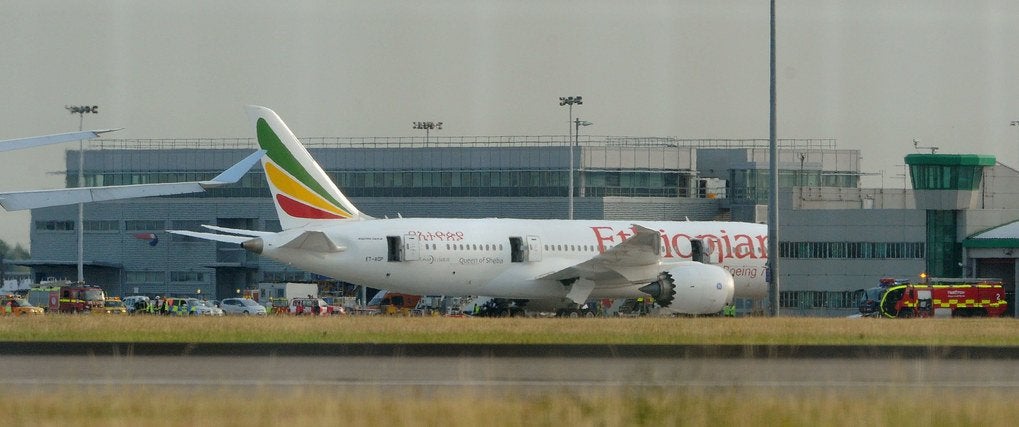
A short circuit was the probable cause of the fire that started in a Boeing 787 parked at London’s Heathrow Airport in July 2013, U.K. investigators said this week. Two exposed wires in the aircraft’s lithium battery-powered ELT touched, starting the fire and causing substantial damage to the 787, the Air Accidents Investigations Branch said in a BBC report. Heathrow was closed for about 90 minutes and no one was injured. The result of the short circuit was unexpected as testing indicated such an occurrence would run down the batteries, the report said. Instead, the fire ignited and spread among the battery cells, and insulation helped it build inside the aircraft, investigators determined.
It’s unknown what could have occurred if the fire began in flight, the AAIB said in the BBC report. While temperatures at altitude would have limited the fire, it would have been difficult for the crew to locate and manage. The fuselage likely would have kept its integrity, but fumes in the cabin or depressurization would have been possible, the investigations branch said. The agency’s finding’s prompted the FAA to plan an evaluation of the flammability testing procedures used to certify the Boeing 787, according to a Seattle Times report. Quoting an unnamed official, the Times said tests didn’t anticipate that flame-resistant insulation in the aircraft could “trap the heat and energy” as it did in the Heathrow incident, allowing a fire to spread and burn the composite structure.