
















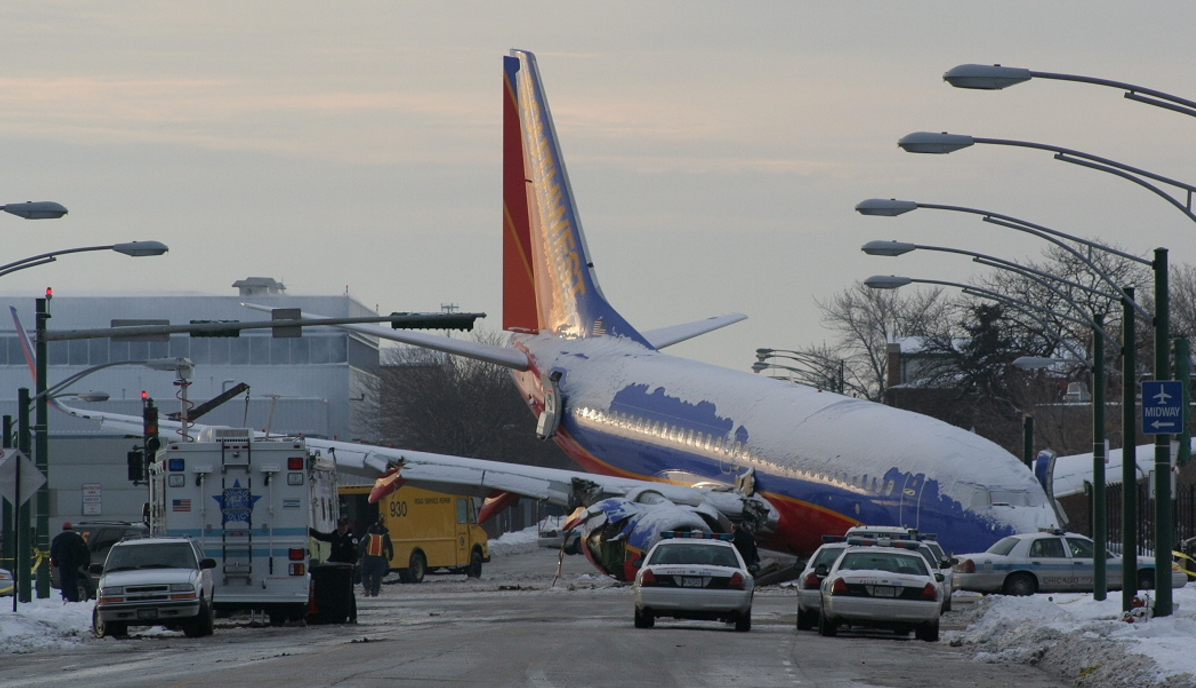
The FAA has developed new protocols for ATC to use when telling pilots about runway conditions that might affect their landing. The new standards, which take effect Oct. 1, are meant to reduce the risk of runway overrun accidents and incidents due to runway contamination caused by weather and other factors, the FAA said. The new standards were developed after a committee examined a December 2005 overrun accident at Chicago Midway Airport, when a Southwest 737 ran off the end of the runway and into a street after landing during a snowstorm. A six-year-old boy in a car was killed.
The new standards, called “Takeoff and Landing Performance Assessment,” or TALPA, aim to directly relate to the way a particular aircraft is expected to perform given the actual runway conditions, according to the FAA. “TALPA improves the way the aviation community assesses runway conditions, based on contaminant type and depth, which provides an aircraft operator with the effective information to anticipate airplane braking performance,” the FAA said. More details about the new standards can be found at the FAA website.

