














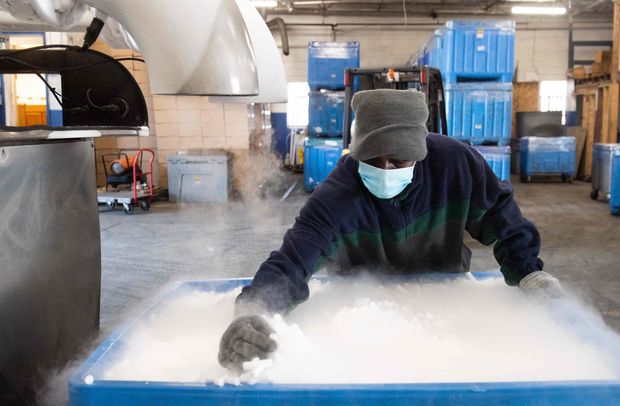

Cargo carriers all over the world are loading up aircraft with up to five times as much of a hazardous substance than they would normally be allowed to carry in the name of delivering the Pfizer COVID-19 vaccine. With the recent approvals granted by various governments for use of the vaccine, the race is now on to get it into people’s arms and dry ice, the solid form of carbon dioxide, is key to that effort. The vaccine has to be kept at about -70 degrees Celsius and dry ice is the only widely available material that will maintain that temperature. In a safety alert, the FAA urged caution and awareness in vaccine operations. “In order to transport COVID-19 vaccines, operators may plan to carry dry ice quantities larger than quantities they may carry during typical operations. This volume of dry ice may present risks that existing mitigations do not adequately address.”
The threat is that as the dry ice sublimates, or goes from the solid to the gaseous state, it might overwhelm the ventilation systems on aircraft and threaten the crew. The issue is even more acute on aircraft because the dry ice sublimates faster in lower air pressure. The FAA’s advisory has some timely advice for operators that includes installation of CO2 detectors and ensuring that all air handling systems are in full operating condition before launch. Those systems should be on full blast during ground operations.
