










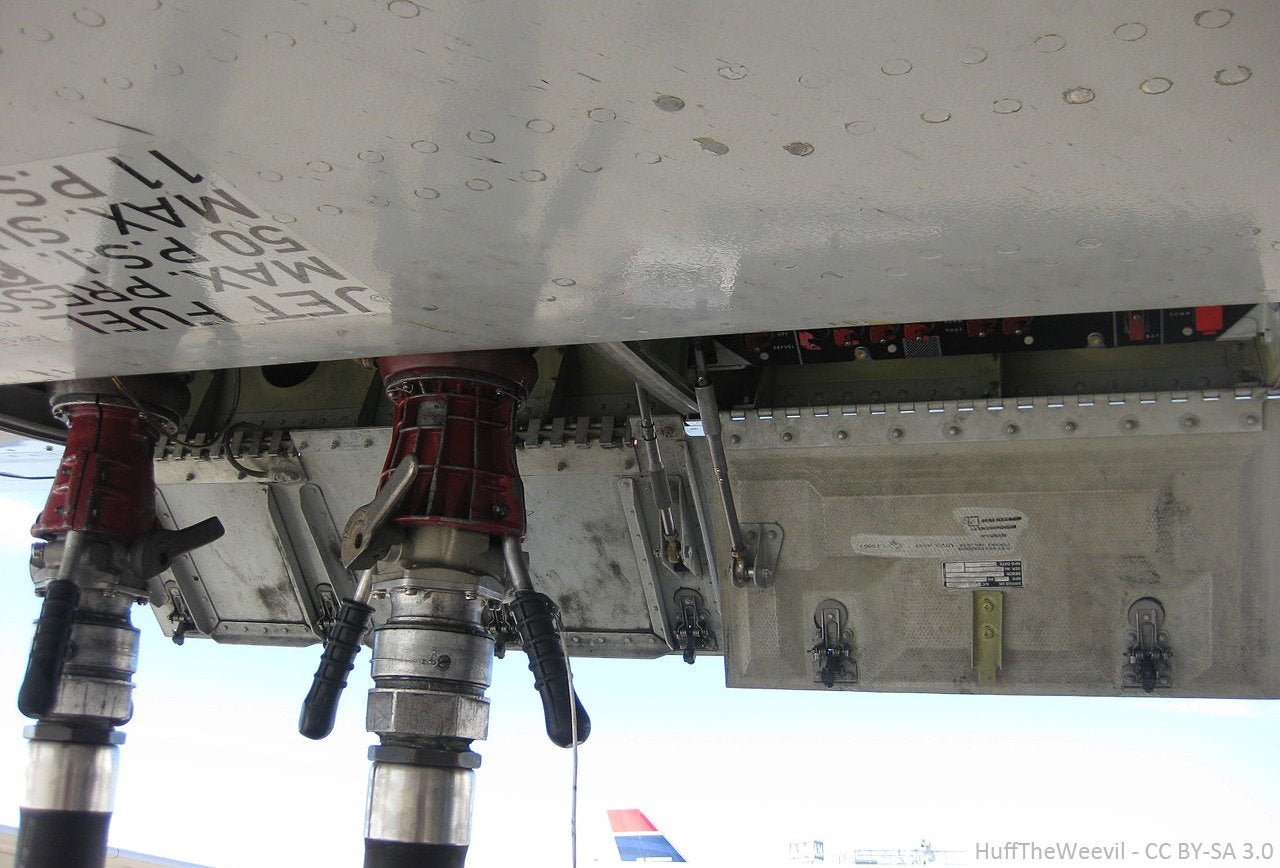


The FAA has issued a Safety Alert for Operators (SAFO) addressing several aircraft refueled with contaminated jet fuel at Miami-Opa Locka Executive Airport (OPF) in Opa-locka, Florida. The agency reports that five aircraft were serviced with jet fuel containing diesel exhaust fluid (DEF) between Aug. 12 and Aug. 16, 2018. Nine additional aircraft were serviced with refueling equipment that had been exposed to DEF.
The FAA identified a similar event in which seven aircraft were serviced with jet fuel containing DEF at Eppley Air Field Airport (OMA) in Omaha, Nebraska, in November 2017. In both cases, the agency says DEF was mistakenly used instead of a fuel system icing inhibitor (FSII) on aircraft refueling trucks. The DEF was then added to the fuel via the trucks’ FSII injection systems.
DEF is a urea-based chemical used to break down potentially hazardous diesel engine emissions. According to the SAFO (PDF), it reacts with certain jet fuel chemical components, forming non-fuel-soluble crystalline deposits that can accumulate on filters, fuel system components and engine fuel nozzles.
For affected aircraft, recommendations include contacting their aircraft, engine and APU manufacturers to determine the appropriate maintenance actions; reporting inspection results, system repairs and service difficulties to the FAA; making sure to discard any jet fuel suspected to be contaminated; and discussing procedures for avoiding DEF contamination with fuel providers if it is used in their service vehicles. The FAA says it will be monitoring the situation to determine if additional action is necessary.