
















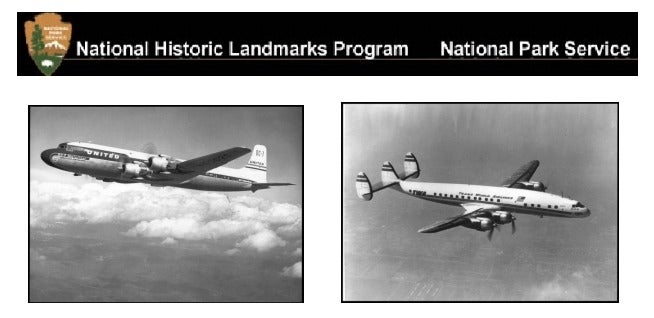
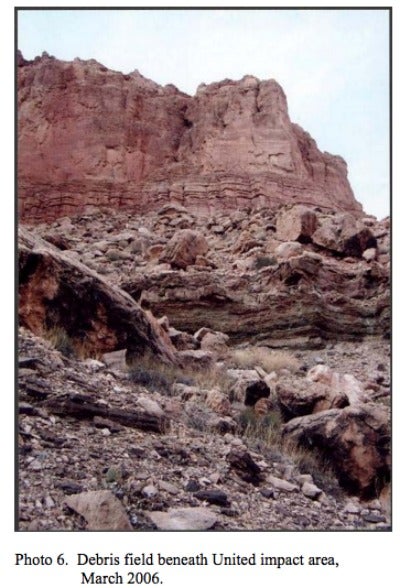
A Grand Canyon site containing wreckage from a 1956 plane crash has been officially designated a National Historic Landmark, the National Park Service announced last week. A TWA Super Constellation L-1049 and a United Airlines DC-7 collided in uncongested airspace at 21,000 feet above the canyon, the Park Service said, killing all 128 people aboard both flights. The accident spurred efforts to modernize and increase safety in the nation’s airways, leading to the Airways Modernization Act signed into law by President Eisenhower in 1957, a prelude to the establishment of the FAA. Hundreds of pieces of wreckage, along with craters and other evidence of disturbance from the crash, remain at the isolated site, which comprises about 1.5 square miles.
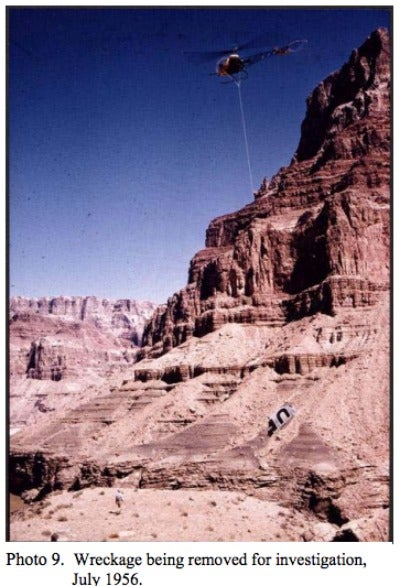
All images from National Park Service.
Other improvements that resulted from the crash include nationwide radar coverage, a common military/civilian navigation system, and the development of technologies such as collision avoidance systems and flight data recorders, the Park Service said. Alexandra Lord, branch chief of the National Historic Landmarks Program in Washington, D.C., told govexec.com this is the first time a crash site has been designated as a landmark. Also, the designation is unusual because the exact location has not been revealed, and the site is closed to the public. “It’s extremely remote, so it would take a very long time for someone to get there backpacking and it would be very difficult to reach,” Lord said. “But we know where it is and we’re going to work to preserve it.”

