
















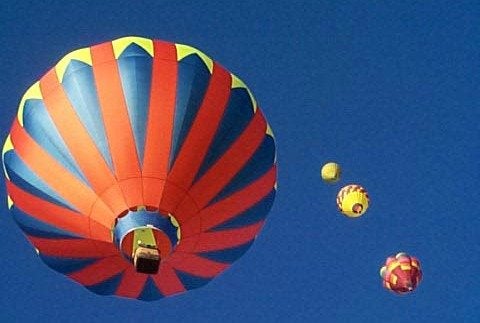
file photo
Last week, a drone reportedly hit an Airbus A320 on approach to London’s Heathrow Airport, but so far, there have been no officially confirmed drone strikes involving U.S. aircraft. However, witnesses have told AVweb that a drone did hit a hot-air balloon in flight, during a festival in Vermont in July 2014, causing damage to the fabric envelope. The pilot had just launched, and was about 150 feet off the ground. He landed immediately, and nobody was hurt. “It was a brand-new balloon, and the impact damaged eight panels,” balloon repairman Paul Stumpf told AVweb this week. “There were a lot of little slices in the fabric, but they were small … the biggest one was less than six inches wide.”
Nevertheless, repairs had to be made before the balloon could fly again. A second balloon, which was still on the ground preparing to launch, also was damaged, Stumpf said. The drone operator paid for all the repairs, he added. The FAA has been working to get operators to register their drones and to educate them about safety, while NASA has been developing technologies that aim to automate safe separation of manned aircraft and drones in the National Airspace System.

