
















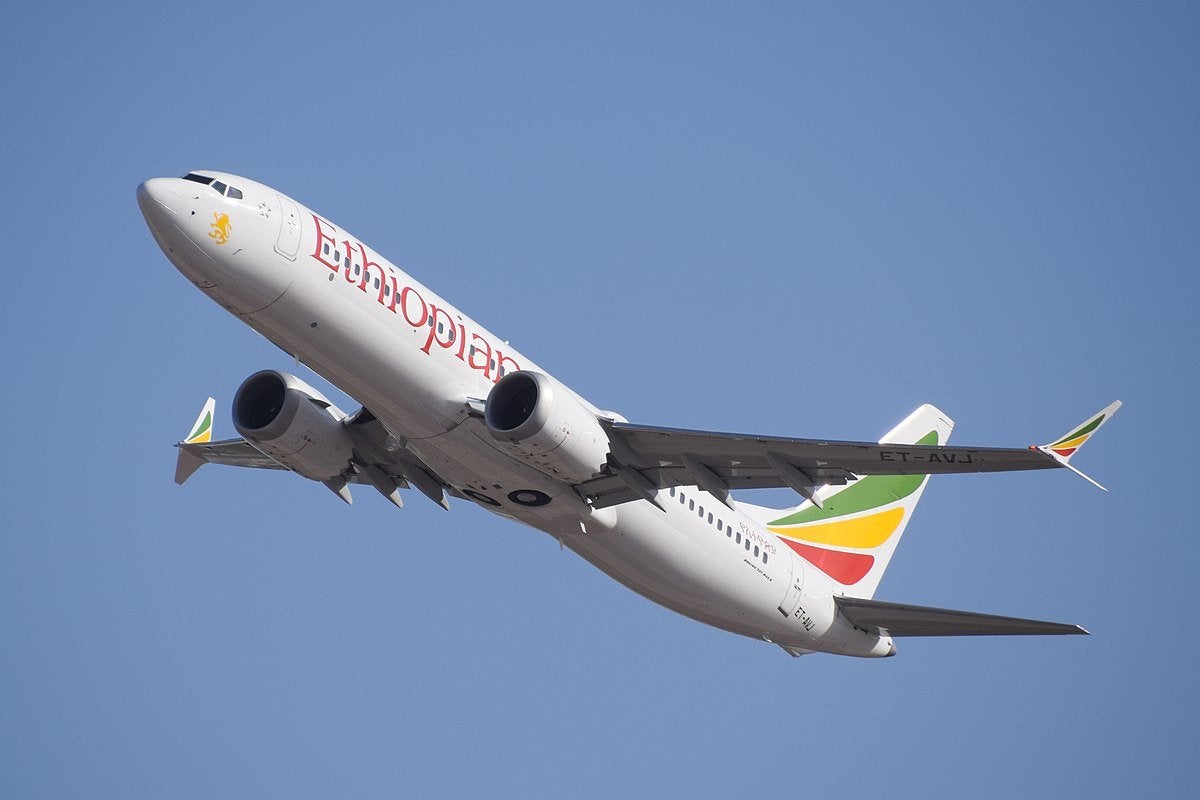
Boeing’s MCAS stall-protection system was at fault in the crash of an Ethiopian Airlines Boeing 737 MAX 8 on March 10, according to a preliminary report released early Thursday. An earlier report showed that the aircraft’s flight data recorder revealed that the crew initially followed procedures Boeing recommended to disable the system, but then inexplicably re-enabled it.
The Wall Street Journal reported that investigators led by Ethiopian authorities believe that MCAS—which may have been erroneously activated by a faulty angle-of-attack sensor—caused uncommanded nose-down trim which the pilots were unable to effectively counter. The FDR readout showed that the crew initially followed Boeing’s recommendation to use the 737’s stabilizer trim cutout switches to disable MCAS and revert to manual trim. But the data also showed the pilots re-engaged electric stabilizer trim, thus re-enabling MCAS, a background stall-protection system that automatically rolls in nose-down trim when the airplane is hand flown at high angles of attack with the flaps retracted. But it relies on the airplane’s electric trim system to command trim.
Boeing is developing new software for the MCAS system, but it’s weeks if not months away from approval. Meanwhile, some 370 MAX series airplanes remain grounded throughout the world. Boeing CEO Dennis Muilenburg said Wednesday that he had joined Boeing test pilots for a demonstration of the revised MCAS software and that the company would “take the time to get it right.”

