
















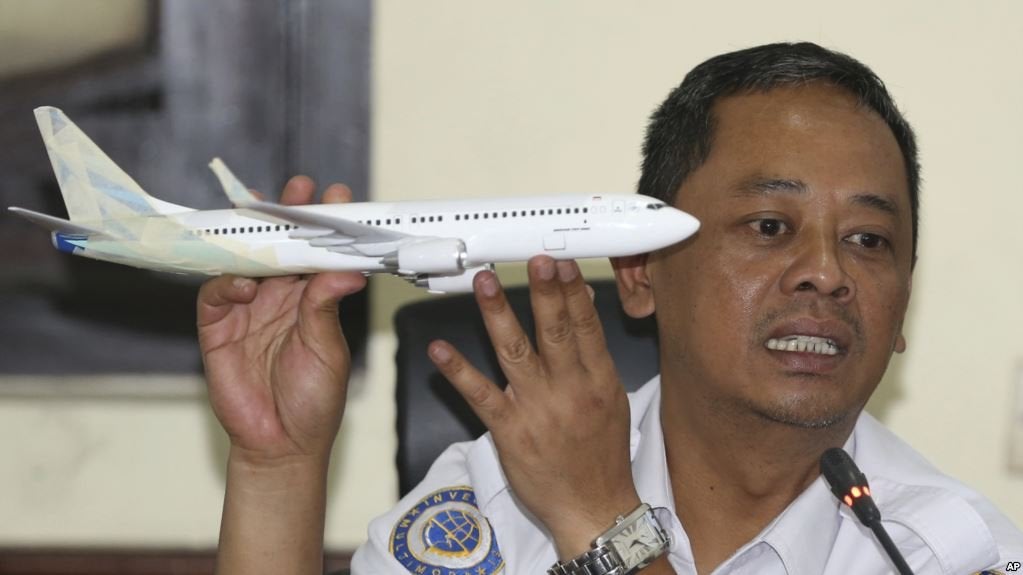
At a follow-up press conference in Indonesia Thursday, accident investigators said they did not claim that a Lion Air 737 MAX 8 was unairworthy before it crashed into the Java Sea on Oct. 29. The investigators said the unairworthy comment applied to the aircraft’s previous flight, during which the 737’s stick shaker activated constantly because of a sensor failure.
“This condition is considered as an unairworthy condition and the flight shall not be continued,” the report said of that flight, which occurred the day before the accident flight. At the second press conference, investigator Nurcahyo Utomo said that based on maintenance records, technicians had made repairs and run tests as required and corrected the faults the previous crew experienced the day before the accident flight. “The NTSC and the head of aviation communication never stated that Lion Air, Boeing 737-8 MAX aircraft registered PK-LQP, was not airworthy,” said Utomo.
The 737 MAX 8 crashed about 11 minutes after takeoff, killing all 189 people aboard. Investigators have recovered the airplane’s flight data recorder, but are still searching the sea floor the cockpit voice recorder. The Wednesday press conference summarized a preliminary report issued a month after the accident. It explained that the previous crew experienced unreliable airspeed indications and evidence of an angle-of-attack sensor failure. Because this apparently caused the aircraft autotrim system—called MCAS—to begin uncommanded nose-down stabilizer trimming, the pilots used the aircraft’s stabilizer trim cutout switches to retain manual trim control.

