
















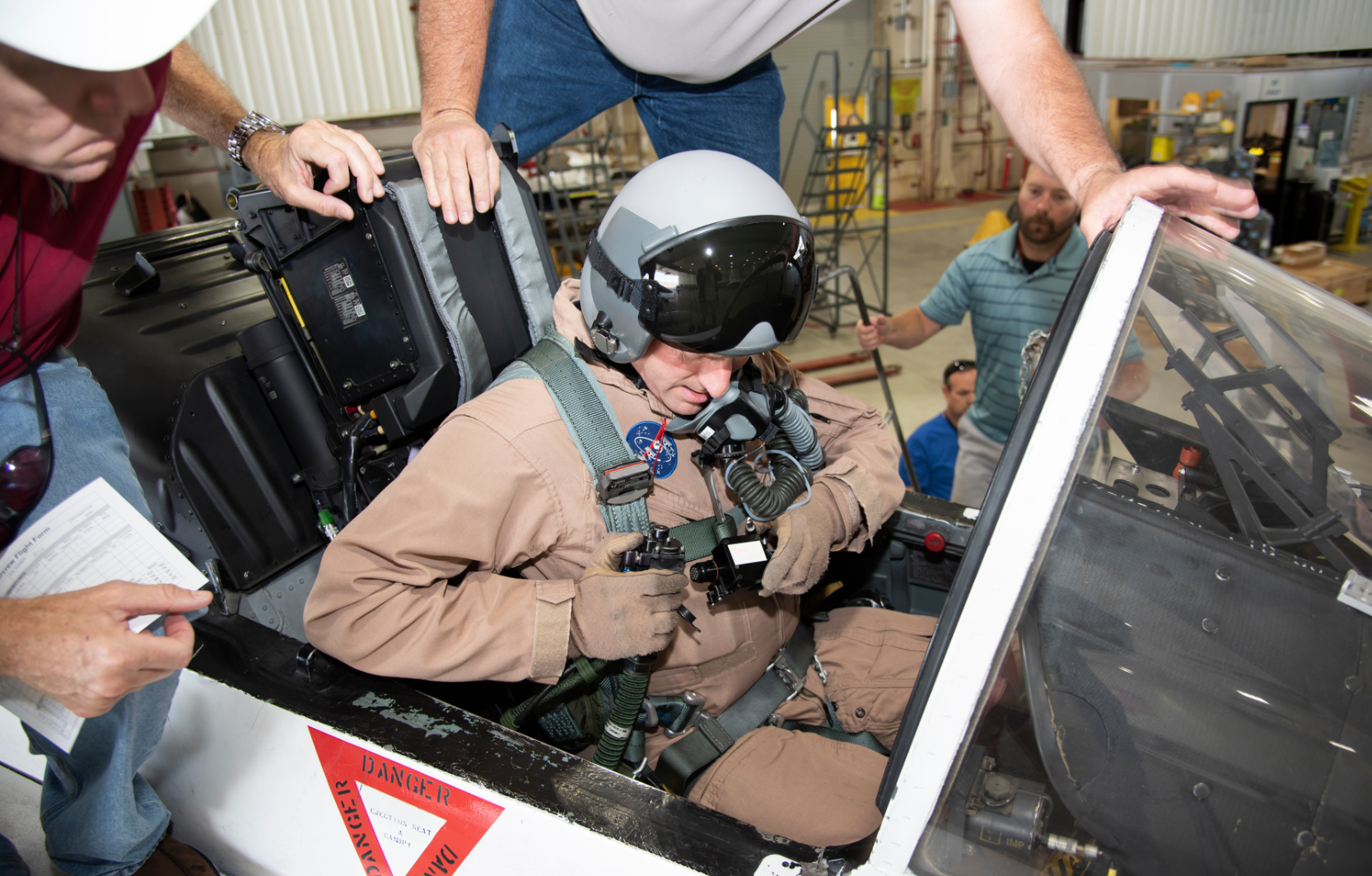
Image: NASA
Over the last five years, an increasing number of military jet pilots, from both the U.S. Navy and Air Force, have reported problems with the oxygen systems in their aircraft—and so far, solutions have proved elusive. This week, NASA said they have begun a series of flight tests that aim to better understand what is going on, so they can find a way to address the situation. At NASA’s Armstrong Flight Research Center, in California, five research pilots are flying several aircraft types, equipped with various types of aircrew technology. A range of flight conditions will be replicated, including basic instrument training, high-altitude flight, aerobatics and combat maneuvers.
The flight tests will continue over the next few months. “It is my hope that the data we gather will increase our understanding of the physiology of flying high-performance fighters and will allow the military to resolve the problems they’ve been having,” said NASA pilot Jim Less. “Our military pilots need to have complete confidence in their equipment so they can focus on carrying out their vital missions.” A range of symptoms have been reported by pilots, including cognitive impairment, numbness, tingling, lightheadedness, behavioral changes and fatigue. These events have been reported as early as the 1990s, and persist today, yet the cause remains unknown.

