
















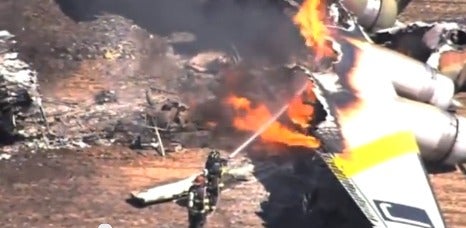
The destruction of a B-17 Flying Fortress in June 2011 was caused by “inadequate repair of the fuel tank that allowed the fuel leak to continue, ultimately resulting in an in-flight fire,” the NTSB has concluded in its final report. The Liberty Belle, operated by the Liberty Foundation of Florida, was destroyed by fire after the crew made an emergency landing in a corn field in Illinois. All seven people on board escaped, with only one minor injury to a passenger, according to the NTSB, but the airplane was a total loss. The weekend before the accident, a fuel leak was identified, the NTSB said. The fuel leak was subsequently repaired, and a final inspection the morning of the accident flight reportedly did not reveal any evidence of a continued fuel leak. Shortly after takeoff, the flight crew noticed a faint odor in the cockpit and a small amount of smoke near the radio room.
The flight crew immediately initiated a turn with the intention of returning to the departure airport, the NTSB said. About that time, they received a radio call from the pilot of the accompanying T-6 chase plane advising that fire was visible on the left wing. The B-17 pilot subsequently executed an emergency landing to a corn field. Emergency crews were hampered by the muddy field conditions, and the fire ultimately consumed significant portions of the airframe. A post-accident examination noted that the C-channel installed as part of the No. 1 main fuel tank repair earlier in the week was partially separated, the NTSB said. Metallurgical examination of the repair area revealed a longitudinal fatigue crack along the weld seam. The full report was posted on the NTSB website last month.