
















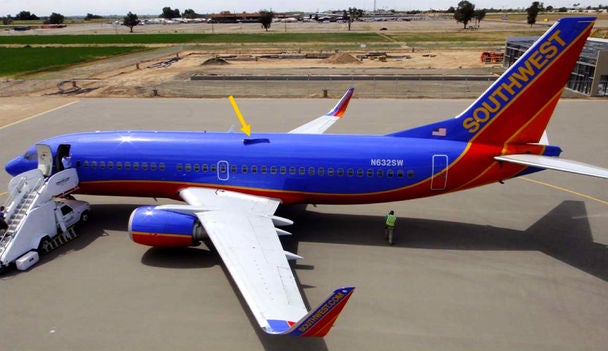
Photo: NTSB
The NTSB says “extremely poor manufacturing technique” led to the in-flight decompression of a Southwest Boeing 737-300 two years ago but it also appears the shoddy workmanship was an isolated circumstance and not a fleet-wide problem. The board determined that improperly drilled and installed rivets in a misaligned section of the roof skin of the aircraft finally let go in an eight-inch-wide by five-foot gash while the aircraft was climbing through 34,000 feet on its way from Phoenix to Sacramento.The crown skin panel and the upper left fuselage panel were misaligned, so most of the lower rivet row holes were misdrilled, the report states.
The crew carried out an emergency decent and landed in Yuma a few minutes later, but not before a flight attendant and an off-duty Southwest employee fell unconscious and suffered minor injuries. The NTSB said Boeing determined the improperly installed piece of skin was added late in the manufacturing process by a mechanic who was conducting a repair, and subsequent inspections found other 737s were put together correctly. Therefore the board determined that it’sunlikely that there was a systemic [quality assurance] error at the Boeing facilities.Details of the repair can’t be determined because Boeing destroyed the manufacturing records after the airplane had been in service for six years, and this aircraft was built in 1996.

