
















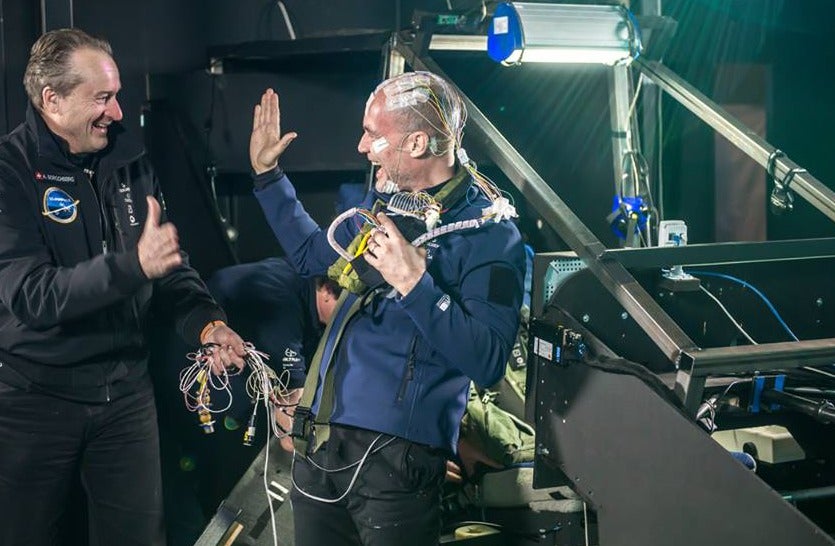
For the round-the-world flight planned for Solar Impulse in 2015, a solo pilot will have to fly legs of up to 72 hours, so last week the team staged a simulation at their base in Switzerland. Bertrand Piccard, the leader of the nonprofit group and one of the two pilots for the solar-powered electric airplane, spent 72 hours in a mock-up of the cockpit and experimented with self-hypnosis techniques to remain alert, manage his fatigue, and sleep. A battery of tests assessed Piccard’s ability to cope with cockpit ergonomics, nutrition, and exercise, which is necessary to prevent thrombosis. He was also tested for the ability to maintain vigilance and to pilot the aircraft in a state of sleep deprivation. All tests were successful, the team reported.
“This experiment provided vital training for the round-the-world flight, while at the same timehighlighting the extreme difficulty of this venture,” said Piccard. Over the 72 hours, he took 35 short rest breaks of 20 minutes each. The team will now focus on the final phase of preparation for the round-the-world flight. The team plans to begin assembly of a new prototype aircraft in February, in Switzerland, and test flights and training will begin. The solar-powered round-the-world flight is expected to launch in March 2015.

